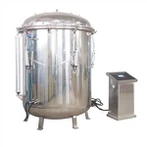
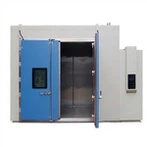
LIB has successfully completed the installation of a Cyclic Salt Spray Test Chamber for a customer in South Korea. The project included equipment delivery, on-site installation, system commissioning, and operational guidance. After installation, the chamber was immediately put into use for corrosion testing applications, operating smoothly and meeting all performance expectations.
This installation highlights the growing demand for advanced corrosion testing solutions in industries such as automotive, electronics, coatings, and materials engineering. It also reinforces LIB's capability to deliver reliable, standards-compliant environmental testing equipment worldwide.
LIB Salt Fog Cyclic Corrosion Test Chamber For Real-World Durability Testing
When evaluating the durability of metals, coatings, and structural components, understanding how materials behave under cyclic environmental stress is critical. Salt fog corrosion testing provides a controlled method to reproduce real-world corrosion challenges in a laboratory setting. By simulating repeated cycles of salt exposure, temperature fluctuations, and humidity variations, engineers and quality assurance teams can predict product lifespan and improve material selection.
LIB's Salt Fog Cyclic Corrosion Test Chamber delivers reliable, standardized, and repeatable testing, ensuring that your products meet international quality and safety benchmarks. It integrates salt spray, temperature, and humidity control into a single system, supporting standards such as ASTM B117, ISO 9227, IEC 60068-2-52, and IEC 61701-2. With precise sensors, automated systems, and programmable test sequences, the CCT enables accurate evaluation of corrosion resistance under real-world environmental conditions.
|
Classify |
Type 1 |
Type 2 |
Type 3 |
|
Name |
|||
|
|
|
|
|
|
Model |
S-150, S-250, S-750 S-010, S-016, S-020, |
SC-010, SC-016, SC-020 |
SSC-010, SSC-016, SSC-020 |
|
Test Standard |
ASTM B117; ISO9227 (NSS, NASS, CASS ); |
ASTM B117; ISO9227; IEC60068-2-52; |
ASTM B117; ISO9227; IEC60068-2-52; ASTM G85 (A4); |
|
Function |
Salt fog spray; Temp (Ambient ~+60℃) |
Salt fog Spray; Temp (+10℃ ~+90℃); Humid (30% ~98%RH); |
Salt fog Spray; Temp (+10℃ ~+90℃); Humid (30% ~98%RH); So2 gas; |


How Salt Fog Control Ensures Testing Accuracy
Salt fog in a Salt Fog Cyclic Corrosion Test Chamber is precisely controlled to ensure consistency and reliability in corrosion testing. LIB's chambers maintain a salt deposition rate of 1–2 mL/80 cm² per hour, using preheated air at 35 ± 2 °C for accurate spray. The system employs a saturated barrel, external salt water tank, and quartz spray nozzles, which evenly distribute the salt fog throughout the workroom.
Humidity and temperature are simultaneously regulated using a PT-100 Class A temperature and humidity sensor. The chamber keeps humidity between 30%–98% RH and temperature between +10 °C to +90 °C, with a ±0.5 °C fluctuation and ±2 °C deviation, according to IEC and ISO standards. Dual centrifugal fans ensure uniform airflow, preventing hot or wet spots and guaranteeing reproducible results across multiple samples.
This precise control ensures compliance with ASTM B117 (Neutral Salt Spray), ISO 9227 (NSS, AASS, CASS), and IEC 60068-2-52, allowing engineers to trust the validity of their test results.
Procedure For Metal Testing In LIB Salt Fog Cyclic Corrosion Test Chamber
Testing metals in a CCT involves a precise and repeatable sequence:
Step 1: Prepare the Sample
Ensure metal samples are clean and free of contaminants. Use dedicated holders to allow uniform exposure.
Step 2: Configure Test Parameters
Set temperature (+10 °C to +90 °C) and humidity (30%–98% RH). Program cyclic sequences via the PID touchscreen controller.
Step 3: Start Salt Fog Spray
Use a 5% NaCl solution (pH 6.5–7.2). Maintain spray pressure at 83 kPa with deposition of 1–2 mL/80 cm² per hour.
Step 4: Monitor Test Conditions
Real-time data logging ensures stable conditions with high precision and automated alerts.
Step 5: Complete Test and Record Results
Inspect corrosion results and export data for compliance reporting.
LIB's automated systems, including water refill, closed-loop humidification, and airflow management, ensure consistent and repeatable testing cycles.
Maintenance Ensures Long-Term Performance
Regular maintenance is essential for maintaining accuracy and extending service life:
Spray System: Clean nozzles and pipelines to prevent clogging
Humidification System: Inspect evaporators and replace worn components
Heating & Cooling: Maintain compressors and sensors for stability
Electrical System: Check relays, controllers, and wiring
Chamber Body: Keep interior clean and sealed to prevent leakage
These practices ensure continued compliance with ASTM and ISO standards.
Beyond equipment delivery, LIB offers a complete support system:
Custom Solutions: Tailored chamber configurations and sample fixtures
Fast Spare Parts Supply: Delivery within 7–15 days
After-Sales Service: 3-year warranty and lifetime technical support
Remote Assistance: 24/7 English-speaking support with rapid response
Export Packaging: Secure transport for international delivery
The successful installation in South Korea demonstrates LIB's ability to provide efficient deployment and reliable operation across global markets.
"Through this installation, we ensured the customer could immediately begin high-standard corrosion testing," said a LIB project manager. "Our goal is always to deliver not just equipment, but a complete, dependable testing solution."
For more information about LIB's Salt Fog Cyclic Corrosion Test Chamber and customized testing solutions, please contact LIB Industry today.