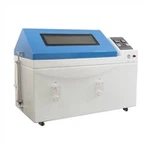
When testing large equipment, multiple samples, or full-scale assemblies, small benchtop chambers simply cannot replicate real-world environmental conditions accurately. Walk-in environmental test chambers deliver scalable, precise, and reliable solutions, ensuring repeatable results for laboratories, manufacturers, and R&D teams.
LIB Walk-In Environmental Test Chambers are designed to provide ultra-precise environmental conditions, including temperature ranges from –70 °C to +150 °C and humidity spans from 20 % to 98 % RH, with ±0.5 °C fluctuation and ±2 % RH stability, even for oversized or irregular specimens. They are engineered to maintain stable temperature and humidity conditions, ensuring high-throughput testing without compromising accuracy.
What is a Walk-In Environmental Test Chamber?
Walk-in environmental test chambers are large, enclosed spaces that let you recreate extreme environmental conditions for full-size equipment, multiple samples, or oversized products. They are used whenever small benchtop chambers aren't enough-for example, testing entire automotive panels, electronics racks, or machinery components under controlled temperature, humidity, dust, salt spray, or sunlight exposure. Essentially, if you need to see how a product behaves in the real world-or even harsher conditions-these chambers make it possible.
These chambers meet international testing standards, so the results are recognized globally. They comply with IEC 60068 for electronics, ISO 16750 for vehicles, ASTM B117 and ISO 9227 for corrosion, IEC 60529 and ISO 20653 for dust protection (IP5X/IP6X), and ASTM G151, D6695, G155, ISO 11341 for sunlight simulation. This means manufacturers and labs can trust the results for product certification, quality control, and research purposes.
Precision and repeatability are what make these chambers valuable. They can maintain temperatures from –70 °C to +150 °C and humidity from 20 % to 98 % RH with very small fluctuations (±0.5 °C for temperature and ±2.5 % RH for humidity). Heating and cooling are fast-up to 3 °C per minute for heating and 1 °C per minute for cooling-so testing cycles don't take forever. This is especially useful when running accelerated aging tests for plastics or electronics, or when you want to see how a device responds to sudden environmental changes.
The chambers use high-accuracy sensors and powerful fans to ensure even conditions inside. PT100 Class A temperature sensors measure to ±0.001 °C, and humidity sensors keep readings within ±2.5 % RH. Fans circulate air in all directions so that no part of the chamber is hotter, colder, wetter, or drier than another. This guarantees that every sample-from a small circuit board to a full-size vehicle component-experiences the same conditions. Companies rely on this consistency for stress testing, corrosion testing, endurance testing, and any scenario where the product's performance in extreme or variable environments matters.
How to Install a LIB Walk-In Environmental Test Chamber?
 |
 |
| Name | Walk-In Environmental Test Chamber |
| Model | Walk-Ins |
| Internal Dimension (mm) | As request |
| Overall Dimension (mm) | As request |
| Temperature Range (℃) | A: -20℃ ~+150 ℃ B:-40℃ ~+150 ℃ C:-70℃ ~+150 ℃ |
| Humidity Range (R.H) | 20% ~ 98% RH |
Installing a large walk-in chamber-especially one larger than 90 m³-requires careful planning and modular assembly. LIB follows a structured six-step process to ensure safety, precision, and long-term reliability.
Step 1: Site Evaluation & Unpacking
Before installation, LIB engineers conduct a thorough survey of the lab or facility, checking floor load capacity, ceiling height, and access paths. Each modular component is carefully transported into place using cranes or forklifts. Every part is inspected for shipping damage to ensure a smooth and safe assembly process.
Step 2: Base, Wall, and Top Assembly
Assembly begins with a leveled base plate to provide a stable foundation. Vertical wall panels are lifted into position, followed by the top panel. Laser alignment tools are used throughout to guarantee the chamber is perfectly square, stable, and ready for airtight sealing.
Step 3: Panel Locking & Seam Sealing
After positioning, all panels are securely locked and welded. Special sealing treatments are applied to maintain airtightness and insulation integrity, ensuring the chamber can hold precise environmental conditions during extreme testing.
Step 4: Functional System Installation
Next, core systems-including refrigeration, heating, humidification, and airflow circulation-are installed. Sensors are calibrated and the control panel is integrated, allowing precise management of temperature, humidity, and other environmental parameters.
Step 5: Validation & Operator Training
The chamber undergoes rigorous validation cycles to confirm uniform temperature and humidity throughout the workspace. Operators then receive hands-on training in programming, safety procedures, and routine maintenance to guarantee smooth operation.
Step 6: Acceptance & Handover
Finally, performance benchmarks are verified, and full documentation-including operational manuals and test certificates-is provided. Clients can begin testing immediately, confident that the chamber meets all safety, precision, and reliability requirements.
|
|
|
| Workroom | Cable hole |


|
|
|
| sensor | air circulation |


This modular, step-by-step approach allows even very large chambers to be installed in tight or complex spaces, such as upper floors or narrow lab corridors, without compromising safety, energy efficiency, or long-term performance.
LIB Provides Walk-In Test Chambers for Diverse Applications Such as Temperature & Humidity, Salt Spray, and Xenon Testing
Walk-In Temperature & Humidity Chambers: Ideal for large assemblies, automotive panels, or electronics racks. Features include SUS304 stainless steel interiors, ±0.5 °C temperature stability, ±2 % RH humidity deviation, and cable ports for powered test items.
Walk-In Salt Spray Chambers: Enable accelerated corrosion testing of full-size products. Specifications include 316 stainless steel interiors, temperature +10 °C–+90 °C, humidity 30 %–98 % RH, 1–2 mL/80 cm²·h salt deposition, and multi-mode fog systems (NSS, AASS, CASS). Compliant with ASTM B117, ISO 9227, DIN 50021, and IEC 60068-2-11.
Walk-In Dust Test Chambers: Support IP5X/IP6X dust exposure testing with vertical circulation, 50 µm talcum powder, dual vacuum and circulating pumps, and PID touchscreen controllers. Compliant with IEC 60529, ISO 20653, IEC 60068-2-68, and MIL-STD-810.
Walk-In Xenon Arc Weatherometers: Simulate full-spectrum sunlight (280–800 nm) for plastics, coatings, and automotive components. Adjustable black panel temperatures (35–85 °C), humidity 50 %–98 % RH, and programmable spray cycles guarantee ASTM G151, D6695, G155, ISO 11341, and D7869 compliance.
Across all models, LIB offers intelligent PID controllers, remote Ethernet monitoring, multilingual operation, closed-loop water recovery, and modular designs for efficient installation and long-term reliability.
Contact LIB Industry to get your exclusive Walk-In Environmental Test Chamber solutions for temperature, humidity, salt spray, dust, and sunlight simulation. Reliable, standards-compliant, and scalable testing is just a call away.