
In the field of new energy vehicle (NEV) battery testing, ensuring the long-term durability and corrosion resistance of lithium-ion batteries is crucial. The Neutral Salt Spray (NSS) Corrosion Test Cabinet is a vital tool for evaluating the performance of battery components exposed to harsh environmental conditions. By simulating aggressive salt spray environments, this test provides essential insights into the corrosion resistance of battery enclosures, connectors, bus bars, and structural components.

What is the NSS Salt Spray Corrosion Test?
The Neutral Salt Spray (NSS) test is a standardized accelerated corrosion test method used to assess the resistance of metallic and coated materials against salt-induced corrosion. It is widely recognized under international standards such as ISO 9227, ASTM B117, and so on.
This test involves exposing test samples to a fine mist of sodium chloride (NaCl) solution at a controlled temperature and humidity level inside the NSS corrosion test cabinet. The typical test conditions include:
- 5% NaCl solution concentration
- 35 °C chamber temperature
- Continuous salt mist exposure for 24 to 1000+ hours
- pH level between 6.5 and 7.2
Importance of NSS Testing in Lithium-Ion Battery (LIB) Development
Lithium-ion batteries used in electric vehicles (EVs), energy storage systems (ESS), and consumer electronics require extensive corrosion testing to ensure long-term reliability. The NSS test cabinet plays a critical role in LIB testing by:
- Assessing Battery Enclosure Durability
Battery packs are typically housed in aluminum, stainless steel, or coated enclosures that must withstand corrosive environments. NSS testing helps determine how well these enclosures resist salt-induced degradation.
- Evaluating Electrical Connector Corrosion Resistance
Battery connectors, terminals, and bus bars (often made from copper, nickel-plated steel, or aluminum) are prone to corrosion, which can lead to higher contact resistance and electrical failures. NSS testing ensures that these components maintain conductivity under real-world conditions.
- Testing Cooling System Components
Lithium-ion batteries use liquid cooling systems with metallic pipes and radiators that must endure long-term exposure to saline environments, especially in coastal and humid regions.
- Ensuring Coating and Plating Effectiveness
Protective coatings such as anodizing, electroplating, and polymer coatings are applied to battery components to enhance corrosion resistance. The NSS test validates the performance and durability of these coatings under aggressive conditions.
Advantages of Using an NSS Salt Spray Corrosion Test Cabinet
1. Accelerated Corrosion Testing
NSS testing provides fast and reliable results, allowing manufacturers to evaluate corrosion resistance in a fraction of the time compared to natural environmental exposure.

2. Compliance with International Standards
The NSS test follows well-established standards, ensuring that test results meet industry and regulatory requirements for EV batteries.
3. Simulation of Real-World Environmental Conditions
Electric vehicles and energy storage systems often operate in coastal, high-humidity, and polluted environments. The NSS test accurately replicates these conditions to assess material longevity.
4. Improved Battery Safety & Performance
Corrosion can lead to battery casing failure, electrical short circuits, and thermal runaway. By identifying corrosion-prone materials, NSS testing helps improve battery safety and efficiency.
5. Cost-Effective Material Selection
By testing different coatings, materials, and plating techniques, manufacturers can optimize material selection, reducing long-term costs associated with corrosion-related failures.
Applications of NSS Test Cabinet in LIB Industry
The NSS salt spray corrosion test is widely used in various stages of lithium-ion battery manufacturing and testing, including:
✔ Battery Pack Manufacturing: Ensuring corrosion resistance of casings, connectors, and bus bars before mass production.
✔ Quality Assurance & Certification: Meeting OEM and regulatory compliance for EV battery safety.
✔ Failure Analysis & Research: Investigating corrosion-related failures in used or defective batteries to improve design and materials.
✔ Environmental Simulation Testing: Evaluating battery durability under marine, industrial, and high-humidity conditions.
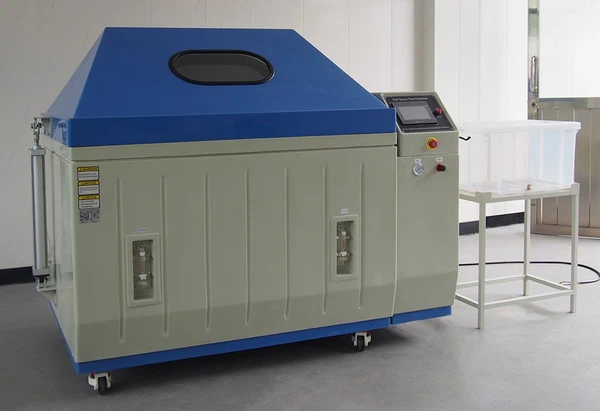
|
Temperature Range |
Ambient ~ +60 ℃ |
|
Temperature Fluctuation |
± 0.5 ℃ |
|
Temperature Deviation |
± 2.0 ℃ |
|
Humidity Range |
95% ~ 98% RH |
|
Salt Fog Deposition |
1~2ml / 80cm2 · h |
|
Spray Type |
Continuous / Periodic |
|
Salt Fog Collected |
Fog collector and fog measure cylinder |
As the demand for high-performance lithium-ion batteries continues to grow in the electric vehicle and energy storage sectors, the need for reliable corrosion testing is more important than ever. The NSS Salt Spray Corrosion Test Cabinet provides an effective, standardized, and accelerated method to assess corrosion resistance in battery components, ensuring longevity, safety, and efficiency.
Investing in NSS corrosion testing allows manufacturers to enhance product reliability, meet regulatory standards, and reduce failure risks, ultimately contributing to the advancement of next-generation battery technologies.
Would you like recommendations on NSS Test Cabinet or customized test setups for your battery lab? Feel free to reach out!


