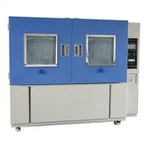
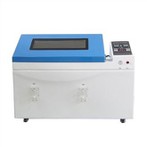
In this blog, we'll take a closer look at the key components that make IPX4 test equipment effective and how each plays a vital role in delivering precise, reliable results. Understanding these components will guide you in choosing the right system for your needs.
Understanding the Precision Spray Nozzle Assembly and its Calibration
At the heart of IPX4 test equipment is the precision spray nozzle assembly, which simulates water exposure to evaluate a product's resistance to moisture. Typically, these nozzles are calibrated to release water at specific angles (usually between 60° and 90°) and flow rates, often ranging from 10 to 15 liters per minute. The nozzle is designed to create a controlled water spray, typically in the form of fine mist or spray jets, replicating real-world rain or water splashes.

IPX4 Oscillating Tube
Calibration of the spray nozzles is crucial for ensuring accuracy, as it guarantees uniform water distribution. A study conducted by the International Electrotechnical Commission (IEC) specifies that for an IP54 test, the water spray must be applied for at least 5 minutes, ensuring the product is exposed to a consistent level of water over time. Proper calibration ensures that the water impact mimics real-world conditions, helping manufacturers validate their product's resilience under varying moisture levels.
Examining the Water Delivery System - Pumps, Flow Meters, and Pressure Regulation
The water delivery system in IPX4 test equipment is a complex network of pumps, flow meters, and pressure regulators. The pumps ensure that water is consistently supplied to the spray nozzles, typically at a flow rate of 10-15 liters per minute. Flow meters monitor the volume of water passing through the system to ensure accuracy, with a tolerance typically within ±5%. Pressure regulation is critical for maintaining the correct water pressure during testing, as too much or too little pressure can affect the test's outcome.
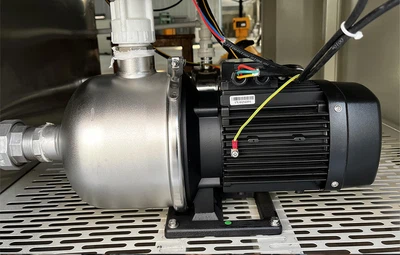
Water pump
For example, precise pressure regulation ensures that the water spray is forceful enough to simulate environmental conditions without damaging the product being tested. The typical operating pressure for IP54 tests ranges between 50 and 150 kPa, depending on the specifications of the equipment. Flow meters, on the other hand, ensure that the amount of water used in the test meets the standards set by IP54 requirements, which stipulate specific water exposure levels.
Exploring the Role of the Specimen Support and Rotation Mechanisms
In IPX4 test equipment, the support and rotation mechanisms play a key role in exposing all sides of the test specimen to water spray. The support mechanism ensures that the product is held securely during testing, preventing any movement that might affect the test's accuracy. Rotation mechanisms are often included to rotate the specimen during the test, typically at speeds ranging from 2 to 5 RPM, allowing for an even distribution of water across the entire surface.
This functionality is essential for products that will be exposed to water from different angles in real-world conditions, such as electronic devices, outdoor equipment, or automotive components. By rotating the specimen, manufacturers can assess whether their product can maintain its integrity and performance even when exposed to water from multiple directions.
Analyzing the Observation Window and the Control System Interface
The observation window and control system interface are important features of IPX4 test equipment, allowing operators to monitor the test in real-time and make necessary adjustments. The observation window typically features toughened glass with high optical clarity, enabling technicians to observe the test process without interference. This clear view of the specimen allows operators to assess the effectiveness of the water spray and detect any immediate signs of failure or water ingress.
Meanwhile, the control system interface offers an intuitive way to manage all test parameters, from water pressure and duration to nozzle calibration. Modern systems are equipped with digital interfaces, often featuring touch screens and advanced software that allows precise adjustments in real-time. A well-calibrated control system can ensure that all test parameters are within the specified ranges for IP54 testing.
The Importance of Water Management, Filtration, and Drainage Systems
Effective water management is vital for ensuring the smooth operation of IPX4 test equipment. Filtration systems are responsible for removing impurities from the water, such as debris or sediment, that could clog the nozzles or interfere with the test. Clean water is essential for maintaining the integrity of the test and ensuring that results are not compromised by contaminants. Filtration systems typically include multiple stages, such as coarse, fine, and ultra-fine filters, with pore sizes ranging from 10 microns to as small as 0.5 microns.

Drainage systems, on the other hand, are designed to handle the excess water generated during testing. Proper drainage ensures that water does not accumulate in the test chamber, which could lead to inaccurate results or damage to the equipment. A high-quality drainage system will usually have a flow capacity of 20–25 liters per minute, ensuring that water is efficiently removed from the test area. Additionally, a well-designed drainage system helps extend the lifespan of the equipment by preventing water damage or corrosion.

|
Spraying Hole Diameter |
φ0.4 mm |
|
Hole Spacing |
50 mm |
|
Swing Angle of Oscillating Tube |
0 ~ ±180° (Adjustable) |
|
Turntable Rotation Speed |
1r/min (Adjustable speed) |
|
Water Pressure Control |
Flow meter |
|
Water supply system |
Water tank, booster pump, Automatic water supply, Water purification system |