LED (Light Emitting Diode), a light-emitting diode, is a solid-state semiconductor device that can convert electrical energy into visible light. It can directly convert electricity into light. The heart of the LED is a semiconductor wafer. One end of the wafer is attached to a bracket, one end is the negative electrode, and the other end is connected to the positive electrode of the power supply, so that the entire chip is encapsulated by epoxy resin. A semiconductor wafer is composed of two parts, one is a P-type semiconductor, in which holes dominate, and the other is an N-type semiconductor, which is mainly electrons. But when these two semiconductors are connected, a P-N junction is formed between them. When a current is applied to the chip through a wire, the electrons are pushed to the P region, where the electrons and holes recombine, and then energy is emitted in the form of photons. This is the principle of LED light emission. The wavelength of light, which is the color of light, is determined by the material that forms the P-N junction.
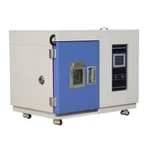
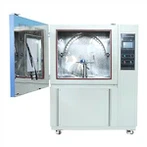
LIB IPX7/IPX8 Water Immersion Chamber provides precise and reliable waterproof testing for LED lamps, allowing manufacturers to validate product performance under simulated deep-water conditions while ensuring safe, repeatable, and standards-compliant testing.
It is because of this structure that LED lamps have good shock resistance and high lumen. They have replaced traditional incandescent fluorescent lamps in many places as a source of lighting. What are the common testing standards for LED?
1. EN 55015: 2013
Limits and methods of measurement of radio interference characteristics of electrical lighting and similar equipment.
◆ CISPR 15: 2013 applies to the following emitted (radiated and conducted) radio frequency interference:
The main function of all lighting equipment is to generate and / or distribute light for lighting purposes and to connect to low voltage power sources or for battery operation;
The lighting part of a multifunctional device, one of its main functions is lighting;
Independent auxiliary equipment dedicated to lighting equipment;
Ultraviolet and infrared radiation equipment;
Neon signboard;
Street / flood lighting for outdoor use;
And transportation lighting (installed on buses and trains).
◆Outside the scope of this standard are:
Lighting equipment operating in the ISM band;
Aircraft and airport lighting;
As well as equipment that explicitly sets electromagnetic compatibility requirements in the RF range in other CISPR standards. The frequency range covered is from 9 kHz to 400 GHz.

2. EN 61547: 2009
General lighting equipment-EMC immunity requirements
The natural environment of outdoor lighting greatly affects its service life and lighting effects. In addition to outdoor lighting complying with relevant standards, the sealing performance of the product itself will change with the use of time. One of the application areas of the IP series immersion protection test chamber produced by LIB is outdoor lighting, which is used to test the waterproofing of lighting Rating and dust rating. The test chamber meets CE certification and quality inspection certification.
LIB provide test machine and test solution,provide customized production and design to meet customers requirement. Please contact us if you need IP test.
|
IPx7 and IPx8 Water Immersion Equipment for Waterproof Testing |
||
|
Water Test Equipment |
1. Reliable IPX7 IPX8 Water Immersion Test Equipment 2. Efficient IPX7 Test Equipment 4. Precision IPX6K Test Chamber 5. Durable IPX5 IPX6 Water Jetting Test Chamber |
|

3. How is LED immersion testing conducted using LIB's IPX7/IPX8 water immersion chamber?
After confirming that the LED PCB has passed basic electrical, thermal, and mechanical testing, the next step is to validate the LED lamp's waterproof performance under IPX7 and IPX8 standards. The following are the typical steps:
 |
 |
|
|
|
|
Model |
R78-600 |
|
Internal Dimension (mm) |
Diameter 600 mm * Height 1500 mm |
|
Overall Dimension (mm) |
Diameter 800 mm * Height 1800 mm |
|
Pressure |
50m water depth pressure |
|
Open mode |
Pneumatic lid |
|
Material |
A3 steel plate, wall thickness 15 mm |
|
Controller |
Programmable color display touch screen controller |
|
Water Supply System |
Storage water tank, Automatic water supply |

Step 1: Sample Preparation and Installation
Mount the LED lamp or LED module securely onto the adjustable sample holder inside the immersion chamber. Ensure that all cables and connectors are properly sealed or positioned to simulate actual operating conditions.
Fill the chamber with water to the required level and set the target immersion depth (1 m for IPX7, up to 50 m equivalent for IPX8).
LIB Advantage:
- Adjustable Sample Holder: The holder can support up to 50 kg and is height-adjustable to match various LED sizes and shapes, ensuring stable positioning during immersion.
- Customizable Setup: LIB supports custom fixtures for unique LED designs, providing flexibility for testing different product forms.
 |
 |
|
Test Area |
Footstand |
 |
 |
|
Control Panel |
Safe Lock |
Step 2: Controlled Immersion Testing
Activate the chamber's pneumatic lid and begin the immersion cycle. The system precisely applies water pressure equivalent to the desired IPX7/IPX8 depth. Maintain the test for the required duration (e.g., 30 minutes for IPX7). Monitor the LED's operation during immersion, checking for leakage, short circuits, or other functional failures.
LIB Advantage:
- Precise Pressure Simulation: The chamber can simulate water pressures from 1 m to 50 m depth, ensuring highly accurate immersion testing for LEDs designed for both shallow and deep-water applications.
- Safety and Real-Time Monitoring: Built-in overpressure valves, external water-level meters, and leak detection systems ensure test safety and protect both the LED sample and the chamber.
- One-Touch Pneumatic Operation: Simplifies operation, reduces setup errors, and improves test repeatability.
Step 3: Post-Test Evaluation
After immersion, carefully remove the LED lamp from the chamber. Inspect for water ingress, corrosion, or any performance degradation. Verify that electrical and optical performance remains within specification.
LIB Advantage:
- Stable and Secure Chamber Design: Floor-fixed feet and reinforced A3 steel construction prevent vibration and movement, ensuring consistent test conditions.
- Comprehensive Support: LIB provides global after-sales service, including troubleshooting, replacement parts, and guidance for secure sample handling.
Using LIB's IPX7/IPX8 Water Immersion Chamber, manufacturers can confidently validate the waterproof performance of LED lamps under simulated deep-water conditions. The combination of precise pressure control, intelligent operation, robust safety features, and flexible sample handling ensures accurate, repeatable, and safe testing for both standard and customized LED products.
Any customization can be made. LIB offers a 3-year warranty and lifetime service. Any issues that cannot be resolved during the warranty period will be replaced free of charge. 24/7 English-speaking after-sales team. Fast shipping within 7-15 days.
Contact LIB Industry to develop a professional and efficient solution tailored to your specific standards and stringent requirements.