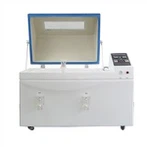
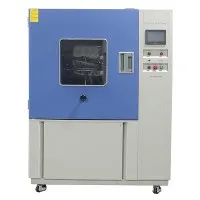
In product development and reliability testing, engineers often need to simulate extreme environmental conditions to evaluate how materials and components perform over time. Automotive ECUs must start at −40 °C in winter and continue operating near 85 °C under the hood, while lithium batteries and photovoltaic modules may face 85 °C / 85 % RH damp-heat conditions for up to 1000 hours. Without controlled environmental simulation, risks such as corrosion, seal failure, insulation degradation, and solder fatigue can remain hidden until costly field failures occur.
Recently, customer Keyhan shared feedback after installing the chamber in his laboratory: "We have been using the chamber since last week. It is overall good so far. I will keep you updated." During initial operation, the system demonstrated stable temperature ramping, consistent humidity regulation, and smooth overall performance. For testing laboratories, this early-stage stability is critical because long-duration tests-such as 85 °C / 85 % RH damp heat exposure or −40 °C to +85 °C thermal cycling-require reliable and uninterrupted environmental control to ensure trustworthy data.
To replicate these demanding conditions, laboratories rely on advanced environmental testing equipment, particularly Thermal Cycle Test Chambers and Thermal Shock Chambers. Although both simulate temperature changes, they differ significantly in their testing methods, transition speeds, and application purposes. Understanding these differences allows engineers and QA teams to select the most suitable chamber for accurate reliability testing and product qualification.
Thermal Cycle Test Chamber vs Thermal Shock Chamber
The key difference between a Thermal Cycle Test Chamber and a Thermal Shock Chamber lies in how temperature changes are applied to the test samples. Thermal cycling gradually changes temperature in a single chamber, while thermal shock rapidly exposes samples to extreme temperatures between separate zones.
Another important distinction is the rate of temperature change. Thermal cycling focuses on controlled ramp rates to simulate long-term environmental exposure, while thermal shock replicates sudden temperature transitions that may occur in real-world conditions.
|
|
|
|
|---|---|---|
| Feature | Thermal Cycle Test Chamber | Thermal Shock Chamber |
| Test Method | Gradual temperature ramp within one chamber | Instant transfer between hot and cold zones |
| Temperature Transition | Controlled ramp (1–5 °C/min typical) | Rapid change within seconds |
| Temperature Range | Typically –70 °C to +200°C | Typically –70 °C to +200 °C |
| Transfer Method | No physical movement | Basket moves between zones/Pneumatic dampers control the transfer between zones. |
| Transition Time | Minutes | ≤3 seconds |
| Main Purpose | Simulate long-term environmental aging | Simulate sudden thermal stress |
| Typical Standards | IEC 60068-2-14, JESD22-A104 | MIL-STD-883, JESD22-A106 |


In simple terms, thermal cycling evaluates durability over repeated temperature exposure, while thermal shock evaluates resistance to sudden temperature extremes.
LIB Thermal Cycle Test Chamber Testing Method
A Thermal Cycle Test Chamber typically follows standardized testing procedures to ensure consistent and repeatable results. One widely used international standard is IEC 60068-2-14 (Temperature Change Test), which evaluates how electronic components withstand repeated heating and cooling cycles.
The test process involves gradually increasing and decreasing temperature according to a defined profile while holding at specific setpoints.
Example: Cycle 1 Test Procedure (Based on IEC 60068-2-14)
A common thermal cycling test profile follows these steps:
Step 1: Low Temperature Exposure
The test sample is stabilized at –40 °C for 30 minutes. This stage ensures the entire product reaches thermal equilibrium before the temperature transition begins.
Step 2: Controlled Temperature Ramp
The chamber gradually increases temperature at approximately 3 °C per minute until reaching the high temperature setpoint.
Step 3: High Temperature Exposure
The temperature is held at +85 °C for 30 minutes to simulate hot environmental conditions.
Step 4: Cooling Stage
The chamber reduces temperature at approximately 1–2 °C per minute, returning to –40 °C to complete one full cycle.
A complete reliability test may include 100 to 1000 cycles, depending on the product qualification requirements.
This testing method is widely used in industries such as:
1. Automotive electronics validation
2. Printed circuit board reliability testing
3. Semiconductor packaging evaluation
4. Aerospace component durability testing
These tests are often conducted according to standards including:
1. IEC 60068-2-14
2. JESD22-A104
3. MIL-STD-810
4. ASTM D6944

Thermal Cycle Test Chambers for aging test
Advantages of the LIB Thermal Cycle Test Chamber
The LIB Thermal Cycle Test Chamber is engineered to deliver precise, repeatable environmental testing for modern laboratories.
Precise temperature control ensures reliable data.
The chamber uses PT100 Class A sensors and PID control to maintain temperature fluctuation within ±0.5 °C, ensuring accurate and repeatable results throughout long testing cycles.
|
|
Name | Temperature Humidity Chamber | ||||
|
Model |
TH-100 |
|||||
|
Internal dimension (mm) |
400*500*500 |
|||||
|
Overall dimension (mm) |
860*1050*1620 |
|||||
|
Capacity |
100L |
|||||
|
Temperature range |
-20℃ ~+150 ℃ |
|||||
|
Low type |
A: -40℃ B:-70℃ C -86℃ |
|||||
|
Humidity Range |
20%-98%RH |
|||||
|
Temperature deviation |
± 2.0 ℃ |
|||||
|
Heating rate |
3 ℃ / min |
|||||
|
Cooling rate |
1 ℃ / min |
|||||
|
Controller |
Programmable color LCD touch screen controller, Multi-language interface, Ethernet , USB |
|||||
|
Refrigerant |
R404A, R23 |
|||||
|
Exterior material |
Steel Plate with protective coating |
|||||
|
Interior material |
SUS304 stainless steel |
|||||
|
Standard configuration |
1 Cable hole (Φ 50) with plug; 2 shelves |
|||||
|
Timing Function |
0.1~999.9 (S,M,H) settable |
|||||

|
|
|
|
|
|
| Robust Workroom | Cable Hole | Temperature and Humidity Sensor | PID controller |


1. Wide testing range supports multiple industries.
LIB chambers operate from –70 °C to +180 °C, covering most reliability testing requirements for electronics, automotive components, and aerospace materials.
2. Efficient ramp rates reduce testing time.
With heating speeds up to 3 °C/min and cooling rates around 1–2 °C/min, engineers can complete complex thermal cycle tests faster while maintaining stable environmental conditions.
3. Uniform airflow guarantees consistent exposure.
A multi-directional air circulation system distributes air evenly inside the chamber, maintaining temperature uniformity within ±1.5 °C across the entire workspace.
4. Durable construction ensures long service life.
The interior is built with SUS304 stainless steel, providing corrosion resistance and easy cleaning, while the A3 steel exterior with protective coating enhances durability in industrial environments.
5. Smart programmable control simplifies operation.
The 7-inch color touchscreen controller supports up to 120 programs with 100 steps each, allowing engineers to build complex temperature cycles and store them for repeated use.
FAQs on the Thermal Cycle Test Chamber
1. What is the purpose of a thermal cycle test?
A thermal cycle test evaluates how materials and components respond to repeated temperature changes, identifying potential failures such as cracking, delamination, or solder fatigue.
2. What industries use thermal cycling testing?
Thermal cycle testing is commonly used in electronics, automotive manufacturing, aerospace engineering, semiconductor production, and medical device validation.
3. What standards require thermal cycle testing?
Common testing standards include IEC 60068-2-14, JESD22-A104, MIL-STD-810, and ASTM environmental testing standards.
4. How many cycles are typically required?
Most reliability tests require 100 to 1000 cycles, depending on the product specification and industry requirements.
5. What is the difference between thermal cycling and thermal shock testing?
Thermal cycling changes temperature gradually within one chamber, while thermal shock exposes samples to sudden temperature changes by transferring them rapidly between hot and cold zones.
Contact LIB Industry today to explore customized thermal cycling and thermal shock testing solutions designed to improve product reliability, accelerate development, and meet international environmental testing standards.