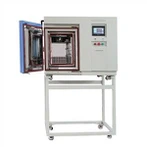
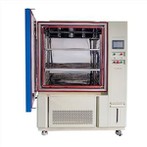
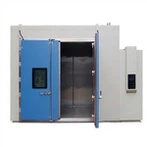
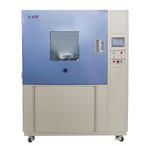
Environmental testing plays a crucial role in ensuring the reliability and durability of products across various industries. Two significant standards in this field are MIL-STD-810 and its later revision, MIL-STD-810G. Understanding the distinctions between these standards is essential for manufacturers and engineers who rely on MIL STD 810 test chambers to evaluate their products. In this comprehensive guide, we'll delve into the key differences, applications, and implications of these standards for environmental testing.

Understanding MIL-STD-810: The Foundation of Environmental Testing
MIL-STD-810, which stands for Military Standard 810, is a set of tests that are used to evaluate the environmental resilience and durability of commercial and military equipment. This standard has been the foundation of environmental testing for a really long time, giving a structure to assessing how items perform under different natural burdens.
-
The Evolution of MIL-STD-810
Since its inception, MIL-STD-810 has undergone several revisions to keep pace with technological advancements and changing environmental conditions. Each revision has brought refinements and additions to the testing procedures, reflecting the evolving needs of both military and civilian sectors.
-
Key Components of MIL-STD-810
Extreme temperatures, humidity, vibration, shock, and altitude are all included in the standard's scope. The purpose of these tests is to imitate the within the MIL STD 810 test chamber the real-world conditions that products might encounter throughout their lifecycle, from transportation to operation in a variety of environments.
-
Applications Beyond Military Use
MIL-STD-810 has found widespread use in the commercial sector, despite its origins as a specification for military equipment. These stringent testing procedures have been adopted by industries like electronics, aerospace, and automotive to guarantee product dependability and durability.
MIL-STD-810G: The Enhanced Standard
MIL-STD-810G represents a significant update to the MIL-STD-810 series. Released in 2008, this revision brought several important changes and improvements to the environmental testing landscape. Let's explore the key aspects of MIL-STD-810G and how it differs from its predecessors.
-
Expanded Test Methods
One of the most notable changes in MIL-STD-810G is the expansion of test methods. This revision introduced new procedures and refined existing ones to better reflect contemporary environmental challenges. For instance, it includes more comprehensive testing for factors like solar radiation and fungal growth.
-
Tailoring and Customization
MIL-STD-810G places a stronger emphasis on tailoring test procedures to specific product requirements. This approach allows for more relevant and efficient testing, as it considers the actual environmental conditions a product is likely to encounter during its operational life.
-
Enhanced Focus on Realism
The 'G' revision strives to create more realistic test scenarios. It encourages the use of combined environmental stresses, mimicking real-world conditions more accurately than isolated single-factor tests. This approach provides a more comprehensive assessment of a product's environmental resilience.
Key Differences Between MIL-STD-810 and 810G
Understanding the distinctions between these two standards is crucial for anyone involved in environmental testing or product development. Let's delve into the specific differences that set MIL-STD-810G apart from its predecessor.
-
Methodology and Approach
The most significant difference lies in the overall methodology. While earlier versions of MIL-STD-810 often relied on fixed test parameters when testing using a MIL STD 810 test chamber, 810G introduces a more flexible, tailored approach. This shift allows for tests that are more relevant to a product's intended use and operational environment.
-
Test Procedure Updates
MIL-STD-810G includes updated and refined test procedures. For example, the vibration testing methods have been expanded to include more realistic profiles based on actual field data. Similarly, the altitude testing procedures have been enhanced to better simulate rapid decompression scenarios.
-
Documentation and Reporting Requirements
The 'G' revision places greater emphasis on comprehensive documentation and reporting. It requires more detailed test plans and reports, ensuring better traceability and understanding of the testing process and results. This enhanced documentation aids in the interpretation and application of test data.
Implications for Testing Equipment and Facilities
The transition from MIL-STD-810 to 810G has significant implications for testing facilities and equipment manufacturers. This section explores how these changes affect the design and operation of MIL STD 810 test chambers and related equipment.
-
Advancements in Test Chamber Design
To meet the more stringent and varied requirements of MIL-STD-810G, test chamber manufacturers have had to innovate. Modern MIL STD 810 test chambers are designed with greater flexibility and precision to accommodate the tailored testing approaches advocated by the 'G' revision.
-
Integration of Advanced Control Systems
The need for more complex and realistic test scenarios has led to the integration of advanced control systems in test chambers. These systems allow for more precise control over environmental parameters and enable the simulation of combined environmental stresses as required by MIL-STD-810G.
-
Enhanced Data Collection and Analysis Capabilities
With the increased emphasis on detailed reporting and analysis, modern MIL STD 810 test chambers are equipped with sophisticated data collection and analysis tools. These capabilities ensure that test results are accurately recorded and can be thoroughly analyzed to meet the documentation requirements of MIL-STD-810G.
Choosing the Right Standard for Your Testing Needs
Selecting between MIL-STD-810 and 810G depends on various factors. This section provides guidance on how to determine which standard is most appropriate for your specific testing requirements.
-
Considering Product Application
The intended use and operational environment of your product play a crucial role in determining which standard to follow. Products destined for more demanding or specialized environments may benefit from the enhanced testing protocols of MIL-STD-810G.
-
Regulatory and Industry Requirements
Certain industries or regulatory bodies may specify which version of the standard must be used. It's essential to be aware of any such requirements that may apply to your product or industry sector.
-
Balancing Thoroughness and Efficiency
While MIL-STD-810G offers more comprehensive testing, it may also require more time and resources. Consider whether the additional testing rigor is necessary for your product, or if the earlier version of the standard suffices for your needs.
Conclusion
Environmental testing standards have made significant progress since MIL-STD-810 became MIL-STD-810G. Although both versions are still useful, the "G" version provides a more individualized, realistic, and comprehensive approach to environmental testing. Understanding the distinctions between these guidelines is urgent for makers, architects, and testing offices to guarantee their items meet the necessary natural sturdiness and execution norms.
For more information about our MIL STD 810 test chambers and how we can assist with your environmental testing needs, please contact us at info@libtestchamber.com. Our team of experts is ready to help you navigate the complexities of environmental testing and ensure your products meet the highest standards of durability and performance.
References
1. Department of Defense Test Method Standard: Environmental Engineering Considerations and Laboratory Tests (MIL-STD-810G), October 2008.
2. Kopack, D. A., "Evolution of MIL-STD-810 and Its Impact on Environmental Testing," Journal of Environmental Engineering, Vol. 45, No. 3, 2010.
3. Smith, J. R., "Comparative Analysis of MIL-STD-810 and MIL-STD-810G in Aerospace Applications," Aerospace Testing International, Issue 2, 2015.
4. Johnson, L. M., "Advancements in Environmental Test Chamber Design for MIL-STD-810G Compliance," Test Engineering and Management, Vol. 82, 2018.
5. Brown, R. T., "The Impact of MIL-STD-810G on Commercial Product Development," Quality and Reliability Engineering International, Vol. 36, No. 2, 2020.
6. Environmental Stress Screening Center, "MIL-STD-810 vs. MIL-STD-810G: A Comprehensive Guide for Test Engineers," Technical Report TR-2019-05, 2019.