
Acidic atmospheric environment in nature will be precipitation (rain and snow) and sedimentation (aerosol or gaseous acid compounds in the form of) two ways to settle to the surface of the product. These substances once encountered water will form a weakly acidic dissolved medium, and slowly be oxidized, the formation of sulfuric acid, nitric acid, and other strong acidic substances, resulting in a strong corrosion effect on the product. LIB mixed flowing gas chamber can provide four to five common harmful gases, such as sulfur dioxide, hydrogen sulfide and nitrogen dioxide, to achieve a single gas corrosion test or multi-gas corrosion test.
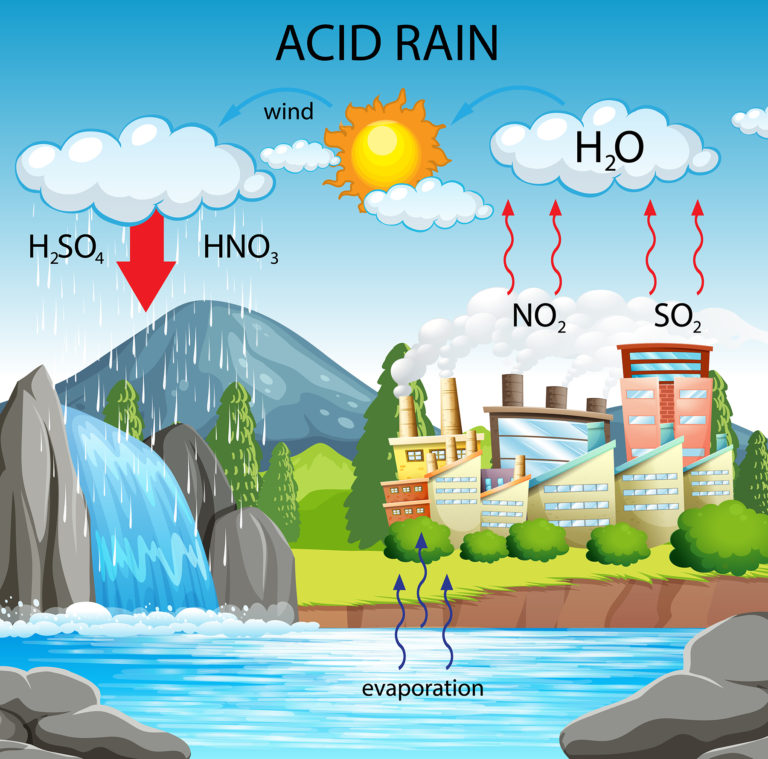
The effect of acidic atmospheric environment on products
① Chemical erosion of surface coating and non-metallic materials
Acidic substances will chemically react with fillers or pigments in the coating layer, resulting in changes in the chemical composition of the coating layer and decrease the physical properties of the coating layer. In addition, the penetration and chemical swelling of the acid solution to the coating layer will also reduce the adhesion of the coating layer, accelerate the degradation and aging of the coating layer, and eventually lead to damage and failure of the coating layer. For example, the Taj Mahal gradually changed from milky white to yellow due to acid rain erosion, and some parts became rusty.
② Metal corrosion
It is mainly due to the dissolution of metals by strong acids such as sulfuric acid and nitric acid, and the electrochemical corrosion caused by acid rain after the formation of electrolyte liquid film on the surface, resulting in rapid corrosion of metals. For example, the famous Statue of Liberty in New York Harbor in the United States, the thin copper sheet outside the reinforced concrete became loose due to acid rain and fell off at a touch.
(3) Pitting of ceramics and optical instruments
Mainly due to the reaction of acid rain with potassium, sodium, calcium and other elements in ceramics and glass, such as the reaction of acid rain with calcium to form gypsum, stone after dissolution on the surface of the formation of countless small pores, with the expansion of corrosion, and eventually damage the ceramic and glass from the inside. For example, the ancient colored glass of the medieval church in Europe gradually lost its mysterious luster due to the attack of acid rain, and the color of the colored glass gradually turned brown, and some even completely faded.
Typical test procedure
Acid atmosphere testing applies to products that may be stored or used in areas with acidic atmospheres, such as industrial areas or near exhaust gases from combustion products. Its test objects mainly include the following two types.
① Military products used near industrial zones. For example, military products used near heavy industrial zones such as the northeast and southwest.
② Products installed or used near aircraft or vehicle engines. For example, products on aircraft carriers, products near the tail nozzle of aircraft engines, products near the exhaust pipe of armored vehicles.
This test cannot be used to replace the hydrogen sulfide corrosion test and salt spray test.
(1) hydrogen sulfide corrosion test
Due to the high chemical reactivity of hydrogen sulfide, it is easy to oxidize to sulfur dioxide in the air. Although both are weakly acidic after being dissolved in water, the corrosion mechanism of hydrogen sulfide and sulfur dioxide on the product is different, so this test cannot be used to replace the hydrogen sulfide corrosion test.
(2) Salt spray test
The solution selected by the two test methods is different, the salt spray test is a neutral sodium chloride solution, and the acid atmospheric test is a mixed aqueous solution of sulfuric acid and nitric acid. Different test solutions have different corrosion mechanisms on the product, and the environmental effects generated are not comparable.
LIB mixed flowing gas chamber


|
Temperature Range |
+15℃ ~ +80℃ (adjustable) |
|
Temperature Fluctuation |
± 0.5 ℃ |
|
Temperature Deviation |
± 2.0 ℃ |
|
Humidity Range |
30% ~ 98% RH (adjustable) |
|
Humidity Deviation |
±2% RH |
|
Temp-Humid point |
+(35±2) ℃, (75±3) %RH +(40±2) ℃, (80±3) %RH |
|
Air Change Rate |
3~5 times / hour |
|
So2 concentration |
1 ~ 35 ppm with adjustable |
|
H2S concentration |
10 ~ 30 ppm with adjustable |
|
No2 concentration |
10 ~ 100 ppm with adjustable |
|
NH3 concentration |
1000 ~2000 ppm with adjustable |
If you are interested in this mixed flowing gas chamber or other noxious gas test chambers, feel free to contact us for the latest quote!


