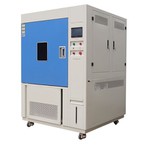
Filiform corrosion starts from tiny scratches or defects in a coating. When exposed to moisture and chloride (like salt), it spreads under the surface in thin, thread-like lines. LIB's environmental chambers can precisely control salt spray, heat, and humidity to recreate these real-world conditions. This lets us simulate how corrosion begins and spreads-just like it happens outdoors, whether it's road salt on a car, sea air around window frames, or moisture buildup on aircraft. With this accurate and accelerated testing, you can spot weak points in coatings early in development and confirm product durability for automotive, architectural, and aerospace use.
When evaluating organic coatings on aluminum alloys-for automotive chassis, architectural profiles, or aircraft components-reproducing real‑world filiform ("hair‑like") corrosion under laboratory conditions is critical. LIB has engineered two complementary environmental testing systems that, used in tandem, streamline the standard SAE J2635 / ISO 9227 Filiform Corrosion Test into a seamless, high‑efficiency workflow:
LIB Salt Mist Corrosion Test Chamber Temperature and Humidity Test Chamber


I. Filiform Corrosion Test Workflow
1. Preparing for Precision: Sample & Scratch
Begin by mounting your coated aluminum sample on a holder inside the salt‑mist chamber. Use a standardized scribing tool to score a straight line through the coating, exposing bare metal. Consistent scratch depth and orientation (45° relative to the chamber airflow) set the stage for reproducible corrosion initiation.
2. Stage One – Accelerated Salt‑Mist Exposure (CASS)
In LIB's Salt Mist Corrosion Test Chamber, the first 6 hours simulate copper‑accelerated acetic acid salt spray (CASS):
Solution: 5 % NaCl + 0.26 g/L CuCl₂ at pH 3.1–3.3
Temperature: 35 ± 2 °C (PT100 Class A sensor accuracy ± 0.5 °C)
Spray Pressure: 83 kPa
Deposition Rate: 1–2 mL/80 cm²/h
The robust spray delivery system-including corrosion‑resistant quartz nozzles and precise pH control-ensures uniform fog density. Automatic water‑level monitoring and dry‑burn protection maintain uninterrupted operation, so you achieve full compliance with ISO 9227 and reliable starting co
nditions for filiform growth.

3. Transition & Transfer
Immediately after the 6 h CASS cycle, remove the sample (transfer time < 15 minutes) and gently dry any surface droplets. Rapid transfer preserves the initial corrosion morphology for the next stage.
4. Stage Two – High‑Temperature, High‑Humidity Exposure
Place the scribed sample into LIB's Temperature & Humidity Environmental Chamber to drive filiform propagation under sustained stress:
Temperature: 65 ± 1 °C
Humidity: 85 ± 3 %RH
Airflow: 6–24 m/min via integrated centrifugal fan
LIB's chamber offers an industry‑leading range (–70 °C to +150 °C) with rapid heating (3 °C/min) and cooling (1 °C/min) rates, but more importantly, it maintains ± 0.5 °C fluctuation and ± 2.5 %RH deviation over hundreds of hours. The SUS304 stainless‑steel interior and A3‑steel exterior guard against corrosive damage and simplify cleaning between long‑term runs.

5. Mid‑Test Inspection
Every 168 hours, briefly halt the cycle (< 15 minutes), extract the sample, and photograph the scratch region. Record filiform tendril length and density. Thanks to uniform airflow and sensor precision (± 0.001 °C resolution), LIB chambers guarantee that your mid‑test data reflect true material behavior, not environmental drift.
6. Final Evaluation & Reporting
After 672 hours of constant high‑temperature, high‑humidity exposure, measure the maximum filiform length from the scratch origin. Compare against acceptance criteria to quantify coating adhesion and durability. With LIB's integrated data‑logging and optional image‑analysis tools, you can generate reports that satisfy R&D teams and regulatory bodies alike.
II. Why LIB's Chambers Workflow Delivers Superior Results
Unmatched Control & Uniformity
LIB's chambers use PT100 Class A temperature sensors with ±0.001 °C resolution, along with precision RH controllers that hold humidity within ±2.5 % RH. In the salt mist chamber, corrosion-resistant quartz nozzles deliver a fine, uniform fog at a deposition rate of 1–2 mL/80 cm²/h, while pH regulation ensures consistent spray chemistry. This level of control eliminates hot spots, uneven fog density, and environmental drift-ensuring your corrosion test data are accurate and reproducible.
Speed Without Compromise
LIB's temperature and humidity chamber features industry-leading ramp rates: 3 °C/min heating and 1 °C/min cooling, allowing rapid transitions between test cycles. In the salt spray system, automated water-level detection and dry-burn protection minimize downtime. Together, these features let your lab run more tests in less time, optimize coating formulations faster, and shorten development cycles without sacrificing test integrity.
Long-Term Reliability
Constructed with SUS304 stainless-steel interiors and A3-steel exteriors, LIB's temperature and humidity chamber is built to resist corrosion over long test durations. Integrated centrifugal fans provide steady airflow between 6–24 m/min, supporting consistent filiform propagation over 672-hour test sequences. Self-cleaning water filtration systems reduce maintenance needs, enabling extended, unattended operation for both short- and long-term studies.
Comprehensive Safety & Service
Each chamber includes safety measures such as leakage current protection and phase-sequence monitoring. The modular design offers easy-access service ports and automatic system diagnostics. LIB backs every unit with a 3-year warranty, lifelong technical support, and access to globally distributed spare parts-giving you confidence in both your equipment and your data.
Elevate Your Corrosion‑Testing Program
By combining LIB's Salt Mist Corrosion Test Chamber for accelerated CASS exposure with its Temperature & Humidity Test Chamber for sustained filiform propagation, you gain a turnkey solution tailored to SAE J2635 and ISO 9227 standards. This dual‑chamber approach optimizes accuracy, reduces cycle time, and delivers data you can trust-enabling your coatings to perform flawlessly in the field.
Contact LIB today to design a customized Filiform Corrosion Test setup that meets your toughest R&D, quality‑control, and compliance requirements.