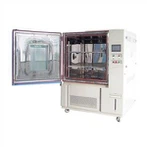
Corrosion testing is a critical process in the manufacturing of products exposed to harsh environmental conditions. Accelerated salt spray testing simulates the corrosive effects of salt-laden environments in a much shorter time frame, allowing manufacturers to evaluate the durability and performance of coatings, metals, and components.
The LIB ASTM B117 Salt Spray Test Chamber is designed to precisely replicate the harsh conditions that lead to corrosion, ensuring that materials are tested for long-term reliability under accelerated environmental stress. This chamber is a vital tool for industries such as automotive, aerospace, electronics, and coatings, offering precise, repeatable results that meet international standards. In this article, we will explore the chamber's application areas, how it works, and how to perform accurate corrosion testing with the LIB ASTMB117 Salt Spray Test Chamber.
Application Areas and Relevant Standards of ASTM B117 Salt Spray Test Chamber for Corrosion Testing
Salt spray testing, often used as an accelerated corrosion test, is pivotal for evaluating how materials, coatings, and metal components withstand exposure to corrosive environments. The LIB ASTM B117 Salt Spray Test Chamber is designed to simulate real-world conditions by exposing materials to a continuous mist of saltwater, which accelerates the natural corrosion process.
This method is essential for testing products in fields such as:
- Automotive Industry: Paint coatings, trims, engines, and sealing strips.
- Aerospace: Aircraft parts, precision aerospace components.
- Electronics: PCBs, mobile phones, connectors.
- Marine: Ship components and offshore equipment.
- Coatings & Surface Treatments: Galvanizing, anodizing, powder coatings, etc.

The chamber complies with global standards such as ASTM B117, ISO 9227 (Neutral Salt Spray - NSS), ISO 11997 (Acetic Acid Salt Spray - AASS), and ISO 9227 (Copper Accelerated Salt Spray - CASS), ensuring that testing meets internationally recognized corrosion resistance benchmarks. These standards set parameters for the salt solution, temperature, fog deposition rate, and exposure time, which are critical for obtaining accurate and reproducible test results.

Methods for Accurate Corrosion Testing Using LIB ASTMB117 Salt Spray Test Chamber
The LIB ASTM B117 Salt Spray Test Chamber ensures precise control over every aspect of the testing environment, making it possible to achieve consistent and reliable corrosion testing results. Here's how it works:
|
|
 |
||||

Salt Spray Control: The chamber utilizes corrosion-resistant quartz nozzles and a precise spray tower to generate uniform salt spray at a pressure of 83 kPa. This ensures that the fog deposition rate remains consistent at 1-2 mL/80 cm² per hour, which is in line with the requirements of ASTM B117.
|
salt spray tower |
cylinder |
spray collector |


Temperature Control: The chamber maintains a temperature of 35 ± 1°C throughout the testing, as prescribed by ASTM B117, with a temperature fluctuation of only ±0.5°C. This allows for the uniform progression of corrosion across all samples, avoiding any discrepancies due to temperature instability.
Real-Time Monitoring: The built-in PT-100 Class A sensors provide 0.001°C accuracy for precise temperature measurement, while the chamber's PID controller adjusts settings in real-time to maintain optimal testing conditions.
This advanced control system helps ensure that every test is executed under consistent and repeatable conditions, providing reliable data for evaluating the corrosion resistance of different materials and coatings.
》》》For more technical information and details about our ASTMB117 Salt Spray Test Chamber, please feel free to email us at info@libtestchamber.com.
Procedure for Metal Testing with LIB ASTMB117 Salt Spray Test Chamber
Performing metal corrosion testing involves a series of steps to ensure accurate results. The LIB ASTM B117 Salt Spray Test Chamber simplifies this process by offering features that ensure consistency and repeatability at every stage.
Step 1: Prepare the Sample
Before testing, clean the metal surface to remove oil, dust, and contaminants. This step is critical to ensure that only the corrosion resistance of the material is being tested.
LIB's advantage: The chamber automatically logs data, such as sample condition and coating thickness, for easy post-test analysis and comparison. There are three types of salt spray chamber can offer:
|
Classify |
Type 1 |
Type 2 |
Type 3 |
|
Name |
Salt Spray Test Chamber |
Salt Cyclic Corrosion Test Chamber |
Salt and So2 Corrosion Test Chamber |
|
|
|
|
|
|
Model |
S-150, S-250, S-750 S-010, S-016, S-020, |
SC-010, SC-016, SC-020 |
SSC-010, SSC-016, SSC-020 |
|
Test Standard |
ASTM B117; ISO9227 (NSS, NASS, CASS ); |
ASTM B117; ISO9227; IEC60068-2-52; |
ASTM B117; ISO9227; IEC60068-2-52; ASTM G85 (A4); |
|
Function |
Salt fog spray; Temp (Ambient ~+60℃) |
Salt fog Spray; Temp (+10℃ ~+90℃); Humid (30% ~98%RH); |
Salt fog Spray; Temp (+10℃ ~+90℃); Humid (30% ~98%RH); So2 gas; |


Step 2: Prepare the Salt Solution
The next step is preparing the 5% sodium chloride solution (NaCl) dissolved in deionized water, adjusted to a pH of 6.5–7.2, as per ASTM B117. This solution mimics the natural saltwater environment that leads to corrosion.
LIB's advantage: The chamber comes with corrosion-resistant tanks and the automatic stirring function helps ensure that the solution is evenly mixed, preventing any discrepancies in test conditions.
Step 3: Set Chamber Parameters
Once the solution is prepared, set the chamber parameters, including temperature (35°C), spray pressure (83 kPa), and deposition rate (1–2 mL/80 cm² per hour).
LIB's advantage: The precision of LIB's PID control system ensures that all settings are maintained consistently, meeting the standards required for accurate testing.
Step 4: Start the Exposure Test
Place the samples inside the chamber at a 15-30° angle to prevent cross-contamination and dripping. The salt spray will be continuously applied to the samples for the predetermined time.
LIB's advantage: The chamber ensures uniform fog distribution without the need for sample rotation, and multiple samples can be tested simultaneously without affecting the results.
|
|
|
| Corrosion-Resisitant Workroom | Modular grooves are used for holding samples |


Step 5: Inspect and Record Results
After the exposure test, rinse the samples with deionized water, dry them, and compare the corrosion development against established rating charts (such as ISO 9227).
LIB's advantage: USB and Ethernet data export options allow for easy logging and reporting of test parameters and results, ensuring traceability for compliance and quality assurance.
》》》To receive customized solutions and pricing for the ASTMB117 Salt Spray Test Chamber, please contact us at info@libtestchamber.com.
Maintenance Guide for LIB ASTMB117 Salt Spray Test Chamber
To ensure the continued reliability and longevity of the LIB ASTMB117 salt spray test chamber, regular maintenance is essential. Key maintenance tasks include:
Regular Cleaning of Nozzles and the Workroom: Over time, salt crystals can accumulate on the spray nozzles and within the workroom, potentially affecting the spray pattern and test results. Cleaning these components ensures consistent performance and accurate results.
Replacing Saturated Barrel Water: The chamber's saturated barrel must be replenished periodically to maintain stable humidity and fog generation. This step prevents the build-up of impurities that could affect the test environment.
Cleaning Electrical Components: Dust and salt can accumulate on electrical components, potentially causing safety concerns or operational issues. Regular cleaning helps to ensure the safe and efficient operation of the equipment.
With these maintenance practices, you can ensure that your LIB ASTMB117 salt spray test chamber continues to perform accurately and reliably, providing you with the high-quality results necessary for evaluating the corrosion resistance of your products.
Contact LIB Industry today to learn more about how our ASTMB117 salt spray test chamber can support your corrosion testing needs and help ensure the longevity of your products.