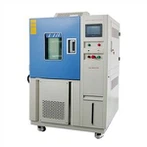
Ozone (O₃) is a strong oxidizing agent that can cause severe respiratory issues, eye irritation, and other health problems when inhaled, even at low concentrations. LIB's ozone testing equipment treats gases harmlessly to ensure that the environment and operators are not harmed.
1. Activated carbon filters help trap residual ozone to prevent leakage into the laboratory.
Activated carbon effectively removes residual ozone gas through catalytic decomposition. The process works as follows:
Adsorption – Ozone molecules (O₃) come into contact with the activated carbon's porous surface.
Catalytic Decomposition – The activated carbon surface, particularly if impregnated with metal oxides or other catalysts, facilitates the breakdown of ozone into oxygen (O₂) without being consumed in the process.
Conversion to Oxygen – The reaction typically follows: 2O3→3O2,
This converts harmful ozone into harmless oxygen.

2. Hermetically sealed to prevent ozone leaks.
Corrosion-resistant seal, the sealing performance will not decrease after long-term testing.

3. Ozone sensors and alarms
Ozone gas concentration detection transmitter
High accuracy, easy to exchange

4. Security lock
The safety lock will lock during the execution of the test and cannot be unlocked unless you click on the controller. This reduces the possibility of mis operation.

LIB ozone testing equipment
|
|
|


|
Temperature Range |
0℃ ~ +100 ℃ |
|
Temperature Fluctuation |
± 0.5 ℃ |
|
Temperature Deviation |
± 2.0 ℃ |
|
Humidity Range |
30% ~ 98% RH |
|
Humidity Deviation |
± 2.5% RH |
|
Cooling Rate |
Ambient ~ 0℃ within 20 min |
|
Ozone Concentration |
1~1000PPHM |
|
Sample Holder Rotate Speed |
0~10 r/min |
|
Airflow Rate |
0 ~ 60L/min |
|
Clamps Tensile Stretch |
5%~35% |