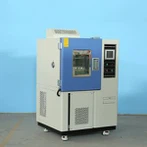
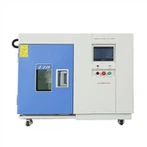
Thermal shock chambers are essential tools in many industries, allowing companies to test the durability and reliability of their products under extreme temperature conditions. These chambers simulate rapid temperature changes to evaluate how materials and products respond to thermal stress. In this blog, we'll delve into how thermal shock chambers work, exploring their mechanisms, applications, and benefits.
What is a Thermal Shock Chamber?
A thermal shock chamber is a specialized piece of testing equipment designed to expose materials and products to rapid temperature fluctuations. This process helps determine the resilience of products when subjected to sudden and extreme changes in temperature, ensuring they can withstand real-world conditions.
Components of a Thermal Shock Chamber
- Two-Zone System: Thermal shock chambers are equipped with a dual-zone configuration: a hot zone and a cold zone. This setup allows for rapid and controlled temperature transitions, essential for simulating real-world conditions effectively.
- Control System: The control system of a thermal shock chamber is critical for maintaining precise and consistent temperatures within each zone. Advanced chambers utilize programmable controllers that automate the testing process, ensuring reliability and repeatability in test results.
Cooling and Heating Mechanisms: To achieve the desired temperature extremes, thermal shock chambers employ robust cooling and heating mechanisms. Cooling is typically achieved through liquid nitrogen or mechanical refrigeration systems, while heating utilizes electric heaters to raise temperatures swiftly and accurately.
Transfer Mechanism: A crucial component, the transfer mechanism swiftly moves the test specimen between the hot and cold zones. This minimizes the time the specimen spends at ambient temperature, maximizing the thermal shock effect during testing cycles.
How Does it Work?
The operation of a thermal shock chamber follows a systematic process:
- Placement of Specimen: Initially, the test specimen is carefully positioned within either the hot or cold zone of the chamber. This zone selection depends on the test parameters and the environmental conditions the product is expected to endure.
- Temperature Regulation: The heart of the thermal shock chamber lies in its ability to precisely control temperature. The chamber's sophisticated control system sets and maintains the temperature within the designated zone according to predefined testing parameters. This regulation ensures that the specimen is exposed to the exact thermal environment required for the test scenario.
- Temperature Transition: Following the dwell time, during which the specimen stabilizes at the set temperature, the transfer mechanism initiates swift movement. This mechanism swiftly transfers the specimen from its current zone to the opposite extreme zone. This rapid transition exposes the specimen to a sudden and drastic change in temperature, mimicking the abrupt thermal shifts that products may experience in real-world conditions.
- Testing Cycles: The entire process is conducted in repetitive cycles, adhering to specific testing protocols and durations. Each cycle comprises a sequence of temperature transitions designed to stress the specimen systematically. This cyclic testing method enables engineers to evaluate how well products withstand thermal shocks and strains over time, providing critical insights into their durability and performance reliability.
What Are the Applications of Thermal Shock Chambers?
Thermal shock chambers are utilized across various industries, each with unique requirements and standards. Here are some of the primary applications:
Electronics and Semiconductor Testing
In the electronics and semiconductor industry, thermal shock chambers are crucial for testing the reliability and durability of components such as printed circuit boards (PCBs), integrated circuits (ICs), and connectors. These components often operate in environments with significant temperature variations, and thermal shock testing ensures they can withstand these conditions without failure.
Automotive Industry
Automotive manufacturers use thermal shock chambers to test the durability of various parts, including engines, transmission systems, and electronic components. Vehicles are subjected to a wide range of temperatures, from freezing winters to scorching summers. Thermal shock testing ensures that automotive components can endure these extremes without compromising performance or safety.
Aerospace and Defense
In the aerospace and defense sectors, materials and components must perform reliably under harsh conditions, including rapid temperature changes experienced during flight or space missions. Thermal shock chambers help validate the performance and reliability of these critical components, ensuring they can withstand the rigors of their operational environments.
Materials Testing
Thermal shock chambers are also employed in materials science to study the behavior of different materials under thermal stress. Researchers can assess the impact of rapid temperature changes on the structural integrity, strength, and durability of materials such as metals, plastics, ceramics, and composites.
What Are the Benefits of Using Thermal Shock Chambers?
Thermal shock chambers offer numerous benefits, making them indispensable in quality assurance and product development processes.
Ensuring Product Reliability
By exposing products to extreme temperature variations, thermal shock chambers help identify potential weaknesses and failure points. This information is invaluable for manufacturers, allowing them to make necessary design improvements and ensure their products are reliable and durable.
Accelerated Testing
Thermal shock testing can accelerate the aging process of materials and components, providing insights into their long-term performance in a shorter time frame. This helps companies bring new products to market faster while maintaining high quality and reliability standards.
Compliance with Standards
Many industries have strict regulatory requirements for product testing and certification. Thermal shock chambers enable manufacturers to meet these standards by providing a controlled and repeatable testing environment.
Cost Savings
Identifying and addressing potential issues early in the development process can save companies significant costs associated with product recalls, warranty claims, and brand reputation damage. Thermal shock testing helps mitigate these risks by ensuring products are robust and reliable before they reach the market.
Conclusion
Thermal shock chambers play a vital role in modern manufacturing and research, enabling companies to test the resilience of their products under extreme temperature conditions. By understanding how thermal shock chambers work and their applications across various industries, businesses can ensure their products meet the highest quality and reliability standards.
If you want to learn more about this kind of Thermal Shock Chamber, welcome to contact us info@libtestchamber.com.
References
1. ASTM International. (2018). Standard Test Method for Thermal Shock Resistance of Ceramic Materials. ASTM C484-99.
2. Bell, R., & Clark, D. E. (2001). Electronic Devices and Circuits. Oxford: Newnes.
3. Lee, S. W., & Shih, M. L. (2009). Reliability of MEMS in thermal shock testing. Microelectronics Reliability, 49(3), 281-286.
4. SAE International. (2016). J1455: Recommended Environmental Practices for Electronic Equipment Design in Heavy-Duty Vehicle Applications.
5. Shen, Y., & Liu, Y. (2015). Thermal shock behavior of engineering ceramics: A review. Journal of the European Ceramic Society, 35(5), 1239-1255.
6. Shrestha, S. (2017). Thermal Shock Testing of Automotive Parts. SAE Technical Paper 2017-01-0287.
7. U.S. Department of Defense. (2008). MIL-STD-810G: Environmental Engineering Considerations and Laboratory Tests.
8. Yang, L., & Wu, Y. (2010). Thermal Shock Performance of High-Temperature Superconductors. IEEE Transactions on Applied Superconductivity, 20(3), 1740-1743.
9. Zhang, J., & Zhang, Y. (2014). Thermal shock behavior and thermal fatigue life prediction of composites: A review. Composites Part B: Engineering, 58, 74-82.
10. Zhu, D., & Lin, H. (2005). Thermal shock behavior of advanced ceramic composites. Journal of the American Ceramic Society, 88(3), 581-586.