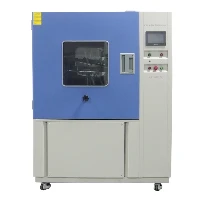
Thermal shock chambers are essential in various industries for testing the durability and reliability of materials and products under extreme temperature fluctuations. Understanding their importance and applications can help businesses ensure their products meet the highest quality standards. In this blog, we will explore what thermal shock chambers are, how they work, and the various industries that benefit from their use.
What is a Thermal Shock Chamber?
A thermal shock chamber is a specialized piece of equipment designed to test the resilience of materials and products by subjecting them to rapid temperature changes. These chambers simulate extreme conditions that can occur in real-world environments, helping manufacturers identify potential weaknesses and ensure product reliability.
How Does a Thermal Shock Chamber Work?
Thermal shock chambers operate by cycling between high and low temperatures within a controlled environment. This process involves two primary stages:
- High-Temperature Stage: During this phase, the chamber swiftly elevates temperatures to a predefined high level. This rapid heating exposes the test specimens to intense thermal stress, simulating conditions that might occur during extreme heat exposure in practical use.
- Low-Temperature Stage: Following the high-temperature phase, the chamber quickly transitions to a low temperature. This sudden cooling subjects the samples to extreme cold, inducing rapid thermal contraction. This stage helps identify vulnerabilities in materials, such as cracking or weakening due to thermal shock.
- Testing Cycle: The thermal shock process is repeated multiple times in a controlled manner to replicate the cycles of heating and cooling that products may endure throughout their operational lifespan. Each cycle provides valuable insights into how materials respond to thermal stress and potential points of failure.
Key Features of Thermal Shock Chambers
- Rapid Temperature Cycling: Thermal shock chambers excel in their capability to rapidly alternate between extreme high and low temperatures. This feature is essential for simulating abrupt temperature changes that products may encounter in real-world environments. By quickly transitioning from one temperature extreme to another, these chambers effectively replicate thermal shock scenarios, revealing potential weaknesses in materials and products.
- Precise Control: These chambers offer precise and meticulous temperature control throughout the testing process. This ensures that temperatures are maintained at specific levels with high accuracy, guaranteeing consistent and reliable testing conditions. Precise control is critical for obtaining repeatable results and conducting thorough evaluations of how materials respond to varying thermal conditions.
- Data Logging: Advanced thermal shock chambers are equipped with sophisticated data logging systems. These systems continuously monitor and record temperature variations and other relevant parameters during testing. Detailed data logging facilitates in-depth analysis of how materials behave under thermal stress, allowing engineers and researchers to pinpoint performance trends, identify potential weaknesses, and make informed decisions for product improvement.
- Versatility: Thermal shock chambers are highly versatile and adaptable to a wide spectrum of materials and products. They can effectively test metals, plastics, electronics, composites, and more, accommodating the diverse needs of industries such as aerospace, automotive, electronics manufacturing, and materials science. This versatility makes thermal shock testing a vital tool across various sectors, ensuring that products meet rigorous quality standards and can withstand demanding environmental conditions.
Why are Thermal Shock Chambers Important?
- Thermal shock chambers play a crucial role in product development and quality assurance across various industries. Here's why they are indispensable:
- Enhancing Product Reliability
One of the primary uses of thermal shock chambers is to enhance product reliability. By exposing products to extreme temperature fluctuations, manufacturers can identify potential weaknesses and make necessary improvements. This process ensures that the final product can withstand harsh environmental conditions without compromising its performance or longevity.
- Ensuring Safety Standards
In industries where safety is paramount, such as aerospace, automotive, and electronics, thermal shock testing is vital. Components in these fields must endure severe temperature changes without failing, as failures could lead to catastrophic consequences. Thermal shock chambers help ensure that these components meet stringent safety standards and perform reliably under extreme conditions.
- Reducing Costs and Time to Market
By identifying and addressing potential issues early in the development process, thermal shock chambers help manufacturers save time and money. Detecting weaknesses before mass production allows for design adjustments, reducing the risk of costly recalls and warranty claims. This proactive approach accelerates the time to market and enhances the overall quality of the product.
What Are the Applications of Thermal Shock Chambers?
Thermal shock chambers are utilized in a wide range of industries, each benefiting from their ability to simulate extreme environmental conditions. Here are some notable applications:
- Electronics and Semiconductors
In the electronics industry, thermal shock chambers are used to test the durability of components such as circuit boards, connectors, and sensors. Rapid temperature changes can cause thermal expansion and contraction, leading to potential failures in electronic devices. By simulating these conditions, manufacturers can ensure the reliability of their products in real-world scenarios.
- Automotive Industry
Automotive components, including engines, brakes, and suspension systems, must withstand extreme temperature variations. Thermal shock testing helps automotive manufacturers verify that these components can endure harsh conditions without compromising safety or performance. This testing is crucial for ensuring the longevity and reliability of vehicles in diverse climates.
- Aerospace and Defense
In aerospace and defense, components are often exposed to extreme temperatures during flight and in space. Thermal shock chambers simulate these conditions to test the resilience of materials and systems used in aircraft, spacecraft, and defense equipment. Ensuring the durability of these components is essential for mission success and the safety of personnel.
- Material Science and Research
Researchers and scientists use thermal shock chambers to study the behavior of various materials under extreme temperature changes. This research helps develop new materials with enhanced properties, such as increased strength, flexibility, and thermal resistance. These advancements have broad applications, from industrial manufacturing to consumer products.
- Medical Devices
Thermal shock testing is also critical in the medical device industry. Devices such as implants, instruments, and diagnostic equipment must function reliably under varying temperatures. Testing these devices in thermal shock chambers ensures they meet the rigorous standards required for medical applications, guaranteeing patient safety and device efficacy.
Conclusion
Thermal shock chambers are invaluable tools in the modern manufacturing and research landscape. They help enhance product reliability, ensure safety standards, and reduce costs and time to market. With applications across diverse industries, from electronics to aerospace, these chambers play a pivotal role in advancing technology and improving the quality of products we rely on every day.
If you want to learn more about this kind of Thermal Shock Chamber, welcome to contact us, info@libtestchamber.com.
References
1. Kuo, J., & Wu, W. (2009). Reliability testing of microelectronic devices using thermal shock chambers. IEEE Transactions on Components and Packaging Technologies, 32(2), 410-417.
2. Quan, T., & Li, S. (2015). Thermal shock resistance of ceramic matrix composites: Experimental investigation and modeling. Journal of Materials Science, 50(14), 4987-5002.
3. Maldonado, A. (2018). Automotive thermal shock chamber testing: Methodology and applications. SAE International Journal of Materials and Manufacturing, 11(3), 335-342.
4. Wang, Y., & Li, J. (2020). Aerospace thermal shock testing for space-bound components: Challenges and advancements. Journal of Aerospace Technology and Management, 12(1), e3911.
5. Jahanmir, S., & Suh, J. (2013). Thermal shock and fatigue of ceramic materials: Advances in understanding and modeling. Annual Review of Materials Research, 43, 89-116.
6. Li, X., & Liu, Y. (2017). Application of thermal shock test in the evaluation of semiconductor packaging materials. Microelectronics Reliability, 77, 72-85.