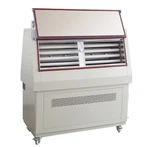
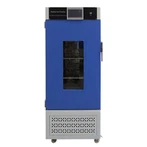
Choosing the wrong chamber supplier can cost you far more than money. A ±3 °C temperature drift or a humidity sensor that wanders outside ±3 % RH can send an entire batch of "passed" products into the field, only to fail months later under real-world conditions. For engineers responsible for product qualification, that kind of risk is not acceptable.
This article will walk through what actually separates a reliable Temperature and Relative Humidity Test Chamber manufacturer from an average one, using LIB Industry as a working example, a real customer case from Canada, a side‑by‑side comparison of reach‑in versus walk‑in chambers, and the most common questions buyers ask before placing an order.
LIB Industry as a Reliable Temperature and Relative Humidity Test Chamber Manufacturer
Manufacturing Strength Behind Every Chamber LIB Industry designs and builds its own control systems, refrigeration units, and sheet-metal enclosures in-house, rather than assembling chambers from third-party kits. Each unit undergoes a 72-hour continuous run-in test before shipment, checking temperature stability, humidity recovery time, and compressor load under full cycling. This factory-level testing is why LIB Industry can back every chamber with a 3-year warranty and lifetime technical support, instead of the 1-year warranty common among smaller assemblers.
Standards a Reliable Manufacturer Must Meet A manufacturer's reliability isn't a marketing claim - it's measurable against published standards. The table below lists the core standards LIB Industry chambers are built and tested to comply with:
| Standard | What It Covers |
|---|---|
| IEC 60068-2-1 / -2-2 | Cold and dry heat test methods |
| IEC 60068-2-30 | Damp heat, cyclic test |
| IEC 60068-2-78 | Damp heat, steady state |
| GB/T 2423 | Chinese national environmental testing standard |
| CE (Low Voltage Directive 2014/35/EU) | Electrical safety compliance |
| CSA C22.2 | North American electrical safety certification |
How the equipment works Inside the equipment, a PT100 Class A sensor continuously reads temperature with ±0.001 °C resolution, feeding data to a PID controller that adjusts the refrigeration and heating elements in real time. A separate wet-bulb sensor tracks relative humidity to ±2.5 % RH accuracy. Dual centrifugal fans push air through the chamber from multiple directions, keeping the internal temperature deviation within ±0.5 °C and holding overall uniformity within ±2.0 °C across the entire working spac. So a sample in the corner sees the same conditions as one in the center.
Put together, a reliable Temperature and Relative Humidity Test Chamber manufacturer is one that controls its own engineering, proves performance against recognized standards before shipment, and stands behind the equipment with real warranty and service commitments - not just a spec sheet.
A Canadian Customer's Experience with LIB Industry
A Canadian electronics testing lab first purchased two reach-in Temperature and Relative Humidity Test Chambers from LIB Industry to run

and Humidity Test Chambers
performance qualification on their products. After nearly a year of daily use, the same customer returned to order a walk-in Temperature and Relative Humidity Test Chamber to expand their capacity for larger battery packs and assemblies.
According to the customer, several factors drove the repeat purchase:
Safety compliance: every chamber carried CE and CSA certification, satisfying both their internal safety audits and North American import requirements, with IEC-compliant test protocols built into the controller.
Test accuracy: temperature control held within ±0.5 °C and humidity within ±2.5 % RH across thousands of test hours, with no drift requiring recalibration.
Cost-effective customization: LIB Industry provided free structural customization - reinforced shelving, additional cable ports, and explosion-venting panels for battery testing - at no extra design fee.
Explosion-proof battery testing: the chamber's reinforced venting and pressure-relief design let the customer run thermal shock and abuse

Humidity Test Chamber
tests on lithium battery cells safely, containing thermal runaway events without damaging the chamber structure.
Service and training: LIB Industry sent an engineer for on-site installation training, and the 3-year warranty plus ongoing remote support gave the customer confidence to run the chamber continuously without downtime concerns.
The customer summarized the decision simply: consistent accuracy, verified safety, and a manufacturer that stays involved after the sale.
Reach-In vs. Walk-In Temperature and Relative Humidity Test Chambers
Both formats use the same PID-controlled, PT100-based technology, but they serve different testing scales. Here is how they compare:
| Feature |
|
|
|---|---|---|
 |
 |
|
| Typical Volume | 0.5–1.5 m³ | 10–100+ m³ |
| Best For | Small components, PCBs, sensors | Large assemblies, vehicles, battery packs |
| Temperature Range | -70 °C to +150 °C | -40 °C to +85 °C |
| Uniformity | ±0.5–1.0 °C | ±1.5–2.0 °C |
| Installation | Plug-and-play, under 2 hours | Requires site preparation, several days |
| Cost | Lower upfront investment | Higher investment, higher throughput |
| Access | Single hinged door | Walk-in door, sometimes with drive-in ramp |


How to Choose: If your samples are small and you need fast cycling for R&D-level component testing, a reach-in chamber is the more economical and space-efficient choice. If you're testing full assemblies, multiple large products at once, or need staff to physically enter the chamber to set up equipment, a walk-in chamber is the better long-term investment, even though the upfront cost and installation time are greater.
LIB industry's Popular Controlled Laboratory Climate Chambers

Space-Saving Laboratory Design, Precise Temperature and Humidity Control

Versatile Testing for Multiple Industries, Stable and Uniform Environmental Conditions

Easy Access for Large Test Specimens, High-Capacity Environmental Simulation

Combined Climatic and Vibration Testing, Reduced Testing Time and Improved Correlation


Up to 5/ 10/ 20°C/min Temperature Ramp Rates, Accelerated Product Reliability Validation.
FAQs on the Temperature and Relative Humidity Test Chamber
Q1: How long does delivery take?
Standard reach-in chambers typically ship within 5-15 days; custom walk-in chambers usually take more weeks depending on size and structural customization.
Q2: Does LIB Industry handle installation and training?
Yes. For walk-in chambers, LIB Industry provides on-site installation support and operator training. Reach-in chambers arrive fully assembled and can be running within two hours of unboxing.
Q3: What does the warranty include?
Every chamber includes a 3-year warranty covering compressors, controllers, and sensors, plus lifetime remote technical support for troubleshooting and calibration guidance.
Q4: Can chambers be customized after the initial order?
Yes, structural changes such as shelving, cable ports, or explosion-venting panels can typically be added even after an initial purchase, based on evolving test requirements.
Q5: What shipping methods are available?
LIB Industry ships internationally by sea freight for walk-in units and by air or sea for reach-in units, with export documentation, CE/CSA certification, and crating handled directly by the factory.
Contact LIB Industry today to discuss which chamber configuration, standards package, and customization options fit your testing requirements.