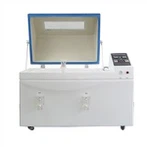
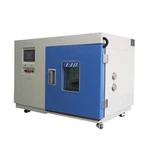
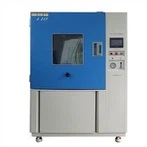
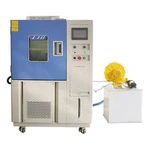
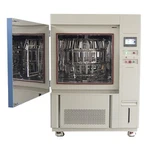
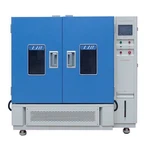
When evaluating the durability of metals, coatings, or electroplated surfaces, traditional real-world corrosion testing can take months or even years. Salt spray testing compresses this timeline, providing accelerated insights into corrosion resistance under controlled, repeatable conditions. A reliable salt spray corrosion test chamber ensures precise environmental control, reproducibility, and adherence to international standards such as ISO 9227, ASTM B117, ASTM G85, and JIS Z 2371.
LIB's Salt Spray Corrosion Test Chamber has earned praise from customers worldwide for its performance and reliability. As one user, Jack, shared: "We have received and installed the chamber, thank you. We are currently running our first test panels and everything is running smoothly. If I have any questions, I'll let you know." This feedback reflects LIB's commitment to delivering chambers that not only meet rigorous testing standards but also provide intuitive operation, consistent results, and long-term durability for laboratories and production facilities.

Role of Salt Spray Corrosion Test Chambers
Salt spray chambers simulate harsh saline environments to accelerate the corrosion of metallic materials and coatings. The test exposes specimens to a fine mist of salt solution within a sealed chamber, speeding up electrochemical reactions that would normally occur over months in natural environments.
The main purpose of the salt spray corrosion test is to:
1. Evaluate coating durability and adhesion.
2. Compare corrosion resistance between materials.
3. Identify potential product failures in harsh outdoor conditions.
4. Verify compliance with international quality standards before mass production.
5. Chloride ions in the salt solution penetrate protective oxide layers on metals, forming micro-galvanic cells that accelerate rusting. This allows engineers to detect vulnerabilities in materials or coatings before deployment, saving time and reducing field failures.

Salt Spray Corrosion Test Chambers for Corrosion Test
By providing a controlled, repeatable environment, salt spray chambers eliminate the variability of outdoor testing, where factors like humidity, temperature fluctuations, and pollutants can affect results. This consistency allows engineers and quality teams to make data-driven decisions, optimize material selection, and improve coating processes. Additionally, advanced chambers, such as LIB's Salt Spray Corrosion Test Chamber, integrate precise temperature control, uniform fog distribution, and real-time monitoring, ensuring every test delivers reliable, reproducible results that can be confidently used for certification, product development, and long-term durability assessments.
Salt Spray Corrosion Test Standards
Salt spray testing is widely recognized for evaluating the corrosion resistance of metals, coatings, and electroplated surfaces. To ensure results are meaningful and comparable across laboratories and industries, tests must adhere to strict international standards. LIB chambers are engineered to meet these standards, providing reliable and reproducible testing for a variety of materials.
Different standards focus on distinct corrosion scenarios. For example, ISO 9227 NSS evaluates general corrosion resistance, while AASS (Acetic Acid Salt Spray) and CASS (Copper-Accelerated AASS) simulate more aggressive environments for decorative or high-performance coatings. Automotive and industrial manufacturers often rely on ASTM, SAE, and JIS standards to meet corporate or regulatory requirements.
LIB chambers also support a wide range of modified or industry-specific protocols, including ASTM G85 for cyclic or accelerated corrosion, Ford CETP, VW PV1210, and GM 9540P for automotive parts, as well as IEC 60068 and UL 199/852 for electrical components. This ensures global applicability and consistency for international testing.
| Standard | Type | Typical Use | Key Features |
|---|---|---|---|
| ISO 9227 NSS | Neutral salt spray | General corrosion | 5% NaCl, pH 6.5–7.2, 35 ± 2 °C, 83 kPa |
| ISO 9227 AASS | Acetic acid salt spray | Decorative/electroplated coatings | Adds glacial acetic acid, pH 3.1–3.3 |
| ISO 9227 CASS | Copper-accelerated AASS | High-performance finishes | Adds 0.26 g/L CuCl₂ to accelerate corrosion |
| ASTM B117 | Salt spray | General corrosion | Similar to ISO 9227 NSS, widely used in the US |
| ASTM G85 | Modified salt spray | Cyclic/accelerated corrosion | Varies by method, supports automotive and marine tests |
| JIS Z 2371 | Salt spray | General corrosion | Japanese industrial standard for metals/coatings |
| SAE J2334 | Automotive salt spray | Automotive parts | Focus on electroplated or chrome-plated components |
| Corporate/Industry Standards | Various | Automotive/electrical | Ford CETP, VW PV1210, GM 9540P, IEC 60068, UL 199/852 |
》》》For more technical information and details about our Salt Spray Corrosion Test Chamber, please feel free to email us at info@libtestchamber.com.
Performing Metal Corrosion Tests Using LIB Salt Spray Corrosion Test Chamber
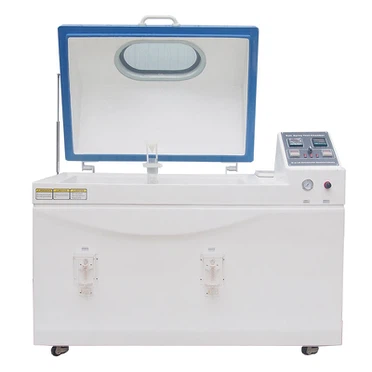
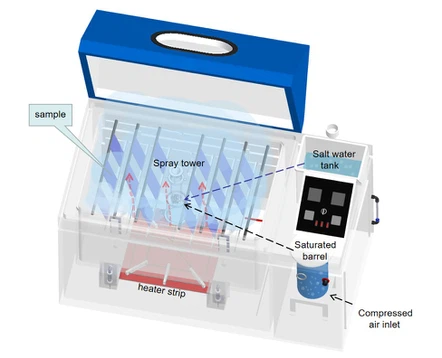
LIB provides a step-by-step procedure to perform reliable metal corrosion tests, ensuring consistent results for automotive, marine, electronics, or industrial parts. LIB chambers streamline sample preparation, salt solution application, and environmental control. Advanced PID controllers, PT100 Class A sensors, and automated safety features ensure every test is precise and reproducible.
  |
|||
|
Model |
S-150 |
S-250 |
S-750 |
|
Internal dimensions (mm) |
470*590*400 |
640*1000*500 |
750*1100*500 |
|
Overall dimensions (mm) |
620*1400*1050 |
810*1800*1180 |
920*1900*1200 |
|
Temp. Range |
Ambient ~ +60 degree |
||
|
Temp. Fluctuation |
± 0.5 ℃ |
||
|
Temp. Deviation |
± 2.0℃ |
||
|
Humidity Range |
95 % ~ 98 % RH |
||
|
Salt Fog Deposition |
1~2ml / 80cm2 · h |
||
|
Spray Type |
Continuous / Periodic |
||
|
Heating Element |
Nichrome heater |
||
|
Salt Fog Collected |
Fog collector and fog measure cylinder |
||
|
Controller |
PID controller |
||
|
Material |
Glass fiber reinforced plastics |
||
|
Standard Configuration |
8 round bars and 7 V-shaped grooves |
||
Step 1: Sample Preparation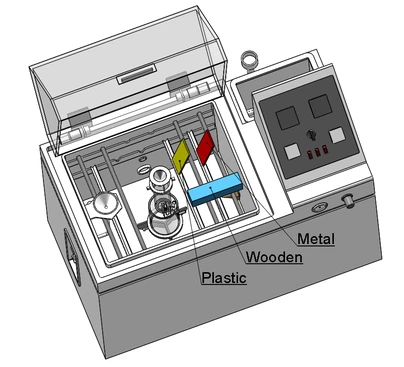
Clean and dry metal or plated specimens to remove oils, dust, and debris.
Place samples in V-groove or round-rod holders suitable for their shape and size.
LIB Advantage: Removable fixtures simplify loading/unloading, and adjustable holders accommodate various sample dimensions.
Step 2: Chamber Setup
Fill the saturation tank with deionized water and the appropriate salt solution (NSS, AASS, or CASS).
Set chamber temperature to 35 ± 2 °C and spray pressure to 83 kPa.
LIB Advantage: Automatic water inlet with condensate recycling prevents dry-run damage, while dry-burn protection ensures safety.
Step 3: Program Configuration
Select or create a test program on the touchscreen interface (up to 120 custom programs, 100 steps each).
Define test duration, spray sequence, and monitoring intervals.
LIB Advantage: The multilingual touchscreen guides users intuitively, reducing setup errors and training time.
Step 4: Salt Fog Generation
Activate the quartz nozzles to produce fine, uniform fog.
Maintain deposition at 1–2 mL/80 cm²/hour, as required by ISO 9227.
LIB Advantage: Corrosion-resistant spray tower and precision PID control stabilize fog concentration and temperature within ±0.5 °C.
|
salt spray tower |
cylinder |
spray collector |


Step 5: Monitoring and Data Logging
Continuously monitor temperature, pH, spray duration, and humidity.
Use built-in USB/Ethernet ports to export audit-ready data.
LIB Advantage: Real-time logging and alarm notifications prevent operator error and allow remote observation without disturbing tests.
Step 6: Test Completion and Analysis
After the test cycle, remove samples and assess corrosion visually or via microscopy.
Compare performance across different coatings, materials, or plating methods.
LIB Advantage: Transparent lid and internal LED lighting allow in-situ observation, and smooth interior surfaces simplify cleaning.
》》》To receive comprehensive or customized solutions and pricing for the Salt Spray Test Chamber, please contact us at info@libtestchamber.com.
FAQs on Salt Spray Corrosion Test Chambers
Q1: Does the salt spray chamber have an automatic water inlet?
A1: Yes. LIB chambers feature automatic water refill, ensuring continuous, stable operation without manual intervention.
Q2: Is dry-burn protection included for the saturation tank?
A2: Yes. A built-in dry-burn protection system prevents equipment damage caused by low water levels or overheating.
Q3: What type of controllers do LIB salt spray chambers use?
A3: S-150, S-250, and S-750 models use push-button controllers with optional touchscreen upgrades. S-010, S-016, and S-020 models come standard with a touchscreen interface for programming up to 120 test profiles.
LIB's Salt Spray Corrosion Test Chamber combines precise salt fog delivery, intelligent environmental control, and robust construction to ensure accurate, repeatable corrosion testing. With compliance across ISO 9227, ASTM B117, ASTM G85, JIS Z 2371, SAE J2334, and other standards, it is ideal for automotive, electronics, marine, and metal industry applications.
Contact LIB Industry today to discover how our Salt Spray Corrosion Test Chamber can accelerate your product development, validate corrosion resistance, and strengthen your brand reputation globally.