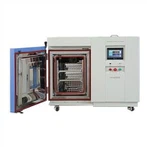
By ensuring the components are rigorously tested under controlled temperature and humidity conditions in a humidity test chamber, manufacturers can deliver reliable and durable electronic products across various applications.
Which electronic components need to be tested in Humidity Chamber
Many electronic components require testing for temperature and humidity to ensure their reliability and performance in real-world environmental conditions.

1. Passive Components
2. Active Components
3. Printed Circuit Boards (PCBs)
4. Connectors and Cables
5. Batteries
6. Displays (LCD, OLED, e-Ink, etc.)
Sensitive to moisture, which can cause condensation, image degradation, or failure of adhesive layers.
7. Enclosures and Packaging Materials
Protective housings or conformal coatings on components may be tested to ensure they prevent moisture ingress.
8. Power Modules and Supplies
High humidity can lead to insulation breakdown or corrosion in power supply components such as transformers and rectifiers.
9. RF Components and Antennas
Moisture can degrade the dielectric materials or cause corrosion, impacting signal performance.
10. Relays and Switches
Internal components can corrode or malfunction under humid conditions.
Two typical tests are required for electronic components
High Temperature and Humidity Storage Test
Purpose: To evaluate the resistance of electronic components to high humidity and temperature over an extended period.
Applicable Standards:
IEC 60068-2-78: Environmental Testing - Part 2-78: Tests - Cab: Damp Heat, Steady State.
JESD22-A101: Moisture Sensitivity of Plastic-Encapsulated ICs.
Test Procedure:Preparation:
Clean and inspect the electronic parts for any pre-existing defects.
Place the samples in the chamber on an insulated platform to avoid contact with the chamber walls.
Test Parameters:
Temperature: 85 °C.
Humidity: 85% RH.
Duration: 500 or 1000 hours, depending on the specific application.
Procedure:
Set the chamber to the specified temperature and humidity conditions.
Allow the chamber to stabilize before placing the samples inside.
Start the test and monitor the environmental conditions using built-in sensors and a data logger.
Inspect the samples periodically or at the end of the test for any changes in physical appearance, electrical characteristics, or functionality.
Temperature and Humidity Cycling Test
Purpose: To assess the performance of electronic parts under fluctuating temperature and humidity, simulating real-world operating environments.
Applicable Standards:
IEC 60068-2-30: Environmental Testing - Part 2-30: Damp Heat, Cyclic (12 h + 12 h cycle).
MIL-STD-810H Method 507.6: Humidity.
Test Procedure:Preparation:
Mount the components securely to prevent movement during testing.
Apply any required pre-test conditions (e.g., voltage bias).
Test Parameters:
Temperature: +25 °C to +55 °C.
Humidity: 95% RH.
Cycle Duration: 24 hours per cycle (12 hours at each condition).
Number of Cycles: Typically 10 cycles.
Procedure:
Program the humidity chamber for the required temperature and humidity cycling profile.
Load the samples and begin the test.
Ensure the transitions between temperature and humidity levels occur smoothly to prevent condensation.
Inspect for any signs of corrosion, delamination, or electrical failure.
LIB humidity Test chamber

|
Temperature Range |
A : -20℃ ~ +150 ℃ B : -40℃ ~ +150 ℃ C: -70℃ ~ +150 ℃ |
|
Temperature Fluctuation |
± 0.5 ℃ |
|
Temperature Deviation |
± 2.0 ℃ |
|
Humidity Range |
20% ~ 98% RH |
|
Humidity Deviation |
± 2.5% RH |
|
Cooling Rate |
1 ℃ / min |
|
Heating Rate |
3 ℃ / min |