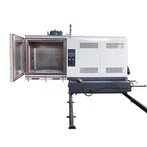
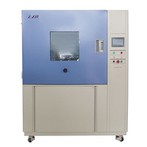
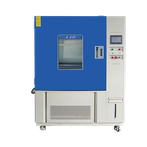
Climatic chamber is the most Ideal equipment for calibrating a temperature and humidity indicator.

Several common ways to calibrate a temperature and humidity indicator
- Freezing point calibration
Freezing point calibration is a simple and effective method that only requires the use of ice and water. First, pour the purified water into the container, and add enough ice to stir, when the temperature of the water is stable at 0 °C, the probe of the Temperature And Humidity Indicator is completely immersed in the water, waiting for its stable reading.

In this case, the Temperature And Humidity Indicator should display 0 °C. If the reading is inaccurate, it can be corrected by adjusting the calibration button on the Temperature And Humidity Indicator. Please refer to the operating manual of the temperature and humidity indicator for the specific operation method of the calibration button.
- Calibration by saturated salt solution method
Saturated salt solution calibration is a relative humidity calibration method, suitable for the relative humidity between 10% and 90% range. First, prepare the saturated salt solution, select the corresponding salt solution according to the required relative humidity, such as sodium sulfate solution can be used for 75% relative humidity calibration. Then, the probe of the temperature and humidity indicator is completely immersed in the salt solution and wait for it to stabilize the reading. At this time, the temperature and humidity indicator should display the set relative humidity value.
- Standard temperature and humidity chamber method calibration
The standard temperature and humidity box method is a method with high accuracy, which is suitable for the occasions where the accuracy of the temperature and humidity meter is required. This method requires the use of a standard climatic chamber for calibration. First, put the temperature and humidity indicator into the standard temperature and humidity climatic chamber, and set the temperature and humidity point in the chamber to the known standard values. Wait for the temperature and humidity Indicator to stabilize the reading, compare it with the standard value, and if the reading is inaccurate, it can be corrected by adjusting the calibration button on the temperature and humidity indicator.
Calibration procedure
- Temperature and humidity control: Simulate different environmental conditions by setting the temperature and humidity in the temperature and humidity test chamber to multiple calibration points (such as multiple points with different combinations of temperature and humidity). Common test points include: -20℃, 0℃, 25℃, 40℃ and other temperature points, as well as 30%, 50%, 75% humidity points.
- Comparative measurement: At each calibration point, the readings of the standard equipment and the equipment to be calibrated are recorded. Compare the differences between them. If there is a deviation, record the deviation value.
- Adjust the hygrograph: According to the comparison result, you can adjust the calibration device manually or through software. Many modern hygrometers can adjust their output values with a built-in calibration function.
- Repeat the calibration process: In order to ensure accuracy, it is often necessary to repeat the measurement and adjustment process several times to ensure that the reading of each temperature and humidity point is as close as possible to the reading of standard equipment.
- Calibration report: After the calibration is completed, a calibration report is generated, documenting the differences at all test points and determining whether the equipment meets the standard.
LIB Climatic chamber
|
|
|
|
Temperature Range |
A : -20℃ ~ +150 ℃ B : -40℃ ~ +150 ℃ C: -70℃ ~ +150 ℃ |
|
Temperature Fluctuation |
± 0.5 ℃ |
|
Temperature Deviation |
± 2.0 ℃ |
|
Humidity Range |
20% ~ 98% RH |
|
Humidity Deviation |
± 2.5% RH |
|
Cooling Rate |
1 ℃ / min |
|
Heating Rate |
3 ℃ / min |