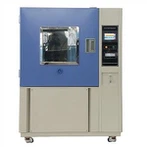
The application of lithium batteries in modern industry is extremely extensive. Battery safety and durability are critical for some high-value products. In many tests, the temperature test chamber plays an extremely important role.

1. What is the purpose of using a temperature test chamber for Li-ion batteries?
The temperature test chamber is used to simulate extreme temperature conditions (both high and low) that a Li-ion battery might encounter during storage, transportation, or use in devices like electric vehicles, laptops, and smartphones. The test helps evaluate the battery's performance, safety, and reliability under varying temperature ranges.
2. What temperature range should be tested for Li-ion batteries?
Typical temperature ranges for Li-ion battery testing are:
Storage temperature: -20 °C to 60 °C
Operating temperature: -10 °C to 50 °C (varies based on battery type and application)
Extreme conditions: -40 °C to 80 °C for safety and stress testing
The exact range depends on the specific application and manufacturer's specifications.
3. How long do you need to test a Li-ion battery in a temperature chamber?
The duration of testing depends on the test type. For example:
Thermal cycling: Could last several hours to days, depending on the number of cycles (typically, 100-500 cycles).
Temperature extremes: Usually last a few hours to a day.
The goal is to evaluate battery stability over time, simulating real-world conditions.
4. What are the key tests conducted in a temperature test chamber for Li-ion batteries?
Thermal Cycling Tests: To test battery performance during repeated temperature changes (e.g., from high to low temperatures).
High-Temperature Exposure: Testing at elevated temperatures to see how batteries perform when exposed to heat over an extended period.
Low-Temperature Exposure: Testing at cold temperatures to evaluate how the battery performs when exposed to freezing or sub-zero conditions.
Storage Tests: Evaluating battery health over extended periods at various temperature ranges.
Rapid Charge/Discharge Tests: To assess how fast charging and discharging affect battery life and performance under temperature stress.
5. Why is temperature testing important for Li-ion batteries?
Battery Safety: Li-ion batteries are sensitive to temperature extremes. Overheating can cause thermal runaway, leading to fires or explosions. Freezing temperatures can reduce the battery's capacity and performance.
Performance Evaluation: Temperature impacts how well a battery can hold a charge, its energy efficiency, and its overall lifespan.
Regulatory Compliance: Many industries, such as electric vehicles and consumer electronics, require temperature testing to meet safety and certification standards (e.g., UN 38.3 for transportation).
6. What is the difference between thermal cycling and constant temperature testing for Li-ion batteries?
Thermal Cycling: Involves exposing the battery to repeated cycles of heating and cooling (e.g., from -20°C to 60°C) to simulate real-world conditions where the temperature fluctuates. This is more stressful on the battery and helps identify long-term durability issues.
Constant Temperature: Maintains a stable temperature throughout the test, useful for evaluating how the battery performs at a constant high or low temperature.
7. Can a temperature test chamber simulate rapid temperature changes?
Yes, some advanced chambers are designed to handle rapid temperature transitions (also known as fast thermal cycling) where the temperature can change quickly (e.g., from -40 °C to 70 °C in minutes). This is important for testing batteries in situations where they might rapidly heat up or cool down, like during rapid charging or discharging.
8. How do you monitor battery performance during temperature tests?
Voltage and current measurements are continuously monitored during testing to track battery charge/discharge cycles.
Capacity loss: How much energy the battery can store and release over time is measured to evaluate degradation.
Internal resistance: This is monitored to check for any increase that might indicate potential problems like overheating or internal short-circuiting.
Temperature sensors: These are placed on the battery to ensure its surface temperature remains within the specified range during the test.
9. Are there any safety concerns during temperature testing of Li-ion batteries?
Yes, safety is critical:
Overheating: Testing batteries at high temperatures can cause them to overheat, potentially leading to fires or explosions if the battery is defective or improperly handled.
Ventilation: Test chambers should be well-ventilated, and the batteries should be monitored for any signs of thermal runaway, leakage, or gas emission.
Proper Handling: Batteries should be placed and connected correctly in the test chamber to prevent short circuits or improper charging conditions.
10. What standards or regulations govern temperature testing for Li-ion batteries?
Some key standards include:
UN 38.3 (for transport testing): This includes temperature tests for Li-ion batteries during shipping.
IEC 62133 (for safety testing): It covers tests related to battery performance, safety, and exposure to extreme temperatures.
ISO 12405 (for automotive batteries): Establishes temperature testing standards for electric vehicle batteries.
UL 2054: A standard related to the safety of household and commercial batteries.
11. How do I choose the right temperature test chamber for Li-ion batteries?
Consider factors like:
Temperature range: Ensure the chamber can handle the temperature extremes your battery will face.
Size and capacity: The chamber should fit the size of your battery or battery packs.
Temperature uniformity: Ensure the chamber can maintain uniform temperature distribution.
Control and monitoring: Look for precise control systems and monitoring capabilities for real-time data logging.
LIB temperature test chamber is definitely a good choice!
|
|
Temperature Range |
A : -20℃ ~ +150 ℃ B : -40℃ ~ +150 ℃ C: -70℃ ~ +150 ℃ |
|
Temperature Fluctuation |
± 0.5 ℃ |
|
|
Temperature Deviation |
± 2.0 ℃ |
|
|
Humidity Range |
20% ~ 98% RH |
|
|
Humidity Deviation |
± 2.5% RH |
|
|
Cooling Rate |
1 ℃ / min |
|
|
Heating Rate |
3 ℃ / min |

If you are looking for the right temperature test chamber to solve your lithium battery testing needs, then this test chamber from LIB will meet your needs 100%!