When rubber hoses are exposed to ozone in real-world environments, tiny cracks can form, surfaces can harden, and eventual failure may occur long before the expected service life. For manufacturers and engineers, understanding how hoses respond to ozone under controlled yet realistic conditions is critical for ensuring product durability and compliance. Accelerated ozone testing provides actionable insights that help designers optimize materials, minimize failures, and maintain safety standards.
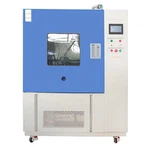
LIB's Ozone Test Chamber for Rubber Hose Resistance Testing offers an all-in-one solution for replicating real-life ozone exposure with unmatched precision, repeatability, and adherence to international standards. By combining advanced environmental control, dynamic mechanical stress simulation, and intelligent monitoring, LIB ensures that every test generates reliable, audit-ready data that accelerates development and strengthens quality assurance programs.
Why Use an Ozone Test Chamber for Rubber Hose Resistance Testing?
Ozone is a highly reactive gas that attacks rubber, elastomers, and other polymer-based materials. Even low concentrations can cause cracking, surface hardening, and loss of elasticity over time, especially in hoses used for automotive, energy, or industrial applications. Traditional room-temperature or static aging tests cannot replicate the combined effects of ozone, temperature, and humidity that occur in real-world use.
An ozone test chamber allows engineers to accelerate aging and evaluate material performance under controlled stress. LIB's chambers comply with Volkswagen PV3305 and IEC 60068-2-42 standards, ensuring that tests meet globally recognized specifications for ozone concentration, sample dimensions, temperature, humidity, and mechanical stress. For example, rubber hose specimens are tested under 2 ppm ozone (±15%) at 40°C (±3°C) and 55% RH (±5%) for 48 hours, providing accelerated insights that closely simulate field conditions.
Using an ozone chamber also enables simultaneous testing of multiple hoses with consistent exposure conditions, eliminating variability that could compromise results. By reproducing the exact stressors hoses encounter in service-stretching, bending, twisting, and ozone contact-engineers gain a realistic understanding of material lifespan and durability, allowing for informed material selection and design improvements.
Furthermore, accelerated ozone testing reduces development time and cost by predicting long-term performance in a fraction of the time required for natural aging. Manufacturers can identify weaknesses before mass production, optimize formulations, and ensure compliance with international quality standards, ultimately improving product reliability and safety for end users.
How LIB Ozone Test Chamber Ensures High-Quality Rubber Hose Resistance Testing
|
|
|
||
|
Model |
OC-250 |
OC-500 |
|
|
Internal Dimension (mm) |
600*600*700 |
700*800*900 |
|
|
Overall Dimension (mm) |
960*1150*1860 |
1180*1350*2010 |
|
|
Interior Volume (L) |
250 |
500 | |
|
Temperature Range |
0℃ ~ +100 ℃ |
||
|
Temperature Fluctuation |
± 0.5 ℃ |
||
|
Temperature Deviation |
± 2.0 ℃ |
||
|
Humidity Range |
30% ~ 98% RH |
||
|
Humidity Deviation |
± 2.5% RH |
||
|
Cooling Rate |
Ambient ~ 0℃ within 20 min |
||
|
Ozone Concentration |
1~1000PPHM |
||
|
Sample Holder Rotate Speed |
0~10 r/min |
||
|
Airflow Rate |
0 ~ 60L/min |
||
|
Clamps Tensile Stretch |
5%~35% |
||
|
Controller |
Programmable color LCD touchscreen controller, Ethernet connection, PC Link |
||
|
Standard |
ISO1431;ASTM 1149;IEC 60903 |
||


Realistic Environmental Control
LIB chambers deliver precise ozone concentration, temperature, and humidity regulation. Ozone levels range from 1–1000 PPHM, temperature spans 0–100°C with ±0.5°C fluctuation, and humidity ranges from 30–98% RH with ±2.5% RH accuracy. Embedded sensors continuously monitor all parameters to ensure repeatable, standards-compliant testing.
Dynamic and Static Stress Simulation
Hoses and rubber components can be mounted on static clamps or a rotating sample holder operating at 0–10 r/min, with elongation adjustable between 5–50% depending on test requirements. This capability reproduces bending, twisting, and stretching experienced in real service conditions, allowing for highly accurate performance predictions.
Durable, Corrosion-Resistant Design
The inner chamber is made of SUS304 stainless steel, offering long-term resistance to ozone corrosion. Compared with fiberglass, stainless steel is more durable, easier to clean, aesthetically superior, and resistant to aging or deformation. The exterior features a coated stainless steel shell for industrial-grade strength and modern appearance.
Smart Control & Monitoring
A programmable color PID touchscreen controller manages all test parameters and supports Ethernet or PC link integration. Users can create up to 120 test profiles with 100 segments each, automate complex sequences, and log data for full traceability. This ensures that all results are reproducible and audit-ready.
Eco-Conscious Safety Features
Residual ozone is eliminated through an activated carbon exhaust system, meeting ISO 14001 environmental protection standards. Energy-efficient airflow control (0–60 L/min) minimizes noise and power consumption, providing a safe and environmentally responsible workspace.
FAQs About Ozone Test Chamber
Q1: What material is used for the door seal?
The door seal is made of hard silicone, chosen for its superior ozone resistance and anti-aging properties, typically lasting around 5 years under normal use.
Q2: Is the sealing material the same as in SO₂ test chambers?
Yes, both use hard silicone. SO₂ chambers require stricter validation due to the gas's toxicity, including 0.2 MPa pressurization tests.
Q3: What is the maximum stretching capacity of the sample rack?
The ozone sample rack can stretch rubber specimens 5%–50%, adjustable according to test needs. Two configurations are available: static stretching and dynamic stretching.
Q4: What is the stretching speed?
The adjustable stretching rate ranges from 1 cm/min to 10 cm/min. Standard ozone samples require slow rates to ensure stable and accurate results.
Q5: Can the SUS304 inner chamber resist long-term corrosion? Why not fiberglass?
SUS304 stainless steel is highly resistant to ozone corrosion and maintains structural integrity over time. It is preferred over fiberglass for better aesthetics, easier cleaning, and longer service life.
LIB Ozone Test Chambers provide a robust, standards-compliant platform for accelerated ozone testing of rubber hoses, combining environmental precision, mechanical flexibility, durability, and safety. By replicating real-world stress, manufacturers can identify weaknesses early, optimize materials, and confidently bring high-quality products to market.
Contact LIB Industry today to elevate your ozone testing capabilities, gain reliable results, and access a global service network that supports your testing operations 24/7.