Reliability testing is the activity performed to assess the functional reliability of a product during its specified life period under all circumstances such as intended use, transport, or storage. Common reliability tests are aging test, salt spray test, high and low temperature test, liquid resistance test and other four major items.
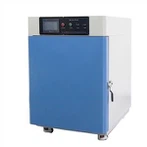
Today we say that the aging test, in popular terms, is to put the product into the aging box for a period of time to see the changes that occur before and after the aging of the product. The most common aging test is UV aging (Necessary equipment: UV aging test chamber ), xenon lamp aging, ozone aging, hot air aging. Common products that need to be tested for aging are mainly rubber, plastics, adhesives and other polymer products, as well as coatings, metals and other products.
UV aging VS Xenon lamp aging
Both UV aging and xenon lamp aging are simulated tests done by an aging chamber that simulates sunlight. What's the difference? Let's explain briefly.
Ultraviolet aging simulates sunlight or artificial light sources, mainly reflecting the ability of the product to resist ultraviolet light. Mainly for non-metallic material products, UV aging box is the use of 8 UV fluorescent lamps with a rated power of 40W as a light source.
Xenon lamp aging is the use of xenon arc lamp that can simulate the full sunlight spectrum to reproduce the destructive light waves existing in different environments. Compared with ultraviolet aging, the same is simulated sunlight, but it reflects more of the three words “full sunlight”, because it can produce ultraviolet light, visible light, infrared light. In a word, the xenon lamp aging box is to simulate sunlight, and the ultraviolet aging box is more to imitate the damaging effect of sunlight.
| UV aging | Xenon lamp aging |
|
|

UV aging test chamber

Xenon Lamp test chamber
Ozone aging VS Hot air aging
Ozone aging, as the name suggests, is to see the ability of the product to resist ozone. Hot air aging is to see the anti-aging ability of the product in a hot air environment.
Under normal circumstances, the aging test is mainly for non-metallic materials, such as rubber plastics, usually to do xenon lamp aging and hot air aging. Coatings generally need to do xenon lamp aging, some coatings used in seaside environments may need to do ultraviolet aging, adhesive products are often done hot air aging.
| Ozone aging | Hot air aging |
| 1. ASTM D1149: Standard Test Methods for Rubber Deterioration – Surface Ozone Cracking in a Chamber 2. ISO 1431-1: Rubber, vulcanized or thermoplastic — Resistance to ozone cracking — Part 1: Static and dynamic strain testing 3. GB/T 7762: Rubber, vulcanized or thermoplastic — Resistance to ozone cracking — Part 1: Static and dynamic strain testing 4. JIS K 6259: Rubber, vulcanized or thermoplastic — Determination of ozone resistance of rubber 5. DIN 53509: Testing of elastomers – Determination of ozone resistance 6. SAE J2006: Ozone Resistance of Elastomeric Materials 7. BS 903-A23: Methods of Test for Rubber – Part A23: Determination of Resistance to Ozone Aging. |
2. ASTM D865 - Standard Test Method for Rubber - Deterioration by Heating in Air (Test Tube Enclosure) 3. ASTM D3045 - Standard Practice for Heat Aging of Plastics Without Load 4. ASTM D3045M - Standard Practice for Heat Aging of Plastics Without Load (Metric) 5. ISO 188 - Rubber, vulcanized or thermoplastic - Accelerated ageing and heat resistance tests 6. IEC 60216-1 - Electrical insulating materials - Thermal endurance properties - Part 1: Ageing procedures and evaluation of test results |