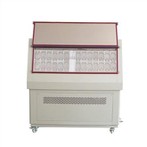
Regarding the test method of textile aging resistance or weather resistance, some standards have been formulated at home and abroad, such as ISO1419-1995, AATCC111-2009, AATCC186-2009, etc. At present, the aging test of textiles mainly uses heating, humidification, lighting and other methods to accelerate the aging. The scope of application and main test conditions of these methods are as follows. To complete the aging tests, a textile aging test chamber is essential.
Common textile anti-aging test method
(1)1SO1419-1995 “Accelerated Aging Test of rubber or plastic coated fabrics”.
Method A: The test condition was 100℃, 16h, the applicable scope was PVC coated fabric, the evaluation index was the mass loss of volatile matter in the fabric, and the method was classified as artificial accelerated aging.
Method B (general method), aging for 168h or its multiple under the conditions of 70℃, normal atmospheric pressure and low oxygen concentration, applied to all kinds of coated fabrics, and the evaluation index was the comparison before and after aging of the same index. The method was classified as artificial accelerated aging.
Method C(tropical test conditions) : The test conditions were aging for 168h or its multiple under the conditions of 70℃ and 95% relative humidity, applicable to various coated fabrics, and the evaluation index was the comparison before and after aging of the same index. The method was classified as artificial accelerated aging.
Method D: The test condition was 70℃, 168h, the application range was nitrocellulose coated fabric, the evaluation index was appearance change and crack, and the method was classified as artificial accelerated aging.
(2)AATCC111-2009 "Climatic Resistance of Textiles: Sunlight and climatic Exposure".
Method A: The test conditions are exposed to sunlight and natural environment; Exposed to natural light after glass filtration and under conditions that do not get wet. The scope of application is: automobile fabric, home decorative fabric, photosensitive material, roof structure fabric. The evaluation indexes were the breaking strength, tearing strength, bursting strength and color difference of the fabric before and after aging, and the method was classified as natural aging.
(3)AATCC169-2009 "Climatic resistance of textiles: Exposure to silkworm arc lamp".
Method 1: Blackboard temperature 77℃, relative humidity 70%, 90 min exposure to sunlight, alternating 30 min of light and water spray; Method 2: Blackboard temperature 77℃, relative humidity 70%, 60 min exposure, alternating 60 min dark cycle, no water spray;
Method 3: Blackboard temperature 77℃, relative humidity 27%, continuous exposure, no water spray;
Method 4: Blackboard temperature 63℃, relative humidity 50%, 102 min exposure to sunlight, alternating 18 min of light and water spray.
Applicable to a variety of textile materials, including coated fabrics and their products. The evaluation index is the percentage of residual strength, residual strength or color difference. Methods are classified as artificial accelerated aging.
(4)AATCC186-2009 "Climatic Resistance of textiles: Ultraviolet light and wet exposure".
Ultraviolet radiation of 315~400 nm and wet exposure are used. Application scope: general application fabric (outdoor furniture fabric); Fabrics for thermal shock applications (for construction sites and other places where thermal shock may occur); Motor vehicle exterior application fabric. The evaluation indexes were the breaking strength, breaking strength and color difference of the fabric before and after aging, and the method was classified as artificial accelerated aging.
LIB textile aging test chamber
|
|
Name UV Chamber (textile aging test chamber) UV-SI-260 Internal Dimension (mm) 450*1170*500 Overall Dimension (mm) 680*1300*1500 Irradiation Source Fluorescent UV lamps (8) - 40 W Temperature Range Ambient ~ 90 ℃ ±2℃ Black Panel Temperature (BPT) 35 ~ 80 ℃ Humidity Range ≥95% RH Bandwidth 290 ~ 400 nm Irradiance Control 0.3~20 W/㎡ Distance of Specimen and lamp 50 mm |
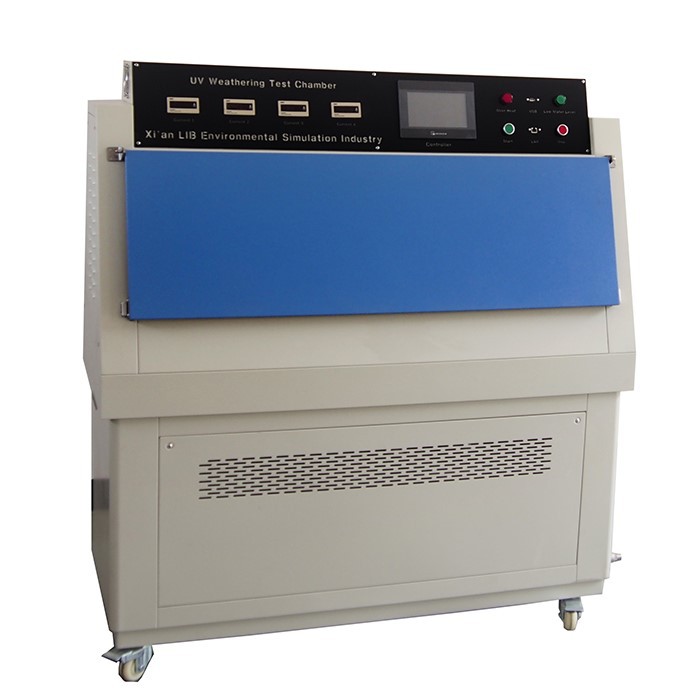
If you are interested in this textile aging test chamber, please feel free to contact us (info@libtestchamber.com) for more information.