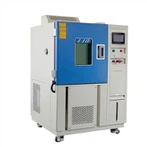
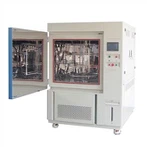
When coatings are exposed to real outdoor environments, sunlight, rain, temperature changes, and humidity all act together to cause fading, cracking, or peeling. To predict how coatings will perform in years of sunlight within just weeks, laboratories rely on a Sunshine Xenon Arc Weatherometer-a device that reproduces the full solar spectrum and environmental conditions found outdoors.
LIB's Sunshine Xenon Arc Weatherometer provides accurate, repeatable, and standards-compliant testing based on ASTM G151, D6695, G155, ISO 11341, and D7869. By simulating light, heat, humidity, and rainfall cycles, it enables coating developers to understand color retention, gloss stability, and film integrity long before products reach the field.
Origin and Applications of the Sunshine Xenon Arc Weatherometer
The Sunshine Xenon Arc Weatherometer was developed to replicate the full spectrum of natural sunlight indoors, covering ultraviolet (UV), visible, and infrared light (280–800 nm). Using a 4500 W water-cooled xenon lamp, it simulates sunlight, heat, and moisture, allowing researchers to evaluate material durability under controlled, repeatable conditions.
It was designed to accelerate outdoor aging tests, compressing months or years of natural weathering into days or weeks. This helps manufacturers quickly identify weaknesses in coatings, paints, plastics, and films.
The chamber provides precise control of environmental factors such as irradiance, Black Panel Temperature (BPT), air temperature, humidity, and spray cycles, ensuring consistent, traceable results. Its design meets or exceeds standards including ASTM G151, ISO 11341, D6695, G155, and D7869.
Automotive, aerospace, marine, and construction industries use the Weatherometer to predict changes in color, gloss, adhesion, and corrosion resistance, supporting R&D and durability assessment. In short, it is a precise, standardized, and time-compressing tool for reliable material testing.
Advantages of the LIB Sunshine Xenon Arc Weatherometer in the Coating Test Field
|
|
|
|
Sample holder |
Adjustable speed, 1r /min |
|
Chamber Type |
Rotating Holder |
|
Irradiation Source |
4500w water-cooled xenon arc lamp with inner quartz and outer borosilicate filter |
|
Irradiance Range |
35~150 W/㎡ |
|
Bandwidth Measurement |
280~800 nm |
|
Chamber Temperature Range |
Ambient~ 100 ℃ ±2 ℃ |
|
Black Panel Temperature |
BPT 35 ~ 85 ℃ ±2 ℃ |
|
Humidity Range |
50 % ~ 98 % RH |
|
Water Spray Cycle |
1~9999 H 59 M (Adjustable) |


Coating performance depends heavily on exposure conditions. Sunlight intensity, temperature cycles, and moisture are all key variables that influence degradation. LIB's Xenon Weatherometer addresses these challenges with several practical advantages:
Accurate Sunlight Simulation:
The xenon arc lamp delivers a full solar spectrum (280–800 nm), while filters like "Daylight" and "Window Glass" allow flexible reproduction of outdoor and indoor environments. Irradiance can be precisely set from 35 – 150 W/㎡, ensuring consistent exposure between tests.
|
|
|
| xenon lamp and filters | |


Realistic Environmental Control:
Temperature and humidity cycles are programmable to simulate day-night and seasonal changes. The rotating sample holder maintains uniform exposure across up to 42 panels per cycle, with a speed of 1 r/min.
Water Spray & Dew Simulation:
An automated spray system replicates rainfall or condensation to assess coating blistering and adhesion loss. Adjustable 1–9999 h 59 m cycles and closed-loop water recovery reduce water consumption by 80 %.

Rain spray system
Standards-Compliant Accelerated Aging:
Complies with ASTM G151, D6695, G155, ISO 11341, and D7869, providing laboratory results that correlate closely with real-world performance. Coatings tested in LIB's chamber demonstrate stable gloss retention and minimized cracking after thousands of exposure hours.
Customization and Data Traceability:
LIB supports non-standard requirements, including extended low-temperature capability (down to –70 °C) through enhanced lamp design, upgraded refrigeration power, and high-low temperature resistant sensors. All parameters are recorded via a PID control system, with automatic CSV/PDF data export for traceability.
| Sunshine Xenon Arc Weatherometer for Accelerated Testing | ||
|
|
Advanced Xenon Arc Test Chambers Accelerated Xenon Weathering Test Chamber High-Precision QUV Accelerated Weathering Tester ASTM G154 UV Accelerated Aging Chamber UV Exposure Chamber For PV Modules
|
|

Sunshine Xenon Arc Weatherometer Q&A
Q1: What is the minimum temperature of the xenon test chamber? What design changes are needed?
The minimum temperature can reach –70 °C. Design upgrades include a xenon lamp capable of operating under extreme temperatures, increased refrigeration capacity, and special high-/low-temperature-resistant radiometers and black panels.
Q2: What is the maximum rotation frequency of the rotating xenon turntable per minute?
The turntable can rotate up to 7 rpm, ensuring even exposure for all test samples.
Q3: Does the xenon chamber need heating in water tanks? Are both tanks one for heating and one for cooling?
In standard configurations, water tanks do not include a heating system. If heating is required, LIB offers an optional heated spray tank with independent heating, control, and display systems. Non-standard designs are fully supported.
Q4: Is there only heating tubes in the heating system inside the water tank?
The heating system modifications include: (1) adding heating tubes, (2) installing temperature sensors, and (3) upgrading the control system for precise temperature management.
Q5: What is installed in the refrigeration system inside the water tank?
The cooling section uses a mechanical refrigeration system (compressor) to lower water temperature, maintaining stable xenon lamp operation. This LIB-patented design ensures long-term efficiency and safety even under continuous high-intensity exposure.
Q6: Is the BPT temperature higher than the chamber temperature range?
Yes. BPT (Black Panel Temperature) reflects both chamber air temperature and light exposure heat, so it's typically about 10 °C higher than chamber temperature, accurately representing the real thermal load on the sample.
LIB's Sunshine Xenon Arc Weatherometer provides a precise, energy-efficient, and customizable solution for coating aging simulation. Whether for R&D, quality control, or certification testing, it ensures fast, consistent, and standards-aligned evaluation of color durability, gloss retention, and surface protection.
Contact LIB Industry to get your exclusive Xenon and UV testing solutions for coatings and materials.