When military or aerospace equipment faces the world's toughest environments-desert battlefields, coastal outposts, or arid construction sites-it must withstand more than just heat. Fine dust, abrasive sand, and high-velocity winds can degrade materials, block sensors, and compromise seals. To prevent these failures, engineers rely on standardized environmental simulations.
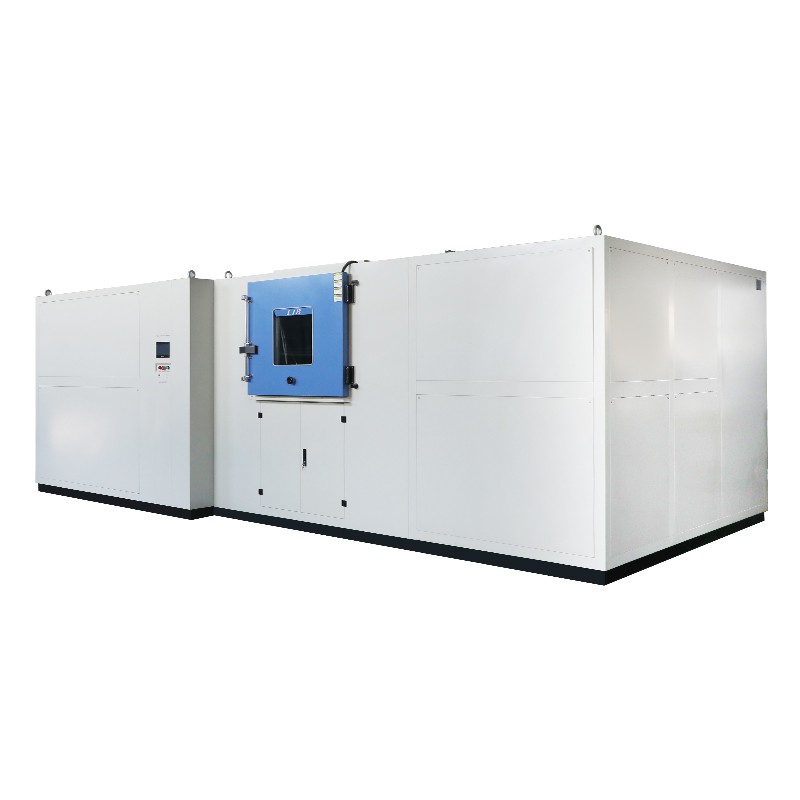
LIB's MIL-STD-810H Blowing Sand and Dust Test Chamber is purpose-built to replicate real-world desert conditions with precision. Designed in full accordance with MIL-STD-810H, Method 510.7 for Blowing Dust and Method 510.8 for Blowing Sand, this chamber provides highly repeatable, controlled exposure to dust and sand to evaluate product endurance, sealing integrity, and operational reliability.
Development and Uses of the MIL-STD-810H Blowing Sand and Dust Test Chamber
The MIL-STD-810 series was developed by the U.S. Department of Defense to ensure military hardware performs reliably under extreme environmental stress. The "Blowing Dust" and "Blowing Sand" methods are two of the most challenging tests within this standard.
Blowing Dust (Method 510.7, Procedure I) assesses how sealed equipment withstands infiltration of fine dust (<150 μm) under air speeds of 1.5 – 8.9 m/s, with dust concentrations of 10.7 ± 7 g/m³. This simulates dry, powdery desert conditions like those in Iraq or the Sahara.
Blowing Sand (Method 510.8, Procedure II) reproduces abrasive wind-blown sand impacts using larger particles (149 – 850 μm) at air speeds between 18 – 29 m/s and concentrations of up to 2.2 ± 0.5 g/m³.
These tests reveal how equipment such as vehicle connectors, sensors, air filters, and navigation instruments perform in sandy or dusty theaters. Civil sectors-including automotive, renewable energy, and heavy machinery-also apply the same testing principles to validate durability for harsh environments.
Technical Strengths of LIB MIL-STD-810H Compliant Sand and Dust Test Chamber
|
|
|
|
Interior Volume: 1000 L Blowing Dust:
Blowing Sand:
Controller: Programmable color LCD touch screen controller Door Lock: Electromagnetic lock Testing Platform Diameter: 600 mm Testing Platform Speed: 1 – 7 r.p.m Dust Detector: Integrated dust detector Exterior Material: A3 steel plate with protective coating Interior Material: SUS304 stainless steel Maximum Noise: ≤ 65 dBA |
 |

Precision Airflow Control
LIB's chamber uses six high-speed centrifugal fans and eight movement rings to maintain even airflow and particle distribution, ensuring consistent test exposure throughout the 1000 L test volume. Air velocity for dust mode is adjustable from 1.5 – 8.9 m/s, while sand mode operates at 18 – 29 m/s-matching MIL-STD-810H requirements precisely.
Dual-Mode Simulation System
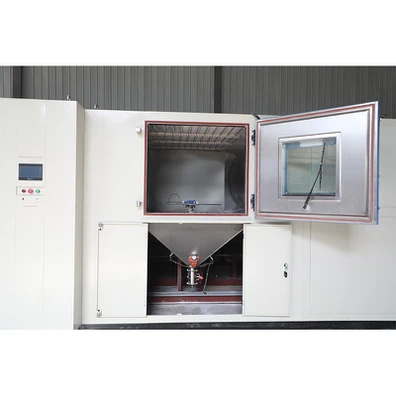
A rotary sand feeder and dust delivery system enable quick switching between fine dust and coarse sand modes. This modular design allows users to conduct both Method 510.7 and 510.8 tests in a single unit, improving efficiency for labs performing multiple test procedures.
Environmental Accuracy & Monitoring
Built-in sensors for dust concentration, temperature, and humidity feed real-time data to a PID controller with a color LCD touchscreen interface. Operators can program variable test durations, airflow cycles, and concentration profiles for complete repeatability.
Rugged Construction
The SUS304 stainless steel interior and A3 steel exterior with anti-static coating resist abrasion and corrosion caused by fine sand. Noise levels remain below 65 dBA, allowing quieter lab operation even during high-speed air circulation.
Automated Test Management
The chamber supports programmable profiles with multiple test stages. Users can pre-define dust exposure time, fan speeds, and rest intervals according to MIL-STD-810H protocols. Data logging and automatic report generation streamline compliance documentation.
|
Blowing Sand And Dust Test Chamber for MIL-STD-810H Testing |
||
|
|
State-of-the-Art MIL-STD-810 Testing Equipment Reliable Wind And Rain Testing MIL-STD-810 Efficient IP6X Dust Ingress Test Chamber Comprehensive IP6X IP5X Ingress Test Chamber Durable IPX5 IPX6 Water Jetting Test Chamber Innovative IP65 Test Equipment
|
|
Common Questions About the MIL-STD-810H Sand and Dust Test Chamber
Q1: How does the MIL-STD Dust Test Chamber achieve a wind speed of 29 m/s, and what is the specific design?
According to MIL-STD-810H Method 510.8, the sand test must ensure sand particles strike the specimen at air speeds of 18 – 29 m/s in a parallel flow. To meet this requirement, LIB's chamber includes:
- An extended air duct with flow-straightening plates to generate uniform laminar airflow;
- A high-power centrifugal fan system with reinforced cooling (air or water) to maintain stable output;
- Noise-reduction and vibration-damping structures that ensure smooth, stable operation even at high wind volumes.
Q2: What are the mesh sizes in the MIL-STD Dust Test Chamber?
Per MIL-STD-810 standards, two mesh sieves are required: one 75 μm screen for talcum dust and one 150 μm screen for quartz sand. These ensure that all test particles conform to standard grain sizes, guaranteeing accuracy and consistency of results.
Q3: Does the Sand and Dust Test Chamber have an insulation layer?
The chamber does not include an independent insulation layer, but its 1 cm-thick steel walls provide natural thermal buffering. Temperature control systems maintain a stable environment up to 45 °C, ensuring consistent test temperature during extended operation.
Ready to Strengthen Your Product Reliability Testing?
LIB Environmental's MIL-STD-810H Blowing Sand and Dust Test Chamber delivers military-grade accuracy, durability, and repeatability. Backed by a 3-year warranty, 24/7 English technical support, and global spare-parts service, LIB ensures long-term confidence in your environmental simulations.
Contact LIB Industry today for a tailored solution to your military-standard testing needs.