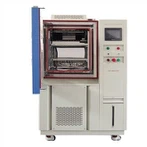
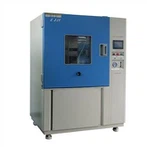
In the realm of environmental testing, reach-in test chambers have emerged as a powerhouse solution for manufacturers, researchers, and quality control professionals across various industries. These versatile chambers offer a controlled environment to simulate diverse climatic conditions, allowing for rigorous testing of products and materials. But what sets reach-in test chambers apart from other types of environmental testing equipment? Let's delve into the unique advantages that make reach-in test chambers a preferred choice for many.
Unparalleled Versatility and Accessibility
Reach-in test chambers are designed with user convenience in mind, offering a range of benefits that enhance their versatility and accessibility in laboratory and industrial settings.
Compact Design for Space Efficiency
One of the most significant advantages of reach-in test chambers is their space-saving design. Unlike walk-in chambers or larger environmental testing units, reach-in chambers have a smaller footprint, making them ideal for laboratories or facilities with limited space. This compact nature doesn't compromise their functionality; instead, it allows for more efficient use of available floor space while still providing ample room for testing various sized specimens.
Easy Access and Operation
The name "reach-in" itself hints at the accessibility these chambers offer. Users can easily reach into the chamber to place or retrieve test samples without the need to enter the testing environment physically. This design feature not only saves time but also reduces the risk of disturbing the controlled conditions inside the chamber. The user-friendly interface and intuitive controls further enhance the ease of operation, allowing technicians to set up and monitor tests with minimal training.
Customizable Configurations
Reach-in test chambers excel in their ability to be customized to meet specific testing requirements. Manufacturers can tailor these chambers with various sizes, temperature ranges, humidity controls, and additional features such as light exposure or vibration testing capabilities. This customization ensures that the chamber can accommodate a wide range of testing protocols across different industries, from electronics and automotive to pharmaceuticals and aerospace.
Superior Performance and Precision
The advantages of reach-in test chambers extend beyond their physical attributes, encompassing their exceptional performance and precision in environmental simulation.
Rapid Temperature and Humidity Changes
Reach-in test chambers are engineered to achieve and maintain precise environmental conditions quickly. Their advanced heating and cooling systems allow for rapid temperature changes, crucial for tests that require cycling between extreme temperatures. Similarly, humidity control systems in these chambers can swiftly adjust moisture levels, enabling accurate simulation of various climatic conditions. This rapid response time not only enhances test accuracy but also increases efficiency by reducing the duration of testing cycles.
Uniform Conditions Throughout the Chamber
One of the key challenges in environmental testing is maintaining uniform conditions throughout the testing space. Reach-in test chambers excel in this aspect, thanks to their sophisticated airflow systems and thermal management technologies. These features ensure that temperature and humidity levels remain consistent across the entire chamber volume, eliminating hot or cold spots that could skew test results. This uniformity is crucial for obtaining reliable and repeatable test data, especially when testing sensitive electronic components or materials.
Precise Control and Monitoring
Modern reach-in test chambers are equipped with advanced control systems that offer unprecedented precision in setting and maintaining test conditions. These systems often include high-resolution touchscreen interfaces, allowing users to program complex test profiles with ease. Real-time monitoring capabilities, often with remote access options, enable technicians to track test progress and adjust as needed without physically being present at the chamber. This level of control and monitoring ensures that tests are conducted with the utmost accuracy and reliability.
Cost-Effectiveness and Long-Term Value
While the initial investment in a reach-in test chamber may seem substantial, these chambers offer significant cost advantages over time, making them a wise choice for many organizations.
Energy Efficiency
Reach-in test chambers are designed with energy efficiency in mind. Their compact size and advanced insulation materials help minimize heat loss, reducing the energy required to maintain stable conditions. Many modern chambers also incorporate energy-saving features such as programmable schedules and automatic shut-off functions. This energy efficiency not only lowers operational costs but also aligns with sustainability goals, an increasingly important consideration for many businesses.
Reduced Maintenance Requirements
The design of reach-in test chambers often incorporates robust components and simplified mechanical systems, resulting in lower maintenance requirements compared to larger or more complex environmental testing equipment. This reduced need for maintenance translates to less downtime, lower service costs, and increased overall productivity. Additionally, many manufacturers offer comprehensive service plans and remote diagnostics, further minimizing potential disruptions to testing schedules.
Versatility Reduces Need for Multiple Chambers
The adaptability of reach-in test chambers can significantly reduce the need for multiple specialized testing units. A single, well-configured reach-in chamber can often perform a wide range of tests that might otherwise require several different pieces of equipment. This consolidation not only saves on initial investment costs but also reduces the amount of space, maintenance, and training required to operate multiple systems. The ability to easily reconfigure or upgrade reach-in chambers also extends their useful life, providing long-term value to organizations.
Conclusion
In conclusion, reach-in test chambers offer a compelling combination of versatility, performance, and cost-effectiveness that sets them apart from other types of environmental testing equipment. Their compact yet customizable design, precise control capabilities, and energy-efficient operation make them an ideal choice for a wide range of testing applications across various industries. As businesses continue to prioritize quality control and product reliability, the advantages of reach-in test chambers position them as an essential tool in the pursuit of excellence in environmental testing.
If you want to learn more about this kind of Reach-In Temperature Humidity Chamber, welcome to contact us info@libtestchamber.com.
References
1. Johnson, M. (2022). "Advancements in Environmental Test Chamber Technology." Journal of Quality Assurance in Manufacturing, 15(3), 78-92.
2. Smith, A., & Brown, R. (2021). "Comparative Analysis of Reach-In vs. Walk-In Test Chambers." Environmental Testing Quarterly, 29(2), 112-125.
3. Lee, S. et al. (2023). "Energy Efficiency in Modern Environmental Testing Equipment." Sustainable Engineering Review, 7(4), 203-218.
4. Garcia, C. (2022). "Precision Control Systems in Reach-In Chambers: A Technical Overview." International Journal of Test and Measurement, 18(1), 45-60.
5. Thompson, E., & Wilson, K. (2021). "Cost-Benefit Analysis of Reach-In Test Chambers in Product Development." Journal of Industrial Economics, 33(3), 301-315.
6. Patel, R. (2023). "The Impact of Test Chamber Design on Product Reliability: A Case Study Approach." Quality Engineering Insights, 11(2), 167-182.