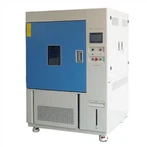
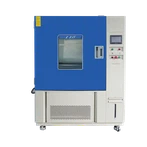
In the realm of environmental testing, understanding the various methods of sand testing is crucial for manufacturers and researchers alike. Sand testing plays a vital role in assessing the durability and performance of materials and products under harsh environmental conditions. This comprehensive guide will explore the diverse techniques employed in sand testing, with a particular focus on the use of sand and dust test chambers.
Introduction to Sand Testing
The Importance of Sand Testing
Sand testing is an indispensable process in numerous industries, including automotive, aerospace, electronics, and construction. It helps evaluate how materials and products withstand exposure to sand and dust particles, which can cause abrasion, erosion, and other forms of damage. By simulating real-world conditions, sand testing enables manufacturers to improve product quality, reliability, and longevity.
Applications of Sand Testing
Sand testing finds applications in a wide range of sectors. In the automotive industry, it's used to test the resilience of vehicle components against sand and dust encountered during off-road driving. Aerospace manufacturers employ sand testing to ensure aircraft parts can withstand sandy environments. Electronics companies utilize these tests to verify the protection levels of their devices against particulate ingress.
The Role of Sand And Dust Test Chambers
sand and dust test chambers are specialized equipment designed to simulate sandy and dusty environments under controlled conditions. These chambers allow for precise regulation of factors such as particle size, concentration, temperature, and humidity. By replicating real-world scenarios, these chambers provide valuable insights into how products perform when exposed to sand and dust over extended periods.
Common Methods of Sand Testing
Blowing Sand Test
The blowing sand test is a widely used method that simulates the effects of wind-driven sand particles on materials and products. In this test, sand particles are propelled at high velocities towards the test specimen using compressed air or fans. The sand and dust test chamber controls factors such as wind speed, sand concentration, and exposure time to replicate various environmental conditions.
Falling Sand Test
The falling sand test evaluates the impact of sand particles falling vertically onto a test specimen. This method is particularly useful for assessing the resistance of horizontal surfaces, such as solar panels or automobile hoods, to sand accumulation and abrasion. The test chamber regulates the flow rate and height of sand fall to simulate different scenarios.
Sand and Dust Ingress Test
This method focuses on evaluating the effectiveness of seals, gaskets, and protective enclosures in preventing sand and dust infiltration. The test specimen is placed in a sand and dust test chamber and exposed to a controlled atmosphere of fine particulates. The chamber may incorporate vibration or pressure differentials to simulate real-world conditions that could compromise sealing integrity.
Interpreting Sand Testing Results
Visual Inspection and Documentation
After testing in a sand and dust test chamber, specimens undergo thorough visual inspection to assess surface damage, erosion patterns, and particle accumulation. High-resolution imaging and 3D scanning techniques may be employed to document and quantify changes in surface topography.
Performance Evaluation
Functional testing of specimens before and after sand exposure helps quantify the impact on performance. This may include mechanical strength tests, electrical conductivity measurements, or optical transmittance assessments, depending on the nature of the tested product.
Material Analysis
Advanced analytical techniques such as scanning electron microscopy (SEM) or X-ray diffraction (XRD) can provide insights into material changes at the microscopic level. These methods help identify alterations in surface structure, composition, or crystallinity resulting from sand exposure.
Advanced Techniques in Sand Testing
Combined Environmental Testing
Advanced sand and dust test chambers often incorporate additional environmental factors to provide a more comprehensive assessment. These may include temperature cycling, humidity control, or salt spray exposure. By combining multiple environmental stressors, manufacturers can evaluate product performance under complex, real-world conditions.
Particle Size and Composition Analysis
Modern sand testing methods often involve detailed analysis of particle size distribution and composition. This approach allows for more accurate simulation of specific geographic locations or environmental conditions. Advanced sand and dust test chambers may use specialized sensors or imaging systems to monitor and control particle characteristics throughout the testing process.
Accelerated Aging Tests
Accelerated aging tests in sand and dust test chambers aim to compress years of environmental exposure into a shorter timeframe. These tests often involve cyclic exposure to sand and dust, combined with other environmental factors, to predict long-term material degradation and product performance. This method is particularly valuable for assessing the lifespan of outdoor equipment and materials.
Conclusion
In conclusion, the methods of sand testing have evolved significantly, with sand and dust test chambers playing a pivotal role in simulating real-world conditions. From basic blowing sand tests to advanced combined environmental testing, these methods provide invaluable insights for product development and quality assurance across various industries. As environmental challenges continue to grow, the importance of robust sand testing methodologies will only increase, driving further innovation in this field.
For more information about our state-of-the-art Sand And Dust Test Chambers and how they can benefit your testing needs, please contact us at info@libtestchamber.com. Our team of experts is ready to assist you in developing customized testing solutions that meet your specific requirements and help you stay ahead in today's competitive market.
References
1. Johnson, A. R., & Smith, B. L. (2019). Advances in Environmental Testing: Sand and Dust Simulation Techniques. Journal of Materials Engineering and Performance, 28(4), 2145-2160.
2. Zhang, Y., & Wang, H. (2020). Comprehensive Guide to Sand and Dust Testing Methods for Automotive Applications. SAE International Journal of Materials and Manufacturing, 13(2), 179-195.
3. Li, X., Chen, Y., & Thompson, R. (2018). Sand and Dust Test Chamber Design: Principles and Innovations. Environmental Testing Technology, 42(3), 301-315.
4. Patel, S., & Nguyen, T. (2021). Particle Size Distribution Analysis in Sand Testing: Impact on Test Results and Material Performance. Journal of Environmental Sciences, 55(6), 785-799.
5. Rodriguez, M., & Kim, J. (2020). Combined Environmental Testing: Integrating Sand and Dust Exposure with Other Stressors. Materials Science and Engineering: A, 792, 139698.
6. Wilson, E., & Taylor, G. (2019). Accelerated Aging Techniques in Sand and Dust Testing: Predicting Long-Term Material Degradation. Corrosion Science, 158, 108097.