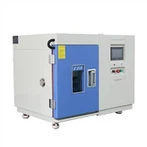
In the world of environmental testing, understanding the standards for dust testing is crucial for manufacturers and researchers alike. Dust testing plays a vital role in ensuring product durability, safety, and compliance with industry regulations. This comprehensive guide will explore the various standards governing dust testing, the importance of dust test chambers, and how these standards impact different industries.
Understanding Dust Testing Standards
Dust testing standards are established guidelines that ensure consistency and reliability in evaluating a product's resistance to dust exposure. These standards are crucial for maintaining quality control and meeting regulatory requirements across various industries.
International Organization for Standardization (ISO) Standards
ISO standards are widely recognized and adopted globally. They provide a framework for dust testing that ensures uniformity in testing procedures and results interpretation.
- ISO 12103-1 (Test Dust Composition): This standard specifies the composition and characteristics of test dust used in filtration efficiency and dust capacity tests. It defines four grades of test dust, each with specific particle size distributions and chemical compositions.
- ISO 20653 (Road Vehicles - Degrees of Protection): While primarily focused on automotive applications, this standard includes specifications for dust ingress protection, which are applicable to various industries.
- ISO 14644 (Cleanrooms and Associated Controlled Environments): This series of standards provides guidelines for controlling contamination in cleanrooms, including methods for measuring airborne particle concentrations and surface cleanliness.
Ingress Protection (IP) Ratings
IP ratings, defined by IEC 60529, are used to classify the degree of protection provided by enclosures against solid objects, including dust. The first digit in an IP rating indicates the level of protection against solid particles.
- IP5X (Dust Protected): This rating indicates that dust ingress is not entirely prevented, but it does not interfere with the equipment's operation.
- IP6X (Dust Tight): This highest level of dust protection signifies that no dust can enter the enclosure under specified test conditions.
Military Standards (MIL-STD)
Military standards often set stringent requirements for dust resistance, given the harsh environments in which military equipment operates.
- MIL-STD-810G (Environmental Engineering Considerations and Laboratory Tests): This comprehensive standard includes specific methods for dust testing, such as Method 510.5 for sand and dust testing.
The Role of Dust Test Chambers in Standards Compliance
Dust test chambers are essential tools in ensuring compliance with dust testing standards. These specialized environmental simulation devices allow manufacturers to subject their products to controlled dusty conditions, replicating real-world scenarios.
Features of Advanced Dust Test Chambers
Modern dust test chambers are equipped with sophisticated features that enable precise control over test parameters and ensure accurate results.
- Particle Size Control: Advanced chambers can generate and maintain specific particle sizes as required by different standards, ensuring test validity across various applications.
- Humidity and Temperature Regulation: Many dust test standards require specific environmental conditions. High-quality chambers offer integrated humidity and temperature control to meet these requirements.
- Automated Test Cycles: Programmable test cycles allow for consistent and repeatable testing, reducing human error and improving test efficiency.
Calibration and Maintenance of Dust Test Chambers
Regular calibration and maintenance of dust test chambers are crucial for ensuring compliance with standards and obtaining reliable test results.
- Particle Concentration Monitoring: Accurate monitoring of particle concentration throughout the test cycle is essential for maintaining test integrity and compliance with standards.
- Filter System Maintenance: Regular cleaning and replacement of filters in dust test chambers are necessary to maintain optimal performance and prevent cross-contamination between tests.
- Sensor Calibration: Periodic calibration of sensors for temperature, humidity, and particle concentration ensures the accuracy of test conditions and results.
Industry-Specific Applications of Dust Testing Standards
Different industries have unique requirements for dust testing, often leading to the development of industry-specific standards or adaptations of existing ones.
Automotive Industry
The automotive sector relies heavily on dust testing to ensure the longevity and performance of various components, from air filters to electronic systems.
- SAE J726 (Air Cleaner Test Code): This standard, developed by the Society of Automotive Engineers, specifies test procedures for evaluating the performance of air cleaners under dusty conditions.
- ECE R116 (Protection Against Unauthorized Use): While primarily focused on vehicle security, this regulation includes requirements for dust resistance in locking systems.
- ASTM D1739 (Standard Test Method for Collection and Measurement of Dustfall): This method is used to assess the amount of dust settling on surfaces, which is crucial for evaluating the effectiveness of automotive protective coatings and finishes.
Electronics and Telecommunications
Electronic devices and telecommunications equipment often operate in dusty environments, necessitating rigorous dust testing standards. Utilizing a dust test chamber is essential in these evaluations, as it provides a controlled environment to simulate dust exposure, ensuring that the devices can withstand harsh conditions without compromising performance or reliability.
- IEC 60068-2-68 (Environmental Testing - Dust and Sand Testing): This standard provides methods for testing the effects of dust and sand on electrotechnical products, including those used in telecommunications.
- ETSI EN 300 019-2-4 (Environmental Conditions and Environmental Tests for Telecommunications Equipment): This European standard includes specifications for dust testing of telecommunications equipment deployed in various environmental conditions.
- Telcordia GR-487-CORE (Generic Requirements for Electronic Equipment Cabinets): While not exclusively focused on dust testing, this standard includes requirements for dust resistance in telecommunications cabinets and enclosures.
Medical and Pharmaceutical Industries
In medical and pharmaceutical applications, dust testing is crucial for ensuring product safety and efficacy, particularly for devices and packaging that must maintain sterility.
- ISO 14644-1 (Cleanrooms and Associated Controlled Environments): This standard classifies air cleanliness in cleanrooms and controlled environments, which is essential for pharmaceutical manufacturing and medical device production.
- USP <1116> (Microbiological Control and Monitoring of Aseptic Processing Environments): This United States Pharmacopeia chapter provides guidelines for controlling and monitoring particulate matter in aseptic processing environments.
- EN 13544-1 (Respiratory Therapy Equipment - Nebulizing Systems and Their Components): This European standard includes requirements for dust resistance in nebulizing systems, ensuring their reliability in various environments.
Conclusion
Understanding and adhering to dust testing standards is crucial for ensuring product quality, safety, and regulatory compliance across various industries. As technology advances and environmental concerns grow, these standards continue to evolve, addressing new challenges and opportunities in dust testing. By staying informed about the latest standards and leveraging advanced dust test chambers, manufacturers can ensure their products meet the highest quality and safety standards in an increasingly dusty world.
Contact Us
For more information about our state-of-the-art dust test chambers and how we can help you meet your dust testing needs, please contact us at info@libtestchamber.com. Our team of experts is ready to provide you with customized solutions that ensure your products meet and exceed industry standards.
References
1. International Organization for Standardization. (2016). ISO 12103-1:2016 Road vehicles - Test contaminants for filter evaluation - Part 1: Arizona test dust.
2. International Electrotechnical Commission. (2013). IEC 60529:1989+AMD1:1999+AMD2:2013 CSV Consolidated version Degrees of protection provided by enclosures (IP Code).
3. United States Department of Defense. (2008). MIL-STD-810G: Environmental Engineering Considerations and Laboratory Tests.
4. Society of Automotive Engineers. (2020). SAE J726: Air Cleaner Test Code.
5. United States Pharmacopeia. (2021). USP <1116> Microbiological Control and Monitoring of Aseptic Processing Environments.
6. European Committee for Standardization. (2007). EN 481:1993 Workplace atmospheres - Size fraction definitions for measurement of airborne particles.