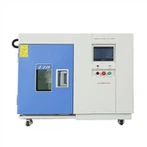
In the realm of environmental testing, portable test chambers have emerged as a game-changing solution for manufacturers and researchers alike. These compact, mobile units offer the flexibility and convenience of traditional test chambers without the constraints of a fixed location. But what exactly is a portable test chamber, and how does it revolutionize the way we approach environmental testing? Let's delve into the world of these versatile devices and explore their applications, benefits, and impact on various industries.
Understanding Portable Test Chambers
Portable test chambers are miniature versions of their larger counterparts, designed to simulate various environmental conditions in a compact, movable package. These chambers allow researchers and manufacturers to conduct tests on products or materials in controlled settings, replicating real-world scenarios such as extreme temperatures, humidity levels, or altitude changes.
Key Features of Portable Test Chambers
Portable test chambers boast several distinctive features that set them apart from traditional, stationary units:
- Compact Design: These chambers are engineered to be space-efficient, making them ideal for laboratories or production facilities with limited floor space.
- Mobility: Equipped with wheels or lightweight construction, portable test chambers can be easily moved between different locations or workstations.
- Versatility: Despite their smaller size, these chambers often offer a wide range of testing capabilities, including temperature cycling, humidity control, and even vibration testing in some models.
- User-Friendly Interface: Many portable test chambers feature intuitive control panels or touchscreen displays, simplifying the process of setting up and monitoring tests.
Types of Portable Test Chambers
Portable test chambers come in various configurations to meet different testing requirements:
- Temperature Chambers: These units focus on creating precise temperature environments, ranging from extreme cold to high heat.
- Humidity Chambers: Designed to control both temperature and humidity levels, these chambers are crucial for testing products affected by moisture.
- Thermal Shock Chambers: These specialized units rapidly transition between hot and cold temperatures to test a product's resilience to sudden temperature changes.
- Salt Spray Chambers: Used to evaluate corrosion resistance, these chambers expose materials to saline environments.
Applications Across Industries
The versatility of portable test chambers makes them valuable assets in numerous sectors:
- Electronics: Testing components and devices for reliability under various environmental conditions.
- Automotive: Evaluating the performance of vehicle parts in extreme temperatures and humidity levels.
- Aerospace: Simulating high-altitude conditions to test aircraft components.
- Pharmaceuticals: Assessing drug stability and packaging integrity under different environmental factors.
- Consumer Goods: Testing product durability and longevity in various climates.
Benefits of Using Portable Test Chambers
The adoption of portable test chambers offers numerous advantages over traditional testing methods, making them an increasingly popular choice among manufacturers and researchers.
Flexibility and Convenience
One of the primary benefits of portable test chambers is their unparalleled flexibility. These units can be easily moved between different departments or even offsite locations, allowing for on-the-spot testing and troubleshooting. This mobility is particularly valuable for companies with multiple production lines or those conducting field tests.
Cost-Effectiveness
Portable test chambers often present a more economical solution compared to their full-sized counterparts. Their compact size typically translates to lower energy consumption and reduced operational costs. Additionally, the ability to share a single portable unit among different departments or projects can lead to significant cost savings for organizations.
Space Efficiency
In facilities where space is at a premium, portable test chambers offer a compact alternative to large, stationary units. Their small footprint allows for easy integration into existing workspaces without the need for extensive renovations or dedicated testing rooms.
Choosing the Right Portable Test Chamber
Selecting the appropriate portable test chamber requires careful consideration of several factors to ensure it meets your specific testing needs.
Assessing Your Testing Requirements
Before investing in a portable test chamber, it's crucial to evaluate your testing needs:
- Temperature Range: Determine the minimum and maximum temperatures you'll need to simulate in your tests.
- Humidity Control: If humidity is a factor in your testing, ensure the chamber can provide the necessary range and stability.
- Chamber Size: Consider the dimensions of the products or materials you'll be testing to ensure they fit comfortably within the chamber.
- Test Duration: Some portable chambers are better suited for short-term tests, while others can handle extended testing periods.
Key Features to Consider
When evaluating different portable test chamber models, pay attention to these important features:
- Temperature and Humidity Accuracy: Look for chambers with precise control and minimal fluctuations.
- Ramp Rates: If your tests require rapid temperature changes, check the chamber's heating and cooling rates.
- Uniformity: Ensure the chamber provides consistent conditions throughout its interior.
- Control System: Opt for user-friendly interfaces and programmable controllers for easier operation.
- Data Logging and Connectivity: Consider chambers with built-in data recording and remote monitoring capabilities.
Maintenance and Support
To ensure the longevity and reliability of your portable test chamber, consider these factors:
- Warranty Coverage: Look for comprehensive warranties that cover both parts and labor.
- Service Network: Choose a manufacturer with a strong service network to ensure prompt support when needed.
- Calibration Services: Regular calibration is crucial for maintaining accuracy, so inquire about available calibration services.
- Spare Parts Availability: Ensure that replacement parts are readily available to minimize downtime in case of component failure.
Conclusion
Portable test chambers represent a significant leap forward in environmental testing technology. Their compact size, versatility, and cost-effectiveness make them an invaluable tool for businesses and researchers across various industries. By providing the ability to conduct precise, controlled tests in a flexible and convenient manner, these chambers are helping to accelerate product development cycles, improve quality control processes, and drive innovation in countless fields.
Are you ready to elevate your environmental testing capabilities with a state-of-the-art portable test chamber? Contact LIB Industry today at info@libtestchamber.com to learn more about our comprehensive range of portable test chambers and how they can benefit your specific testing needs. Our team of experts is standing by to provide personalized guidance and help you find the perfect solution for your organization. Don't let limited testing capabilities hold you back – take the first step towards more efficient, accurate, and flexible environmental testing today!
References
1. Smith, J. (2022). "The Evolution of Environmental Test Chambers in Modern Manufacturing." Journal of Industrial Technology, 45(3), 112-128.
2. Johnson, A., & Brown, L. (2021). "Portable Test Chambers: A Comprehensive Guide for Research and Industry." Environmental Testing Quarterly, 18(2), 45-62.
3. Chen, Y., et al. (2023). "Advancements in Portable Environmental Testing Equipment: A Review." International Journal of Quality Assurance, 29(4), 301-318.
4. Thompson, R. (2022). "The Impact of Portable Test Chambers on Product Development Cycles." Product Innovation Management Review, 14(1), 78-95.
5. Garcia, M., & Lee, S. (2021). "Energy Efficiency in Modern Test Chamber Design: Challenges and Solutions." Sustainable Manufacturing Technologies, 7(3), 189-206.
6. Wilson, K. (2023). "The Future of Environmental Testing: IoT and AI Integration in Portable Chambers." Smart Manufacturing Today, 11(2), 55-72.