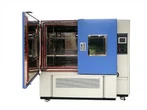
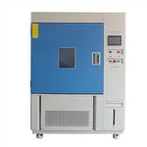
When materials and coatings face outdoor conditions, sunlight, humidity, heat, and rainfall all interact to cause fading, cracking, or peeling. Waiting months or years for natural exposure is impractical for R&D and quality assurance teams, making accelerated testing a crucial solution.
LIB's Sunshine Xenon Arc Weatherometer reproduces the full solar spectrum indoors, compressing months or years of outdoor exposure into days or weeks. It provides precise, repeatable, and standards-compliant testing, allowing manufacturers to predict material durability, color retention, and adhesion performance long before products reach the market. The Sunshine Xenon Arc Weatherometer supports plastics and packaging materials standards (ISO 4892-1/-2, ISO 29664, ASTM F1164, D882, D5071) as well as paint and coating standards (ASTM D3451, D6577, D6695, D7869, ISO 11341).
1. Causes Generated by the Sunshine Xenon Arc Weatherometer
The Sunshine Xenon Arc Weatherometer generates accelerated environmental stresses to evaluate material performance. UV, visible, and infrared light simulate natural sunlight across 280–800 nm. By combining light with controlled black panel temperature (BPT), chamber temperature, humidity, and water spray, the chamber reproduces outdoor degradation mechanisms, including fading, chalking, adhesion loss, cracking, and mechanical weakening. These factors are aligned with ASTM G151, G155, D6695, ISO 11341, and D7869 standards.
High irradiance levels (35–150 W/m²) combined with daylight, window glass, or UV-extended optical filters mimic realistic exposure scenarios for coatings, plastics, adhesives, and rubbers. Rapid, repeatable cycles allow engineers to observe degradation in a fraction of the time it takes outdoors, providing actionable insights for product improvement.
Moisture and rainfall are simulated through programmable water spray cycles (1–9999 h 59 m) with automatic water supply and closed-loop recovery. This ensures consistent stress on coatings while saving water and energy, all while maintaining ISO and ASTM-compliant traceability.
In addition, the Sunshine Xenon Arc Weatherometer allows precise control over test parameters such as temperature ramp rates, humidity levels, and light intensity, enabling customized testing protocols for specific material formulations.

》》》For more technical information and details about our Sunshine Xenon Arc Weatherometer, please feel free to email us at info@libtestchamber.com.
2. Procedure for Plastics and Coating Testing Using Sunshine Xenon Arc Weatherometer
Accelerated testing with the LIB Sunshine Xenon Arc Weatherometer follows a structured workflow to ensure accurate results and reproducibility. IIt evaluates UV degradation, fading, cracking, and mechanical weakening. With full-spectrum xenon light (280–800 nm) and precise control of Black Panel Temperature (35–85 °C), chamber temperature (ambient–100 °C), and humidity (50–98 % RH), engineers get fast, repeatable insights to optimize plastic durability.
For paints and coatings, the Weatherometer simulates sunlight and environmental stress to test color retention, gloss, cracking, chalking, and adhesion. Using ASTM G151, G155, D6695, ISO 11341, and D7869 standards, it controls irradiance (35–150 W/m²), temperature, humidity, and water spray. Developers can quickly predict long-term performance and validate product quality.
|
|
|
 |
|


Step 1 – Sample Preparation
Prepare test specimens according to ASTM C1257, ASTM C1442, ASTM D7869, and ISO 11341. Record baseline color, gloss, adhesion, and tensile properties before exposure. LIB's rotating turntable with adjustable speed (1 r/min) and 42-specimen capacity ensures uniform irradiance and environmental exposure across all samples, while integrated irradiance and BPT sensors monitor real-time light intensity within ±5% tolerance.
|
|
|
| Workroom |
Hanging specimen |


Step 2 – Program Exposure Cycle and Run the Test
Select a testing cycle based on the target application: ASTM D7869 for automotive coatings, ASTM G155 Cycle 1 for general outdoor exposure, or ISO 11341 for construction materials. Test durations typically range from 500 to 1600 hours. LIB chambers use 4500 W/6500 W water-cooled xenon lamps with automatic deionized water supply for humidity and spray control. PID-controlled temperature regulation maintains BPT 35–85 °C ±2 °C and chamber temperatures up to 100 °C ±2 °C.
Step 3 – Optical Filter Selection
Choose a filter to match real-world exposure conditions:
Daylight Filter: Simulates full outdoor sunlight for exterior coatings.
Window Glass Filter: Simulates indoor exposure through glass, for packaging and appliance adhesives.
UV-Extended Filter: Provides higher UV energy for accelerated degradation testing.
|
|
|


xenon lamp and filters
Step 4 – Data Recording and Pass/Fail Evaluation
After testing, measure post-exposure properties: color difference (ΔE), gloss, peel strength, tensile adhesion, and surface integrity. LIB chambers provide built-in data logging and export in CSV/PDF format for traceable reporting. Closed-loop humidification minimizes water use while maintaining strict control over environmental conditions.
LIB Advantage: The combination of high-precision sensors, water-cooled xenon lamps, rotating sample holders, and programmable cycles ensures repeatable and comparable results for coatings, plastics, adhesives, rubbers, and textiles.
 |
|
| Control system | Rain spray system |

》》》 Please feel free to email us at info@libtestchamber.com for detailed technical information, standard-compliant testing solutions, customized chamber configurations, or professional support from our experienced engineering team!
3. Maintenance of LIB Sunshine Xenon Arc Weatherometer
Routine maintenance keeps the chamber operating efficiently and ensures testing accuracy. Key steps include:
- Lamp Tube & Ignitor Check: Xenon lamp, ignitor, and power supply work together to initiate and maintain stable plasma discharge. High-current trigger ensures reliable ignition, while the power supply sustains constant light intensity.
- Water Tank Maintenance: Two tanks are included – large tank: 270 × 800 × 300 mm, small tank: 280 × 280 × 350 mm. Regularly drain, clean, and refill to maintain spray and humidity performance.
- Filter and Sensor Cleaning: Quartz and borosilicate filters maintain spectrum accuracy. PT100 Class A temperature sensors and irradiance meters should be inspected and cleaned for ±0.001 °C accuracy and ±5 % irradiance tolerance.
- Mechanical & Electrical Checks: Inspect circulating fans, heating strips, compressors, solid-state relays, and contactors. Ensure electrical connections are secure and all moving parts rotate freely.
- Water Spray System: Clean nozzles and check connections monthly to prevent clogs. Confirm the float ball and water level sensors operate correctly.
LIB provides detailed visual guides and operational videos to assist with proper maintenance, extending lamp life and maintaining testing precision.
4. FAQs on Sunshine Xenon Arc Weatherometer
Q1: How are the lamp tube, ignitor, and power supply matched?
A: The lamp tube generates light through high-temperature plasma discharge. The ignitor provides the instant high-current pulse for ignition. The power supply maintains stable voltage and current, ensuring continuous operation and constant light intensity.
Q2: What are the dimensions of a xenon lamp tube?
A: According to ASTM G155, the standard lamp tube is 42 cm long with a 25 mm diameter, designed for uniform full-spectrum output covering 280–800 nm.
Q3: Can a blackened lamp tube be cleaned and reused?
A: Minor darkening can be cleaned carefully to extend life, but for precision testing, replacement is recommended once severe blackening occurs. LIB provides detailed cleaning tutorials.
Q4: How many water tanks does the system have, and what are their sizes?
A: Two tanks: large tank 270 × 800 × 300 mm and small tank 280 × 280 × 350 mm, supporting automatic humidity and spray control.
Q5: Is BPT higher than the chamber temperature?
A: Yes. Black Panel Temperature (BPT) reflects both chamber air temperature and lamp irradiation, typically 10 °C higher, accurately simulating real thermal load on the sample.
LIB's Sunshine Xenon Arc Weatherometer delivers precise, repeatable, and standards-aligned accelerated testing. It enables R&D, quality control, and certification teams to confidently predict material performance under real-world environmental stresses.
Contact LIB Industry to discuss model selection, custom profiles, and detailed quotes tailored to your industry standards and test plans.