Photovoltaic panels are expected to operate outdoors for more than 25 years, facing constant exposure to sunlight, heat, humidity, rain, and freezing temperatures. Even small material defects can grow into power loss, delamination, corrosion, or insulation failure after years of environmental stress.
LIB provides a complete and standardized solution for photovoltaic environmental aging tests, combining UV Preconditioning Test Chambers, Temperature and Humidity Test Chambers and so on. Together, they help manufacturers simulate long-term outdoor exposure in a controlled laboratory environment-faster, safer, and fully compliant with international standards.
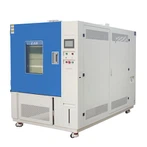
LIB Temperature and Humidity Test Chambers are specifically engineered for photovoltaic module qualification under IEC 61215 and IEC 61646. With precise temperature control, stable humidity regulation, and flexible panel racking, LIB chambers support damp heat, thermal cycling, and humidity freeze tests required for global PV certification.
1. Why Environmental Testing Is Critical for Photovoltaic Panels
Environmental testing verifies long-term reliability before panels reach the field. Laboratory aging tests expose hidden weaknesses in materials, solder joints, and sealing structures that are not visible in short electrical tests.
Heat and humidity accelerate material degradation. Under high temperature and high humidity, moisture can penetrate module layers, causing corrosion, PID effects, and insulation breakdown that reduce output power.
Temperature cycling reveals mechanical fatigue. Repeated expansion and contraction between hot and cold extremes create cracks in solar cells and fatigue in interconnections.
Standardized testing ensures global compliance. Environmental aging tests performed according to IEC standards are mandatory for certification, market access, and long-term warranty validation.

Environmental testing for Photovoltaic panels
2. How to Perform UV Preconditioning for Photovoltaic Panels
Before thermal and humidity aging tests, photovoltaic panels must undergo UV preconditioning to simulate long-term sunlight exposure.
UV radiation primarily degrades polymer-based materials such as sealants, and adhesives. UV preconditioning ensures that subsequent thermal cycling and damp heat tests reflect realistic outdoor aging behavior.
IEC 61215 UV Pretreatment
LIB UV Preconditioning Test Chamber is designed in accordance with IEC 61215.
|
|
|


Typical UV Test Parameters:
|
Item |
Specification |
|
UV wavelength range |
280 nm – 400 nm |
|
UVA proportion |
90% – 97% |
|
UVB proportion |
3% – 10% |
|
UVC content |
< 0.1% |
|
Irradiance dose (280–320 nm) |
7.5 kWh/m² |
|
Irradiance dose (320–400 nm) |
15 kWh/m² |
|
Maximum UV irradiance |
< 250 W/m² |
LIB UV Preconditioning Chamber Advantages
- 30 UV lamps total: 20 UVA + 10 UVB lamps for uniform irradiation(With the improvement of UV lamps, and in accordance with the IEC 61215 requirement that UVA accounts for 8% and UVB accounts for 3%–10%, LIB will adopt the most advanced UVA lamps that incorporate UVB components to meet this standard.)
- Black Panel Temperature (BPT) control from 35 °C to 80 °C
- Chamber temperature range: Ambient to 90 °C ±2 °C
- Adjustable specimen holders for customized full-size PV panels
- SUS304 stainless steel interior for corrosion resistance and long service life
- After UV exposure, panels are transferred directly to the temperature and humidity chamber without interruption.
》》》For more technical information and details about our UV Test Machine, please feel free to email us at info@libtestchamber.com.
3. Procedure for Photovoltaic Panels Testing Using LIB Temperature and Humidity Test Chamber
Environmental aging tests for PV panels involve multiple stages. LIB chambers are designed to support each step with precision, stability, and ease of operation.
Under IEC 61215 and IEC 61646, photovoltaic modules must pass damp heat, thermal cycling, and humidity freeze tests. LIB Temperature and Humidity Test Chambers provide a stable and repeatable environment to complete all required tests in one system.

Step 1: Sample Installation and Preparation
PV panels are mounted vertically or at a defined tilt using adjustable stainless steel racks.
LIB Capabilities:
- Panel size support: up to 1.5 m × 2.5 m (customizable)
- Panel capacity: 4 / 6 / 8 / 10 / 12 panels
- Adjustable rack height and spacing
- Optional roller racks for heavy modules
- Uniform airflow ensures all panels experience the same conditions.
Step 2: Damp Heat Test (85 °C / 85 % RH Test)
The 85 °C / 85 % RH test is one of the most critical aging tests under IEC 61215.
Test Conditions:
|
Test Temperature |
85 °C ±2 °C |
|
Relative Humidity |
85 % ±5 % RH |
|
Test Duration |
1000 hours continuous |
LIB Performance:
- Temperature fluctuation: ±0.5 °C
- Temperature deviation: ±2.0 °C
- Humidity deviation: ±2.5 % RH
- PT100 Class A sensors with ±0.001 °C resolution
This test evaluates resistance to moisture ingress, corrosion, and insulation degradation.
Step 3: Thermal Cycling Test
Thermal cycling simulates daily and seasonal temperature changes.
IEC 61215 Requirements:
| Temperature Range | –40 °C to +85 °C |
| Temperature Change Rate | 1–3.4 °C/min |
| Test Cycles | Multiple repeated cycles |
LIB Advantage:
High-efficiency compressors and optimized airflow allow stable ramp rates without overshoot, ensuring compliance with strict IEC limits.
Step 4: Humidity Freeze Test
Humidity freeze testing combines moisture exposure with sub-zero temperatures.
Test Profile:
| Test Conditions | Cycling between 85 °C / 85 % RH and –40 °C |
| Test Cycles | 10 cycles with extended soaking at high humidity |
LIB Advantage:
Advanced PID control ensures smooth transitions and stable humidity control throughout the test.
Step 5: Monitoring and Data Logging
- Programmable controller with 120 programs / 100 steps each
- Real-time temperature and humidity curves
- PC-Link connection for data export
- Supports ISO/IEC 17025 documentation requirements
》》》To receive customized solutions and pricing for the PV panels Test Machine, please contact us at info@libtestchamber.com.
4. FAQs on Temperature and Humidity Test Chamber
Q1: Can the power connection cable come with a plug instead of bare wires?
We recommend customers prepare their own plug. The chamber is supplied without a plug to avoid laboratory wiring errors and to ensure safer operation.
Q2: Will modifying the standard design or chamber size increase costs?
Yes. Non-standard customization usually involves additional costs. Pricing depends on design complexity and material usage, and LIB provides transparent quotations.
Q3: What is the maximum fast temperature change rate? Can it reach 20 °C/min?
The standard rate is 5–10 °C/min. Upon request, LIB can customize systems to reach 20 °C/min or higher.
Q4: What is the dew point temperature in the chamber?
LIB Temperature and Humidity Test Chambers primarily control relative humidity and do not directly measure dew point temperature.
Q5: Does the chamber support remote connection?
PC-Link connectivity is standard. Optional Wi-Fi remote control is available for USD 2063.
By combining UV Preconditioning Test Chambers and Temperature & Humidity Test Chambers, LIB delivers a complete, IEC-compliant solution for photovoltaic environmental aging tests. From UV degradation to 1000-hour damp heat exposure, LIB systems help manufacturers validate durability, protect long-term performance, and accelerate certification timelines.
Contact LIB Industry today for a technical consultation, application guidance, or customized photovoltaic testing solution.