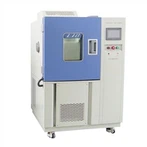
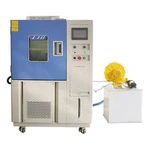
Modern products rarely fail because of a single extreme condition. Instead, failure usually happens after repeated exposure to heat, cold, and humidity-day after day, year after year. A plastic housing becomes brittle, a solder joint cracks, insulation absorbs moisture, or corrosion slowly develops inside a sealed enclosure. These issues are almost invisible at the beginning, but catastrophic in the field.
A temperature cycle chamber is designed to reveal these risks early. By repeatedly cycling products through controlled temperature and humidity ranges, engineers can compress years of real-world environmental stress into days or weeks of laboratory testing.
LIB temperature cycle chambers are built to do exactly that. By combining wide temperature ranges, stable humidity control, fast ramp rates, and compliance with global standards, LIB provides a reliable platform for product verification, qualification, and certification across electronics, batteries, automotive components, photovoltaics, and lighting industries.
Importance of a Temperature Cycle Chamber
A temperature cycle chamber is essential because it accelerates years of natural environmental exposure into a short, controlled test period. In real life, products may experience slow temperature changes over many years during storage, transportation, and use. A temperature cycle chamber compresses this long-term aging process into days or weeks by repeatedly cycling between high and low temperatures. This accelerated testing reveals hidden reliability defects such as solder fatigue, material delamination, seal failure, and micro-cracks-failures that often remain undetected in static or room-temperature tests.
A temperature cycle chamber is essential because thermal cycling exposes hidden reliability defects. Repeated expansion and contraction caused by temperature changes reveal solder fatigue, material delamination, seal failure, and micro-cracks that static tests cannot detect. Humidity control is critical because moisture accelerates failure mechanisms. High humidity promotes corrosion, electrochemical migration, insulation degradation, and polymer aging. A stable range of 20 % to 98 % RH with ±2.5 % RH accuracy ensures realistic environmental simulation.
Fast and controllable ramp rates directly improve test efficiency. With standard heating and cooling rates of 5–10 °C/min, and optional customization up to 20 °C/min, LIB chambers significantly shorten validation cycles without sacrificing accuracy.

Temperature Cycle Chamber for Precise Temp testing
1. Small Benchtop Temperature Cycle Chamber
2. Constant Temperature Cycle Chamber
3. High-Precision Walk in Temperature Cycle Chamber
4. Temperature Explosion Proof Test Chamber
5. Energy-Efficient Battery Thermal Test Chamber
6. Programmable 2-Zone And 3-Zone Vertical Thermal Shock Test Chamber
》》》For more technical information and details about our Temperature Cycle Chamber, please feel free to email us at info@libtestchamber.com.
Applications and Relevant Standards of the Temperature Cycle Chamber
LIB temperature cycle chambers are designed to meet the most widely used international standards across multiple industries.
Battery Testing Applications and Standards
Used for lithium-ion cells, modules, and battery packs to evaluate safety, durability, and thermal endurance:
UL 2580 – EV battery safety
UL 2271 – Battery systems for light EVs
UL 1642, UL 2054, UL 1973
IEC 62660-2, IEC 61960, IEC 62133
SAE J2929, SAE J2464
IEC 60068-2-30 – Damp heat cyclic testing
Photovoltaic Module Testing
IEC 61215
Validates long-term exposure of solar modules to temperature cycling and humidity stress.
Automotive Components
SAE J2334 – Accelerated corrosion and environmental cycling
VW 80000 – Automotive electrical and electronic component testing
Luminaire and Lighting Materials
IEC 62717
Evaluates LED materials and components for lumen maintenance and environmental durability.
Procedure for Electronic Product Testing Using a LIB Temperature Cycle Chamber
Electronic products are highly sensitive to temperature gradients and moisture ingress. LIB chambers are engineered to maintain precise, uniform, and repeatable conditions at every stage of testing. Electronic testing typically follows a structured temperature–humidity cycle to verify functional stability, insulation performance, and long-term reliability under environmental stress.
|
|
 |
||||
| Name | Temperature Cycle Chamber | ||||
|
Model |
TH-100 |
||||
|
Internal dimension (mm) |
400*500*500 |
||||
|
Overall dimension (mm) |
860*1050*1620 |
||||
|
Capacity |
100L |
||||
|
Temperature range |
-20℃ ~+150 ℃ |
||||
|
Low type |
A: -40℃ B:-70℃ C -86℃ |
||||
|
Humidity Range |
20%-98%RH |
||||
|
Temperature deviation |
± 2.0 ℃ |
||||
|
Heating rate |
3 ℃ / min |
||||
|
Cooling rate |
1 ℃ / min |
||||
|
Controller |
Programmable color LCD touch screen controller, Multi-language interface, Ethernet , USB |
||||
|
Refrigerant |
R404A, R23 |
||||
|
Exterior material |
Steel Plate with protective coating |
||||
|
Interior material |
SUS304 stainless steel |
||||
|
Standard configuration |
1 Cable hole (Φ 50) with plug; 2 shelves |
||||
|
Timing Function |
0.1~999.9 (S,M,H) settable |
||||

Step 1: Test Profile Setup and Programming
LIB advantage: Advanced programmable controller with high storage capacity
A 7-inch color touchscreen controller allows engineers to program complex cycles easily. Up to 120 test programs, each with 100 programmable steps.
Temperature range: –70 °C to +150 °C
Temperature fluctuation: ±0.5 °C
Temperature deviation: ±2.0 °C
This flexibility supports standards-based testing and custom qualification profiles.
Step 2: Sample Loading and Live Testing Preparation
LIB advantage: Flexible racks and customizable cable holes
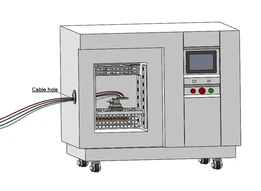
Adjustable shelves support PCBs, electronic modules, and assembled devices. Customizable cable holes (shape, size, and quantity) allow power-on testing, enabling real-time monitoring of functional performance during cycling.
|
|
|
|
| Robust Workroom | Cable Hole | Temperature and Humidity Sensor |


Step 3: Temperature and Humidity Cycling Execution
LIB advantage: Stable ramp control and precise sensing
Heating and cooling rates reach 5 °C/min standard, with optional upgrades up to 20 °C/min.
PT100 Class A sensors provide 0.001 °C resolution, while PID control minimizes overshoot and ensures stable transitions between setpoints.
Step 4: Monitoring, Curve Display, and Data Logging
LIB advantage: Built-in real-time curve drawing
Temperature and humidity curves are displayed live during the test.
Data recording frequency: once per minute
Storage capacity: up to 3 years of continuous records
Export via USB or Ethernet in CSV format for traceability and audits
Step 5: Test Completion and Result Evaluation
LIB advantage: Uniform airflow for repeatable results
Multi-directional centrifugal fans maintain internal temperature uniformity within ±1.5 °C, ensuring all samples experience identical conditions and eliminating retests caused by hot or cold spots.
|
|
|
|
|
|---|---|---|---|
 |
 |
 |
|
| Name | Small Temperature Cycle Chamber | Standing Temperature Cycle Chamber | Walk-In Temperature Cycle Chamber |
| Capacity |
TH-50: 800x1050x950 mm TH-80: 900×1100×1000mm |
Capacity: 100L; 225L; 500L; 800L; 1000L |
>20m³ |
| Throughput | Ideal for small components, sensors, boards | Subassemblies or mid-volume batches |
Bulk testing of items or vehicles as a whole |


》》》To receive customized solutions and pricing for the Temperature Cycle Chamber, please contact us at info@libtestchamber.com.
FAQs on Temperature Cycle Chambers
Q1: Is there audible and visual alarm functionality?
The chamber is equipped with standard audible alarms to alert operators of critical abnormalities. Visual alarm systems are available as optional configurations and can be customized according to application needs.
Q2: How long does it take for humidity to reach the set value?
The humidity control system is efficient and stable. Under normal conditions, the set humidity level is reached within 30 minutes, ensuring smooth test execution.
Q3: What is the maximum fast temperature change rate? Can it reach 20 °C/min?
The standard ramp rate is 5–10 °C/min. 20 °C/min or higher can be achieved through non-standard customization, fully supporting demanding test requirements.
Q4: How is the temperature and humidity calibrated?
Factory calibration is performed after assembly. Temperature calibration uses nine evenly distributed probes inside the chamber to verify uniformity. Humidity calibration is based on the dry- and wet-bulb comparison method, with hardware adjustments made to ensure accuracy before shipment.
Q5: Can curves be drawn during the test process?
Yes. Curve drawing is a standard controller function. Data is automatically recorded every minute, stored long-term, and remains fully traceable for quality audits.
Contact LIB Industry today to upgrade your temperature and humidity testing capabilities with a temperature cycle chamber engineered for accuracy, speed, and global compliance.