1. What is hydrogen sulfide
Hydrogen sulfide is a colorless gas with a distinct rotten egg smell. It can be found in a variety of natural sources such as volcanoes, swamps and hot springs.
It is important to note that high concentrations of hydrogen sulfide can be dangerous. Exposure to high concentrations of this gas can cause respiratory illness and even death. Therefore, it is important to take the necessary safety precautions when working with or around hydrogen sulfide.
Dry hydrogen sulfide gas has no corrosive effect, while wet hydrogen sulfide gas or solution has a strong cracking corrosion effect. The partial pressure of the corrosion effect of wet hydrogen sulfide is very low, only 350Pa. The concentration of chlorine sulfide in the process of oil and gas development is far more than this value, so the corrosion and damage phenomenon of steel in the hydrogen sulfide medium is very obvious.
2. How does it corrode-Hydrogen sulfide electrochemical corrosion process
H2S has a high solubility in water, and as soon as it is dissolved in water, it immediately ionizes, making the water acidic. The hydrogen ion generated by ionization is a strong depolarizing agent, which is easy to seize electrons in the cathode and promote the dissolution reaction of the anode iron, resulting in comprehensive corrosion of steel. FeS produced by anode reaction is usually a protective layer with defective structure, poor adhesion to the surface of steel, easy to fall off, easy to oxidize, easy to be permeated by chloride ions, and the potential is relatively positive. So as a cathode and steel matrix to form an active microbattery to continue to corrode the matrix.
3. Which products are susceptible to corrosion by hydrogen sulfide
One of the most common products that can be affected by hydrogen sulfide is metal. Metals that are prone to corrosion by hydrogen sulfide include copper, brass, aluminum, and iron. When exposed to hydrogen sulfide, these metals can react and form compounds that weaken their structure and eventually lead to decay.
Plastics can also be affected by hydrogen sulfide. Certain types of plastics, such as PVC and polycarbonate, can become brittle and crack when exposed to hydrogen sulfide. This can lead to leaks and other forms of damage that can be costly to repair.
In addition to metals and plastics, concrete can be susceptible to corrosion by hydrogen sulfide. The gas can cause the formation of sulfuric acid when it reacts with water that has permeated the concrete. This can lead to the degradation of the concrete and a loss of structural integrity.
4. Determine the effect of hydrogen sulfide on the product-hydrogen sulfide corrosion test
Hydrogen sulfide test is a method for corrosion test of coating by artificially making an air medium containing H2s.
The hydrogen sulfide test is usually conducted in the test chamber. The H2s gas is generated directly with the temperature control and pressure reduction device, and then mixed with air, so that the coating on the sample will undergo corrosion reaction at a certain temperature, pressure, and concentration. Thus, the corrosion resistance of the coating to hydrogen sulfide industrial atmosphere can be evaluated.
The test conditions of hydrogen sulfide test should be controlled as follows:
Temperature: 25℃±2℃
Relative humidity: 75%±5%
H2s concentration: (10~15) x10-6 (volume ratio)
5. Hydrogen sulfide corrosion test equipment
|
Temperature Range 15 ℃ ~ 80 ℃ Temperature Fluctuation ± 0.5 ℃ Temperature Deviation ± 2.0 ℃ Humidity Range 30% ~ 98% RH Humidity Deviation ±1% RH SO2 Concentration 25±5 ppm Air Change Rate 3~5 /h |
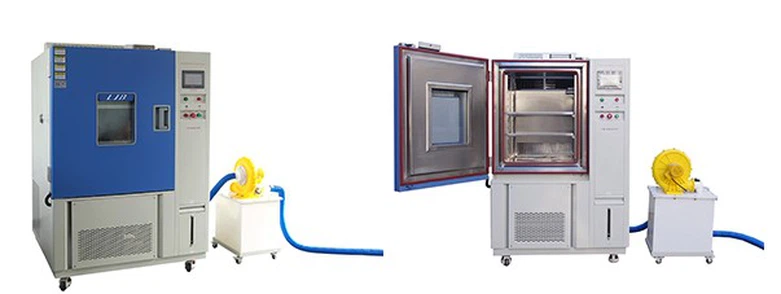
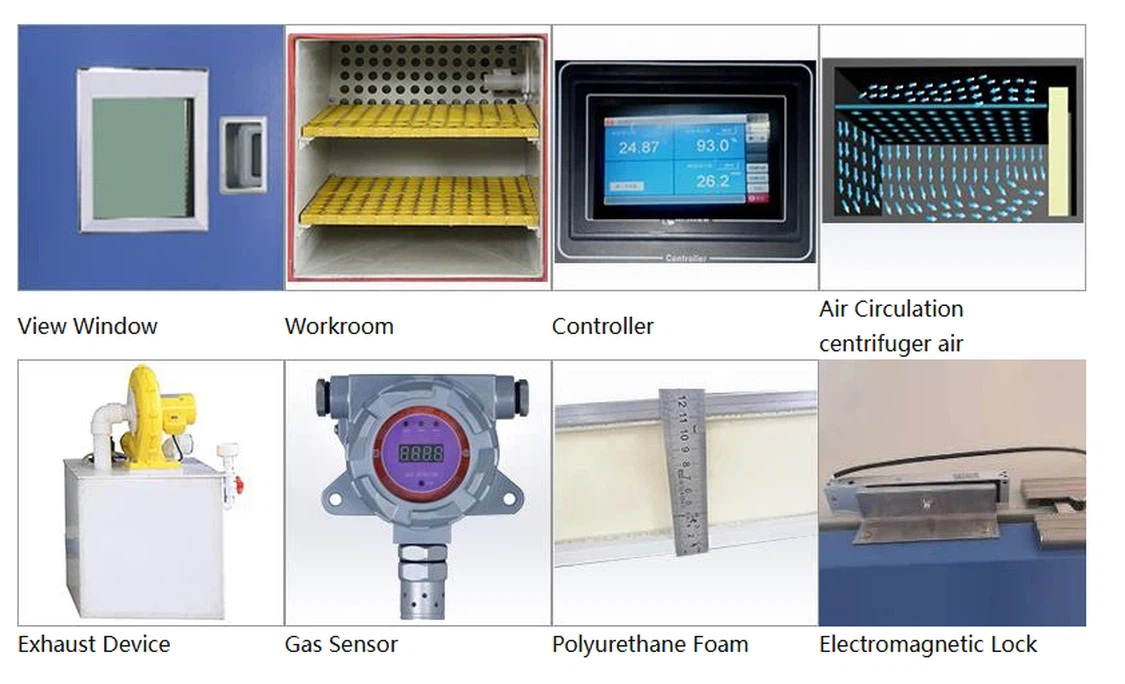
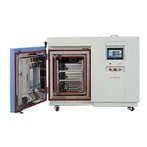
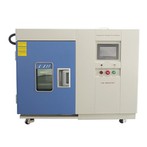
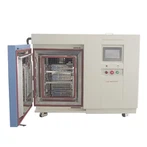
LIB Noxious Gas Flow Chamber's workroom has a two-layer design. The inner layer of the studio of this product is SUS304 steel plate, and the outer layer is made of highly corrosion-resistant FRP. This not only ensures the sturdiness of the box, but also effectively improves the corrosion resistance of the workroom, thus increasing the life of the machine.
LIB's H₂S Corrosion Noxious Gas Test Chamber delivers precise and stable environmental control for accurate corrosion simulation. The temperature range of 15℃ to 80℃ and humidity range of 30% to 98% RH allow flexible testing under various climatic conditions. The SO₂ concentration is controlled at 25 ± 5 ppm with a high-accuracy gas sensor, ensuring reliable and repeatable results. The intelligent PID controller continuously monitors and adjusts gas concentration, temperature, and humidity to maintain stable test conditions throughout the entire cycle.
The chamber supports single-gas, sequential multi-gas, and mixed gas testing, making it suitable for H₂S, SO₂, NO₂, NH₃, and other corrosive gases. Adjustable concentration ranges enable laboratories to simulate different industrial atmospheric environments, from mild exposure to accelerated corrosion conditions. This flexibility makes the chamber ideal for testing coatings, metals, electronic components, automotive parts, and textile materials.
Built with a SUS304 stainless steel interior and corrosion-resistant exterior materials, the chamber ensures long-term durability even under harsh gas exposure. The 10 cm thick polyurethane foam insulation improves thermal stability and energy efficiency. The mechanical compression refrigeration system with refrigerant ensures consistent cooling performance, while the nichrome heater provides stable heating.
Uniform gas distribution is achieved through an advanced air circulation system with 3–5 air changes per hour, ensuring all samples receive consistent exposure. Adjustable sample shelves made of acid-resistant stainless steel allow flexible placement for different specimen sizes. This guarantees reliable and repeatable corrosion testing results across all samples.
Safety is a core design priority. The double-layer silicone sealing structure prevents gas leakage, and the electromagnetic lock ensures secure operation during testing. The built-in NaOH neutralization exhaust tank effectively treats residual gases before discharge, protecting both operators and the environment. Real-time monitoring of gas concentration and environmental parameters further enhances operational safety.
The chamber complies with international standards such as IEC 60068-2-42 and IEC 60068-2-60, ensuring globally recognized testing procedures. CE and RoHS certifications provide additional assurance of product quality and regulatory compliance.
LIB offers customization options to meet specific testing requirements, along with a 3-year warranty and lifetime technical support. Fast delivery within 7–15 days and a 24/7 English-speaking after-sales team ensure professional and responsive service worldwide.
Contact LIB Industry today to learn more about our H₂S, SO₂, NO₂, NH₃, and mixed flow gas corrosion test chambers, and discover how our advanced environmental simulation solutions can enhance the durability and reliability testing of your products.