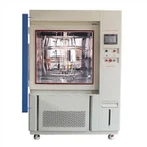
Environmental reliability testing is no longer optional in modern product development. A single electronic failure in aerospace, automotive, or consumer devices can lead to system breakdowns, safety risks, and costly recalls. Engineers today need equipment that can reproduce real-world environments in a controlled and repeatable way.
Mini climatic simulation chambers are designed exactly for this purpose-bringing temperature, humidity, and environmental stress testing into compact laboratory spaces with high precision and international standard compliance.
This article explains how mini climatic simulation chambers work, how they are used under IEC standards, and how LIB solutions help engineers improve testing accuracy, efficiency, and reliability.
Definition of Mini Climatic Simulation Chamber
Why Mini Climatic Simulation Chambers Were Developed
Modern electronic components are getting smaller, but their reliability requirements are increasing. Devices like sensors, PCB assemblies, and aerospace modules must survive extreme environments ranging from –40°C cold storage to +125°C operational heat.
Traditional large environmental chambers consume too much space and energy for small-scale laboratory testing. This created demand for mini climatic simulation chambers, which offer:
Bench-top installation in labs (50–80L capacity)
Faster temperature response for small samples
Lower water and electricity consumption
High-precision environmental simulation in compact space
They are widely used in electronics R&D, automotive validation labs, and aerospace component qualification.
Working Principle: How Environmental Conditions Are Simulated
A mini climatic simulation chamber reproduces environmental stress through controlled temperature and humidity systems.
Temperature Control System
A refrigeration system and electric heating module work together to achieve rapid temperature changes, typically from –70°C to +150°C, depending on configuration.
Humidity Control System
Water evaporation and condensation systems regulate humidity between 20% RH and 98% RH, allowing long-term moisture exposure testing.
Airflow Uniformity Design
Centrifugal fans circulate air evenly to ensure temperature deviation stays within ±2.0°C, preventing localized overheating or cold spots.
This combination allows engineers to simulate real-world conditions such as:
Tropical humidity exposure
Desert heat aging
Cold-start automotive conditions
Transportation thermal shock
IEC 60068 Testing Method Requirements
Mini climatic simulation chambers are commonly used under IEC 60068 environmental testing standards, which define how equipment should be tested under controlled environmental stress.
Key IEC 60068 test conditions include:
Temperature range: typically –40°C to +125°C (depending on product class)
Humidity range: 10%–95% RH
Temperature cycling: repeated transitions between extremes
Dwell time: 10–30 minutes per condition
Stability tolerance: ±2°C temperature accuracy requirement
Common IEC test types:
IEC 60068-2-1 (Cold test)
IEC 60068-2-2 (Dry heat test)
IEC 60068-2-14 (Temperature change test)
IEC 60068-2-30 (Damp heat cyclic test)
These standards ensure products can survive real-world environmental stress before certification and market release.
LIB Mini Climatic Simulation Chamber for IEC 60068 Electronic Testing
Electronic reliability testing requires strict compliance with IEC 60068-2-14 temperature change cycles, which simulate thermal stress in real operation.
Typical IEC 60068-2-14 Cycle
A standard temperature cycling profile includes:
Low temperature: –40°C
High temperature: +125°C
Ramp rate: 3–5°C/min
Dwell time: 10–15 minutes at each extreme
Number of cycles: 100–1000 cycles
This cycle simulates:
Automotive engine compartment heat stress
Aircraft avionics temperature fluctuation
Outdoor telecom equipment aging
LIB Model Example: TH-80 Mini Climatic Simulation Chamber
The LIB TH-80 is designed for IEC-based environmental reliability testing in compact laboratories.
It supports:
Temperature range: –70°C to +150°C
Humidity range: 10%–95% RH
Rapid cycling with programmable profiles
Stable ±2°C temperature uniformity
It is widely used for PCB testing, connector validation, and aerospace electronics qualification.
LIB Advantages
1. High-Precision Control System
PT100 Class A sensors provide ±0.001°C resolution for accurate temperature tracking.
2. Stable Environmental Uniformity
Optimized airflow design ensures consistent conditions across all sample positions.
3. Intelligent Programming Interface
A 7-inch touchscreen supports up to 120 programs and 100-step testing sequences.
4. Compact Laboratory Integration
Benchtop design allows direct placement in R&D environments without dedicated rooms.
Example Application Case
A Thai aerospace supplier reported improved test efficiency after using LIB chambers for thermal cycling validation. Engineers reduced manual intervention and achieved stable IEC 60068 compliance testing with automated cycling programs.
LIB Climatic Simulation Chamber Types and Selection Guide
LIB provides three main categories of climatic simulation systems depending on testing requirements:
Mini Climatic Simulation Chamber (50–80L)
Best for:
Electronic components
PCB boards
Small sensors
Advantages:
Compact size
Fast thermal response
Low energy consumption
Standard Climatic Simulation Chamber (100–1000L)
Best for:
Automotive parts
Battery modules
Medium-sized assemblies
Advantages:
Larger sample capacity
Stronger load stability
Multi-sample testing
Drive-In / Walk-In Climatic Chamber
Best for:
Full vehicle components
Aerospace structures
Large industrial products
Advantages:
Full-scale simulation
Custom temperature zoning
High-capacity endurance testing
Selection Recommendation
If testing small electronics → Mini chamber (TH-50 / TH-80)
If testing system components → Standard chamber
If testing full assemblies → Drive-in chamber
FAQs on LIB Mini Climatic Simulation Chamber
Q1: What is a mini climatic simulation chamber mainly used for?
A: It is used to simulate real environmental conditions such as temperature changes and humidity exposure in a controlled laboratory space. It is commonly applied in electronic reliability testing, especially under standards like IEC 60068, JEDEC JESD22-A104, and MIL-STD-810, to check whether products can survive real-world stress.
Q2: Can it replace a temperature oven?
A: No. A mini climatic simulation chamber and a temperature oven serve different purposes. The chamber is designed for environmental simulation (temperature + humidity + cycling), while an oven is mainly for high-temperature processes such as drying, curing, or aging without humidity control or cycling capability.
Q3: How long does a typical temperature cycling test take?
A: It depends on the test standard and product requirement. For example, under IEC 60068-2-14, one cycle between –40°C and +125°C may take about 30–60 minutes. A full test can range from 100 to 1000 cycles, meaning it may last from several days to several weeks.
Q4: Is the LIB chamber difficult to operate?
A: No. LIB chambers are designed for simple operation. Users only need to set the test program through a touchscreen interface, and the system will run automatically. Many users report that even advanced functions like temperature cycling or FIX mode can be learned quickly without complex training.
Q5: How is installation handled?
A: Installation is very straightforward. LIB mini chambers are plug-and-play systems, usually requiring only power connection, leveling, and basic calibration. In most cases, installation can be completed within 1–2 hours.