In the present cutthroat market, guaranteeing item quality and life span is vital for makers across different enterprises. One significant part of value confirmation is shelf life testing, a cycle that decides how long an item can keep up with its planned quality under unambiguous capacity conditions. This article digs into the complexities of standard shelf life testing, investigating its significance, philosophies, and the job of shelf life test chambers in this basic cycle.
Understanding Shelf Life Testing
Shelf life testing is a systematic approach to evaluating how long a product can retain its quality, safety, and efficacy under predetermined storage conditions. This process is essential for a wide range of products, including food, pharmaceuticals, cosmetics, and even certain industrial goods. By conducting thorough shelf life tests, manufacturers can provide accurate expiration dates, ensure product safety, and maintain consumer trust.
The Importance of Shelf Life Testing
Shelf life testing serves several crucial purposes in the product development and quality assurance process. It helps manufacturers:
- Determine optimal packaging materials and methods
- Identify potential degradation factors
- Establish appropriate storage conditions
- Comply with regulatory requirements
- Minimize product waste and recalls
Types of Shelf Life Tests
There are two primary types of shelf life tests:
- Real-time testing: Products are stored under normal conditions for the duration of their expected shelf life.
- Accelerated testing: Products are subjected to elevated stress conditions to simulate long-term storage in a shorter timeframe.
Factors Affecting Shelf Life
Several factors can impact a product's shelf life, including:
- Temperature
- Humidity
- Light exposure
- Oxygen levels
- Microbial contamination
- Packaging integrity
The Role of Shelf Life Test Chambers
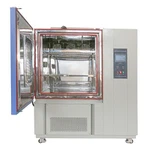
Shelf life test chambers play a pivotal role in conducting accurate and reliable shelf life tests. These specialized environmental chambers provide controlled conditions that simulate various storage environments, allowing manufacturers to assess product stability over time.
Features of Shelf Life Test Chambers
Modern shelf life test chambers offer a range of features designed to facilitate precise and consistent testing:
- Precise temperature and humidity control
- Programmable light cycles
- Adjustable air circulation
- Data logging and monitoring capabilities
- Multiple shelf configurations for various product sizes
Types of Shelf Life Test Chambers
There are several types of shelf life test chambers available, each designed for specific testing requirements:
- Walk-in chambers for large-scale testing
- Reach-in chambers for smaller batch testing
- Photostability chambers for light-sensitive products
- Humidity chambers for moisture-sensitive items
- Thermal shock chambers for extreme temperature fluctuations
Selecting the Right Shelf Life Test Chamber
Choosing the appropriate shelf life test chamber depends on various factors, including:
- Product characteristics and sensitivity
- Required testing conditions
- Sample size and quantity
- Testing duration
- Budget constraints
Standard Shelf Life Testing Methodologies
To ensure accurate and reliable results, standard shelf life testing follows established methodologies and protocols. These methods are designed to provide consistent and reproducible data across different products and industries.
Establishing Test Parameters
Before initiating a shelf life test, it's crucial to define the following parameters:
- Target shelf life duration
- Storage conditions (temperature, humidity, light exposure)
- Packaging specifications
- Sampling intervals and frequencies
- Quality attributes to be measured
Conducting the Shelf Life Test
The shelf life testing process typically involves the following steps:
- Sample preparation and packaging
- Initial quality assessment
- Placement in shelf life test chambers
- Periodic sampling and analysis
- Data collection and interpretation
- Final shelf life determination
Data Analysis and Interpretation
Analyzing shelf life test data requires careful consideration of various factors:
- Statistical analysis of quality attribute changes
- Evaluation of microbial growth patterns
- Assessment of sensory characteristics
- Comparison with established quality thresholds
- Extrapolation of results for accelerated testing
Challenges in Shelf Life Testing
While shelf life testing is crucial for product quality assurance, it comes with its own set of challenges that manufacturers must navigate:
Time and Resource Constraints
Real-time shelf life testing can be time-consuming, especially for products with long shelf lives. This can delay product launches and tie up resources for extended periods. Accelerated testing can help mitigate this issue, but it requires careful correlation with real-time results.
Variability in Environmental Conditions
Products may encounter a wide range of environmental conditions during storage and distribution. Shelf life test chambers must be capable of simulating these diverse conditions accurately to provide reliable results.
Complex Product Formulations
Many modern products have complex formulations with multiple ingredients, each potentially affecting shelf life differently. This complexity can make it challenging to predict and analyze degradation patterns accurately.
Advancements in Shelf Life Testing Technology
The field of shelf life testing is continually evolving, with new technologies and methodologies emerging to enhance accuracy and efficiency:
Predictive Modeling
Advanced software tools now allow manufacturers to create predictive models based on historical data and accelerated testing results. These models can help estimate shelf life more quickly and accurately, reducing the need for lengthy real-time tests.
Smart Sensors and IoT Integration
The integration of smart sensors and Internet of Things (IoT) technology in shelf life test chambers enables real-time monitoring and data collection. This advancement allows for more precise control of testing conditions and immediate alerts if any parameters deviate from set ranges.
Non-Destructive Testing Methods
Emerging non-destructive testing techniques, such as hyperspectral imaging and near-infrared spectroscopy, allow for the assessment of product quality without destroying samples. This approach enables more frequent testing and reduces the number of samples required for shelf life studies.
Conclusion
Standard shelf life testing is a critical process in ensuring product quality, safety, and consumer satisfaction. By utilizing advanced shelf life test chambers and following established methodologies, manufacturers can accurately determine product longevity and optimize storage conditions. As technology continues to advance, the field of shelf life testing will likely see further improvements in efficiency and accuracy, benefiting both producers and consumers alike.
Contact Us
For more information about our state-of-the-art shelf life test chambers and how they can enhance your product testing processes, please contact us at info@libtestchamber.com. Our team of experts is ready to assist you in finding the perfect solution for your shelf life testing needs.
References
1. Johnson, M. E., & Hartel, R. W. (2021). Shelf Life Testing: Methods and Applications in Food Science. CRC Press.
2. Smith, A. K., & Jones, B. L. (2019). Advances in Shelf Life Testing Methodologies for Pharmaceutical Products. Journal of Pharmaceutical Sciences, 108(7), 2149-2161.
3. Brown, C. D., & Davis, E. F. (2020). Environmental Test Chambers: Design, Applications, and Best Practices. Springer.
4. Thompson, R. H., & Wilson, G. S. (2018). Accelerated Shelf Life Testing: Principles and Applications. Food Technology, 72(9), 46-52.
5. Patel, S. K., & Kumar, V. (2022). Shelf Life Prediction Models: Current Trends and Future Directions. Comprehensive Reviews in Food Science and Food Safety, 21(1), 201-225.
6. Lee, Y. H., & Kim, J. W. (2023). Smart Sensors and IoT Integration in Modern Shelf Life Test Chambers. Journal of Food Engineering, 324, 111174.