Modern equipment is rarely used in clean, controlled laboratory environments. From military vehicles operating in desert regions to electronics exposed to wind-driven dust and abrasive sand, harsh airborne particles pose a serious threat to performance, sealing integrity, and long-term reliability. In regions such as the Middle East, where arid and desert conditions are part of daily operation, validating product durability against dust and sand is not optional-it is essential.
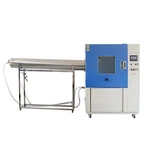
This reality is confirmed by feedback from one of LIB's customers in the United Arab Emirates. During continuous Blowing Dust and Blowing Sand tests, the LIB MIL-STD-810H Method 510 Dust and Sand Test Equipment has been operating stably, with all functions performing as expected. The customer also successfully completed Blowing Rain testing, and test data can be easily downloaded from the touchscreen directly to a USB flash drive. These real-world test results demonstrate the chamber's reliability, ease of operation, and suitability for demanding desert environments typical of the UAE and surrounding regions.
MIL-STD-810H Method 510 Dust and Sand Test Procedures
MIL-STD-810H is the latest revision of the U.S. Department of Defense environmental engineering standard. Method 510 specifically evaluates how equipment performs when exposed to airborne dust and sand. The standard defines three distinct procedures, each targeting a different environmental risk.
Procedure I – Blowing Dust
This procedure focuses on fine particles smaller than 150 μm. The chamber generates airflow between 1.5 and 8.9 m/s, carrying dust at a concentration of 10.7 ± 7 g/m³. It simulates powder-like desert dust that can infiltrate enclosures, block filters, and degrade heat dissipation. This test is commonly used for electronics, sensors, communication equipment, and sealed enclosures.
Procedure II – Blowing Sand
Blowing Sand is more aggressive. It evaluates mechanical damage caused by larger particles ranging from 150 μm to 850 μm. According to MIL-STD-810H, air velocity must reach 18–29 m/s, with sand concentrations between 0.18 and 2.2 g/m³. At these speeds, sand particles strike test specimens with significant kinetic energy, stressing coatings, seals, connectors, and exposed surfaces.
Procedure III – Dust Settling
Dust Settling simulates low-airflow environments such as storage rooms, shelters, or office-type applications. Fine dust particles (< 105 μm) gradually accumulate on surfaces at a rate of approximately 6 g/m²/day. This procedure evaluates long-term contamination, filter efficiency, and thermal performance under passive dust exposure.
| Procedure | Particle Size (μm) | Air Velocity (m/s) | Concentration (g/m³) | Notes |
|---|---|---|---|---|
| I – Blowing Dust | <150 | 1.5–8.9 | 10.7 ± 7 | Fine desert dust exposure |
| II – Blowing Sand | 150–850 | 18–29 | 0.18–2.2 | Abrasive sand impact, seal testing |
| III – Dust Settling | <105 | Minimal airflow | 6 g/m²/day | Long-term indoor accumulation |
Together, these three procedures provide a complete assessment of dust- and sand-related risks defined in MIL-STD-810A through MIL-STD-810H, with Method 510 evolving from 510.1 to the current 510.7.
》》》For more technical information and details about our MIL-STD-810H Method 510 Dust and Sand Test Equipment, please feel free to email us at info@libtestchamber.com.
Dust and Sand Test Requirements According to MIL-STD-810H
To meet MIL-STD-810H Method 510, a dust and sand test chamber must deliver more than just strong airflow. It must generate stable, parallel air streams, precise particle sizing, and controlled concentrations-repeatably.
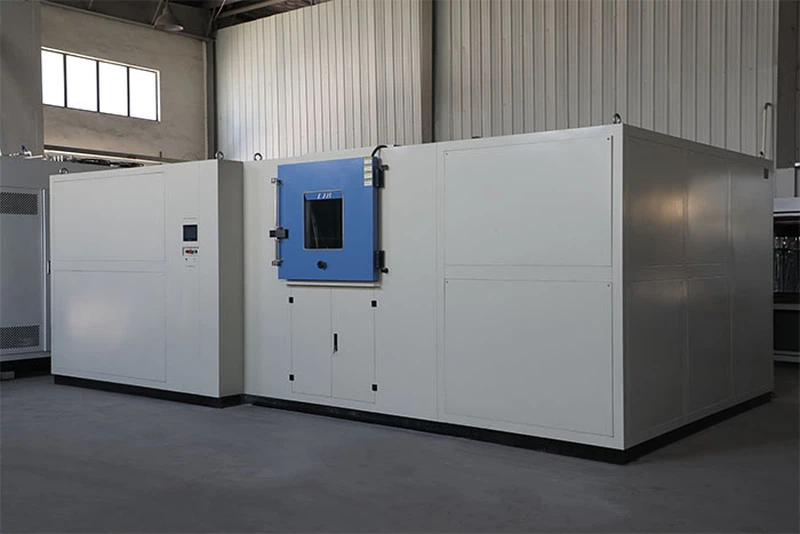
MIL-STD-810H Equipment for Dustproof and Waterproof Tests
Wind Speed up to 29 m/s
MIL-STD-810H requires sand particles to impact the test item at up to 29 m/s. LIB achieves this using an extended airflow duct, high-power centrifugal fans, and flow-straightening plates. These elements accelerate particles gradually and align airflow so that sand strikes the specimen in a controlled, parallel direction rather than turbulent bursts.
Particle Size Control
Two calibrated mesh systems are used in accordance with the standard:
75 μm sieve for talcum dust (fine dust testing)
150 μm sieve for quartz sand (sand testing)
This ensures all particles fall within the defined size ranges of Method 510, maintaining accuracy and test repeatability.
Concentration Accuracy
Integrated dust detectors continuously monitor airborne particle density. Dust concentration is maintained at 10.7 ± 7 g/m³, while sand concentration can be set to 0.18 ± 0.2 g/m³, 1.1 ± 0.3 g/m³, or 2.2 ± 0.5 g/m³, exactly as required by the standard.
Thermal and Structural Stability
Although Method 510 does not require extreme temperature cycling, the chamber maintains stable internal conditions up to 45 °C, preventing condensation or airflow instability during long test durations.
Advantages of LIB MIL-STD-810H Method 510 Dust and Sand Test Equipment
 |
|
|
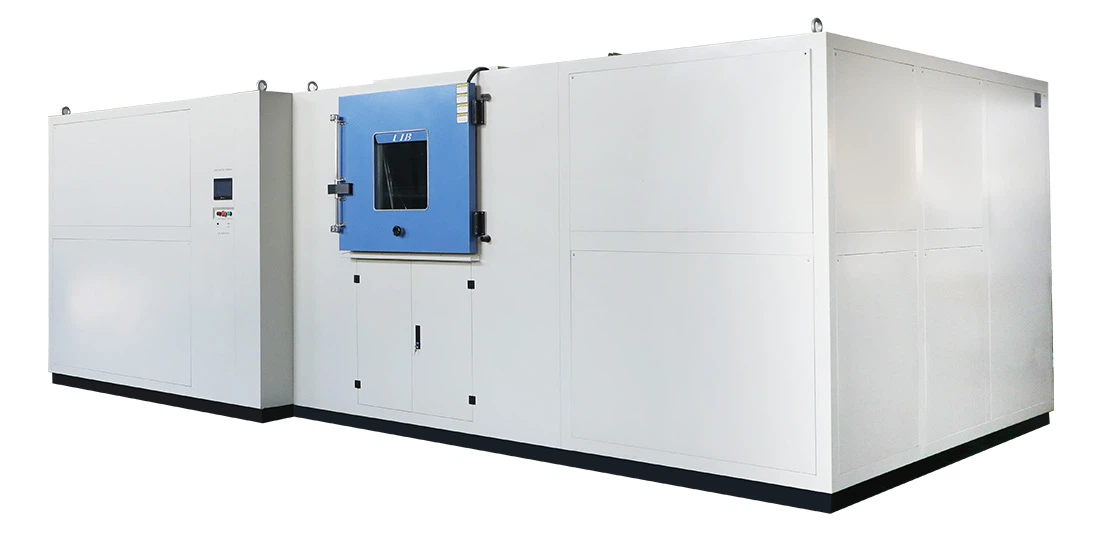
Interior Volume: 1000 L Blowing Dust: Air Velocity: 1.5 – 8.9 m/s Dust Concentration: 10.7 ± 7 g/m³ Dust Particles: <150 μm Blowing Sand: Air Velocity: 18.0 – 29.0 m/s Sand Concentration: 0.18 ± 0.2 g/m³; 1.1 ± 0.3 g/m³; 2.2 ± 0.5 g/m³ Sand Particles: 149 – 600 μm; 600 – 850 μm Controller: Programmable color LCD touch screen controller Door Lock: Electromagnetic lock Testing Platform Diameter: 600 mm Testing Platform Speed: 1 – 7 r.p.m Dust Detector: Integrated dust detector Exterior Material: A3 steel plate with protective coating Interior Material: SUS304 stainless steel Maximum Noise: ≤ 65 dBA |
 |

High-Power Airflow Design
LIB uses multiple centrifugal fans combined with reinforced ducts to reach 18–29 m/s airflow while maintaining uniform velocity across the test zone. Forced air cooling or water-assisted cooling protects motors during extended high-speed operation.
Robust Construction
The interior is built from SUS304 stainless steel, offering excellent resistance to abrasion from sand particles. The exterior features an anti-static protective coating to reduce dust adhesion and improve operator safety.
Programmable Control System
A color LCD touchscreen controller allows users to program airflow speed, exposure time, rotation speed (1–7 rpm), and rest intervals. All parameters are logged automatically, simplifying compliance documentation.
Integrated Monitoring
Real-time monitoring of wind speed, particle concentration, temperature, and humidity ensures every test remains within MIL-STD-810H tolerances. Ethernet connectivity enables remote supervision and data export.
Low Noise and Vibration
Despite high airflow rates, noise levels are controlled to ≤ 65 dBA through acoustic insulation and vibration dampers, improving laboratory comfort and equipment stability.
》》》To receive comprehensive or customized solutions and pricing for the MIL-STD-810H Method 510 Dust and Sand Test Equipment, please contact us at info@libtestchamber.com.
FAQs on LIB MIL-STD-810H Method 510 Dust and Sand Test Equipment
Q1: How does the chamber achieve 29 m/s wind speed?
An extended airflow duct, flow-straightening plates, and high-power centrifugal fans generate stable, laminar airflow. Reinforced cooling systems prevent motor overheating during high-speed operation.
Q2: What are the mesh sizes used for dust and sand?
The chamber includes a 75 μm sieve for talcum dust and a 150 μm sieve for quartz sand, fully compliant with MIL-STD-810 requirements.
Q3: Does talcum powder have a service life?
No. Talcum powder does not have a fixed service life. As long as it is stored in a dry environment, it can be reused while still meeting MIL-STD-810 and IEC 60529 dust test requirements.
Q4: What is the standard test platform size?
The chamber features a 600 mm diameter rotating platform, supporting uniform exposure on all sides of the test specimen.
Q5: How is test data recorded and exported?
All parameters are logged by the programmable controller and can be exported via Ethernet or USB for compliance reports and traceability.
LIB Environmental's MIL-STD-810H Blowing Sand and Dust Test Chamber delivers military-grade accuracy, durability, and repeatability. Backed by a 3-year warranty, 24/7 English technical support, and global spare-parts service, LIB ensures long-term confidence in your environmental simulations.
Contact LIB Industry to learn how MIL-STD-810H Method 510 Dust and Sand Test Equipment can help you certify durability, improve design reliability, and meet strict military and industrial standards with confidence.