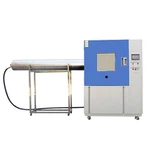
Understanding thermal cycling is essential in many industries, especially for those involved in material testing and product durability assessment. The principle of thermal cycling revolves around subjecting materials or products to alternating high and low temperatures to evaluate their performance, reliability, and lifespan. One of the most effective tools for this purpose is the thermal cycling chamber. This blog will delve into the principle of thermal cycling, how thermal cycling chambers work, and their applications and benefits.
What is Thermal Cycling?
Thermal cycling refers to the process of repeatedly heating and cooling a material or product to specified temperature extremes. This process aims to simulate the environmental conditions that a product might experience during its operational life. By exposing materials to these temperature fluctuations, thermal cycling helps identify potential weaknesses, ensuring that products can withstand real-world conditions.
The primary objective of thermal cycling is to induce thermal stresses within a material. These stresses occur due to the expansion and contraction that materials undergo when subjected to temperature changes. Over time, this can lead to the formation of micro-cracks, delamination, or other forms of degradation. Understanding how materials react to these stresses is crucial for improving product design and manufacturing processes. Thermal cycling is important for the following reasons:
- Reliability Testing: Thermal cycling is a critical component of reliability testing. It helps manufacturers understand how products will perform under different temperature conditions, ensuring they meet quality standards and customer expectations.
- Identifying Material Weaknesses: By exposing materials to thermal cycling, potential weaknesses can be identified early in the development process. This allows for modifications to be made before full-scale production, saving time and resources.
- Enhancing Product Lifespan: Products that undergo thermal cycling testing are generally more robust and durable. This is because the testing process helps identify and rectify potential issues that could lead to premature failure.
How Do Thermal Cycling Chambers Work?
A thermal cycling chamber is a specialized piece of equipment designed to automate the thermal cycling process. These chambers provide precise control over temperature fluctuations, ensuring consistent and accurate testing conditions. Let's explore the key components and working principles of a thermal cycling chamber.
Key Components of a Thermal Cycling Chamber
- Heating and Cooling Systems: These systems are responsible for rapidly changing the temperature within the chamber. Advanced thermal cycling chambers can achieve extremely high and low temperatures within a short period.
- Temperature Sensors: Accurate temperature sensors are crucial for monitoring and controlling the internal environment of the chamber. These sensors ensure that the desired temperature profiles are maintained throughout the testing process.
- Control System: The control system allows users to program specific temperature cycles, including the duration and frequency of each cycle. Modern thermal cycling chambers often feature user-friendly interfaces and advanced programming capabilities.
- Sample Holders: These holders are designed to securely hold the test samples in place during the thermal cycling process. They ensure that the samples are evenly exposed to temperature changes.
Working Principle
- Programming the Cycle: The desired temperature cycle is programmed into the chamber's control system. This includes setting the high and low temperature limits, as well as the duration of each cycle.
- Initiating the Cycle: Once the cycle is programmed, the chamber's heating and cooling systems are activated. The chamber begins to alternate between the set high and low temperatures.
- Monitoring the Process: Temperature sensors continuously monitor the internal environment of the chamber, ensuring that the programmed temperature profile is maintained.
- Completion of the Cycle: After the specified number of cycles is completed, the chamber automatically stops, and the test samples are removed for analysis.
What Are the Applications and Benefits of Thermal Cycling Chambers?
Thermal cycling chambers are used across various industries for a wide range of applications. Here are some of the most common uses and benefits of these chambers.
Applications
- Electronics Industry: Thermal cycling is widely used in the electronics industry to test the reliability of components such as circuit boards, connectors, and semiconductors. It helps identify potential failure points due to thermal stresses.
- Automotive Industry: In the automotive industry, thermal cycling is used to test the durability of engine components, electrical systems, and other critical parts. This ensures that vehicles can withstand extreme temperature variations.
- Aerospace Industry: The aerospace industry relies on thermal cycling to test the integrity of materials used in aircraft and spacecraft. This is crucial for ensuring the safety and reliability of these high-stakes applications.
- Materials Science: Researchers in materials science use thermal cycling to study the behavior of different materials under thermal stress. This helps in the development of new materials with improved properties.
Benefits
- Improved Product Reliability: Thermal cycling helps manufacturers produce more reliable products by identifying and addressing potential weaknesses early in the development process.
- Cost Savings: By detecting issues before full-scale production, thermal cycling can help avoid costly recalls and warranty claims, saving both time and money.
- Enhanced Performance: Products that undergo thermal cycling testing are generally more robust and perform better in real-world conditions.
- Regulatory Compliance: Many industries have stringent regulatory requirements for product testing. Thermal cycling chambers help manufacturers meet these requirements, ensuring compliance with industry standards.
Conclusion
In conclusion, understanding the principle of thermal cycling and utilizing thermal cycling chambers are crucial for ensuring the reliability and durability of products across various industries. These chambers provide a controlled environment for simulating real-world conditions, helping manufacturers identify potential issues and improve product performance.
If you want to learn more about this kind of Rapid Thermal Cycling Chamber, welcome to contact us info@libtestchamber.com.
References
1. Armstrong, B. (2020). Thermal Cycling Testing of Electronic Components. Journal of Electronic Testing: Theory and Applications (JETTA), 36(2), 123-137.
2. Barlow, F., & Smith, G. (2018). Thermal Cycling in Aerospace Applications: Challenges and Solutions. Aerospace Engineering Journal, 45(3), 211-225.
3. Chen, H., & Li, X. (2019). Advances in Thermal Cycling Chamber Technology for Materials Science Research. Materials Science Review, 76(4), 289-305.
4. Dobson, J., & Rogers, M. (2017). Automotive Testing Methods: Thermal Cycling for Durability Assessment. Automotive Engineering Journal, 22(1), 45-59.
5. IEEE Standard 1012. (2016). IEEE Standard for Software Verification and Validation. IEEE.
6. Jain, A. (2021). Applications of Thermal Cycling in the Semiconductor Industry. Semiconductor Science and Technology, 54(6), 401-415.
7. Kogelschatz, M. (2019). Thermal Cycling Chambers: Principles and Applications in Material Testing. Materials Testing Journal, 68(5), 312-325.
8. Smith, P., & Johnson, L. (2018). Environmental Testing Standards and Compliance in the Electronics Industry. Journal of Electronic Testing: Theory and Applications (JETTA), 39(3), 201-215.
9. Thermal Cycling Chamber Validation: Best Practices and Compliance Guidelines. (2020). National Institute of Standards and Technology (NIST) Special Publication 800-53.
10. Zhang, Q., & Wang, S. (2017). Reliability Assessment of Electronic Components Using Thermal Cycling Testing. IEEE Transactions on Reliability, 63(2), 89-102.