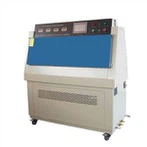
When materials are exposed to heat, humidity, and environmental stress in real-world applications, their performance can change dramatically. A Climate Chamber allows engineers to reproduce these environmental conditions in a controlled way, ensuring that materials used in automotive, aerospace, electronics, and energy industries remain stable, reliable, and compliant with global standards.
LIB's Climate Chamber is engineered to create precise temperature–humidity environments that help researchers evaluate durability, aging behavior, product safety, and long-term reliability. With strict compliance to IEC 60068, ISO 16750, and IEC 61730, the chamber produces repeatable, audit-ready data trusted across certified laboratories worldwide.
The Purpose of the Climate Chamber for Material Test
Material tests rely on controlled environments. The primary purpose of a Climate Chamber is to reproduce temperature and humidity conditions that materials will face during transport, storage, or product lifecycle. By simulating conditions from –70 ℃ to +150 ℃ and humidity from 20%–98% RH, engineers can evaluate shrinkage, expansion, corrosion, oxidation, brittleness, and moisture absorption with scientific accuracy.
Environmental simulation ensures predictable behavior. With programmable cycles, the chamber helps manufacturers perform accelerated aging, stress screening, thermal cycling, and moisture-sensitivity evaluation. These tests predict how plastics, metals, coatings, adhesives, PCBs, and sealing components behave after years of use-within hours or days.
Compliance requires precise environmental control. Standards such as IEC 60068-2-1 (Cold Test), IEC 60068-2-2 (Dry Heat), IEC 60068-2-30 (Damp Heat), and ISO 16750-4 (Climatic Loads for Road Vehicles) require stable temperature/humidity with tight tolerances. LIB chambers maintain ±0.5 ℃ temperature fluctuation and ±2.5% RH humidity deviation, ensuring every test meets regulatory expectations.

Working Principle of the Climate Chamber
Climate Chambers create controlled artificial environments. A Climate Chamber works by coordinating heating, refrigeration, humidification, and dehumidification systems to reach and maintain a target temperature–humidity condition.
Temperature control relies on precision sensors and PID algorithms. PT100 Class A temperature sensors with ±0.001 ℃ resolution continuously monitor the chamber. The PID controller adjusts heaters and compressors in real time to maintain stable temperature without overshoot.
Humidity control is achieved through wet-bulb and evaporative regulation. LIB chambers generate humidity using steam or atomized moisture and remove it through cooling and condensation. Closed-loop recovery systems recycle up to 70–80% of water, reducing consumption during long-term tests.
Uniform airflow eliminates hot and cold zones. Dual centrifugal fans deliver multi-directional laminar airflow, ensuring ±1.5 ℃ uniformity. This is crucial when testing multiple samples at once, preventing deviation caused by uneven temperature distribution.
Rapid transition rates accelerate test schedules.Standard LIB chambers support 5–10 ℃/min temperature change. With customized high-power systems, ramp rates can reach 20 ℃/min, ideal for rapid thermal cycling.
|
|
 |
||||
| Name | Climate Chamber | ||||
|
Model |
TH-100 |
||||
|
Internal dimension (mm) |
400*500*500 |
||||
|
Overall dimension (mm) |
860*1050*1620 |
||||
|
Capacity |
100L |
||||
|
Temperature range |
-20℃ ~+150 ℃ |
||||
|
Low type |
A: -40℃ B:-70℃ C -86℃ |
||||
|
Humidity Range |
20%-98%RH |
||||
|
Temperature deviation |
± 2.0 ℃ |
||||
|
Heating rate |
3 ℃ / min |
||||
|
Cooling rate |
1 ℃ / min |
||||
|
Controller |
Programmable color LCD touch screen controller, Multi-language interface, Ethernet , USB |
||||
|
Refrigerant |
R404A, R23 |
||||
|
Exterior material |
Steel Plate with protective coating |
||||
|
Interior material |
SUS304 stainless steel |
||||
|
Standard configuration |
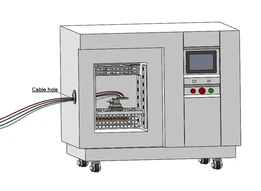
1 Cable hole (Φ 50) with plug; 2 shelves |
||||
|
Timing Function |
0.1~999.9 (S,M,H) settable |
||||

Procedure for Conducting a Material Test Using a LIB Climate Chamber
Material tests evaluate environmental resilience under controlled conditions.
To conduct a reliable temperature–humidity material test, the process must follow consistent steps-from sample preparation to data recording. LIB Climate Chambers streamline this workflow with intuitive interfaces, fast stabilization, and fully programmable test profiles.
|
|
|
|
| Robust Workroom | Cable Hole | Temperature and Humidity Sensor |


Step 1: Prepare the Samples
Place material specimens on adjustable stainless-steel shelves.
Climate Chamber Advantage: LIB's customizable racking supports PCBs, plastics, metals, and large mechanical parts, with both sliding and reinforced options.
Step 2: Select or Create a Test Program
Using the 7-inch color touchscreen, select a pre-stored profile or enter a new one.
Advantage: The controller stores 120 programs × 100 steps, ideal for IEC/ISO multi-stage testing.
Step 3: Set Temperature and Humidity Targets
Input temperature (–70 ℃ to +150 ℃) and humidity (20%–98% RH).
Advantage: PT100 Class A sensors ensure ±0.001 ℃ accuracy, minimizing tolerance errors.
Step 4: Allow the Chamber to Stabilize
Temperature stabilizes almost instantly; humidity reaches setpoint typically within 30 minutes.
Advantage: Fast humidity stabilization reduces waiting time and accelerates laboratory throughput.
Step 5: Run the Test and Monitor Conditions
The chamber automatically logs temperature, humidity, ramp rates, and events.
Advantage: Built-in Ethernet and USB allow remote monitoring and PDF/CSV report export.
Step 6: Evaluate Test Results and Conduct Post-Analysis
After completion, samples are inspected for deformation, cracking, weight change, or electrical failure.
Advantage: LIB's uniform airflow eliminates environmental bias, ensuring test repeatability.
|
|
|
|
|
|---|---|---|---|
 |
 |
 |
|
| Name | Small Climate Chamber | Standing Climate Chamber | Walk-In Climate Chamber |
| Capacity |
TH-50: 800x1050x950 mm TH-80: 900×1100×1000mm |
Capacity: 100L; 225L; 500L; 800L; 1000L |
>20m³ |
| Throughput | Ideal for small components, sensors, boards | Subassemblies or mid-volume batches |
Bulk testing of items or vehicles as a whole |


FAQs on the Climate Chamber
Q1: How is Temperature Humidity Test Chamber product calibrated?
Factory calibration begins after assembly and includes both temperature and humidity calibration. For temperature calibration, nine probes are arranged inside the chamber to measure distribution. Values are compared with standards, and hardware parameters are adjusted until the chamber meets accuracy requirements. Humidity calibration uses the dry- and wet-bulb method. The measured humidity is compared with standard values and adjusted accordingly to ensure accuracy before shipment.
Q2: For fast temperature change rate, what is Temperature Humidity Test Chamber maximum possible? Can it reach 20 °C/min?
Standard units achieve 5–10 °C/min, but LIB can customize systems to reach 20 °C/min or higher, depending on application needs.
Q3: What is Temperature Humidity Test Chamber dew point temperature?
Temperature Humidity Test Chambers mainly test relative humidity (RH) and do not directly measure dew point.
Q4: Is Temperature Humidity Test Chamber audible and visual alarm functionality?
The chamber includes an audible alarm as standard. Visual alarm options are available upon request.
Q5: How long does the chamber take to reach humidity setpoints?
Humidity typically reaches the target value within 30 minutes, depending on the starting condition and programmed settings.
Any customization can be made. LIB offers a 3-year warranty and lifetime service. Any issues that cannot be resolved during the warranty period will be replaced free of charge. 24/7 English-speaking after-sales team. Fast shipping within 7-15 days.
Contact LIB Industry to develop a professional and efficient solution tailored to your specific standards and stringent requirements.