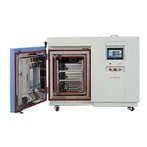
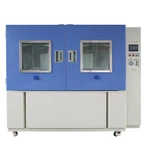
Walk-in chambers are large-scale environmental testing facilities designed to simulate various climatic conditions for a wide range of products and materials. These versatile chambers play a crucial role in product development, quality assurance, and research across numerous industries. By providing controlled environments for temperature, humidity, and other environmental factors, walk-in chambers enable manufacturers and researchers to evaluate the performance, durability, and reliability of products under diverse conditions.

What Are the Key Features of a Walk-In Chamber?
-
Spacious Interior and Customizable Configurations
One of the most distinctive features of a walk-in chamber is its spacious interior. Unlike smaller environmental test chambers, walk-in chambers provide ample room for testing large products or multiple items simultaneously. The interior space can often be customized with adjustable shelving, racks, or specialized fixtures to accommodate various test specimens and equipment.

These chambers can be designed with different dimensions to suit specific testing requirements. Some walk-in chambers are large enough to accommodate vehicles, while others are sized for testing furniture, appliances, or industrial equipment. The flexibility in size and configuration makes walk-in chambers adaptable to a wide range of testing needs across various industries.
-
Precise Environmental Control Systems
Walk-in chambers are equipped with sophisticated environmental control systems that allow for precise regulation of temperature, humidity, and other climatic conditions. Advanced heating and cooling systems enable these chambers to achieve and maintain a wide range of temperatures, typically from -70°C to +180°C, with high accuracy and stability.

Humidity control systems in walk-in chambers can generate and maintain relative humidity levels from 10% to 98%, allowing for the simulation of diverse climatic conditions. Some advanced models also incorporate additional features such as solar radiation simulation, rain and spray testing capabilities, or atmospheric pressure control for altitude simulation.
-
Robust Construction and Insulation
Walk-in chambers are built to withstand extreme conditions while maintaining a stable internal environment. The construction typically involves high-quality insulation materials and vapor barriers to ensure thermal efficiency and prevent moisture ingress. The walls, floor, and ceiling of the chamber are designed to minimize heat transfer and maintain uniform conditions throughout the testing space.
The doors of walk-in chambers are engineered to provide an airtight seal when closed, preventing the loss of conditioned air and maintaining the integrity of the test environment. Many chambers also feature viewing windows or portholes that allow operators to observe the test specimens without disturbing the internal conditions.
lIB Walk-In Chamber
The company is recognized as a world leader in reliability test equipment design and offers products and services of exceptional quality.
-
500 +Completed Projects500 complete work
-
30 +Our ExpertExpert worker


How is a Walk-In Chamber Used for Product Testing?
-
Automotive and Aerospace Applications
In the automotive and aerospace industries, walk-in chambers play a vital role in testing the performance and durability of components and entire vehicles under extreme environmental conditions. These chambers are used to simulate a wide range of scenarios, from scorching desert heat to frigid arctic temperatures.
Automotive manufacturers use walk-in chambers to conduct thermal cycling tests on engines, evaluate the performance of air conditioning and heating systems, and assess the durability of interior materials under prolonged exposure to heat and UV radiation. In the aerospace sector, walk-in chambers are employed to test the reliability of avionics systems, evaluate the performance of aircraft components at different altitudes, and simulate the harsh conditions of space for satellite equipment.
-
Electronics and Telecommunications Testing
The electronics and telecommunications industries rely heavily on walk-in chambers to ensure the reliability and performance of their products in various environmental conditions. These chambers are used to conduct thermal stress tests on large electronic systems, evaluate the performance of telecommunications equipment in extreme temperatures, and assess the durability of consumer electronics under different humidity levels.
Walk-in chambers also play a crucial role in testing the heat dissipation capabilities of data center equipment and evaluating the performance of cooling systems for large-scale electronic installations. By simulating diverse environmental conditions, manufacturers can identify potential failure modes and optimize their products for reliable operation in different climates.
-
Pharmaceutical and Medical Device Validation
In the pharmaceutical and medical device industries, walk-in chambers are essential for conducting stability studies and validating storage conditions for drugs and medical equipment. These chambers provide controlled environments for long-term stability testing of pharmaceutical products, ensuring that medications maintain their efficacy and safety throughout their shelf life.
Medical device manufacturers use walk-in chambers to evaluate the performance of large equipment such as MRI machines, CT scanners, and surgical robots under various environmental conditions. These tests help ensure that critical medical equipment functions reliably in different healthcare settings, from air-conditioned hospitals to remote clinics in challenging climates.
What Are the Challenges and Maintenance Requirements for Walk-In Chambers?
-
Energy Consumption and Efficiency Considerations
One of the primary challenges associated with walk-in chambers is their significant energy consumption. Due to their large size and the need to maintain precise environmental conditions, these chambers can be energy-intensive to operate. This presents both economic and environmental concerns for users.
To address this challenge, manufacturers are increasingly focusing on improving the energy efficiency of walk-in chambers. This includes developing more efficient cooling and heating systems, implementing advanced insulation materials, and incorporating smart control systems that optimize energy usage based on testing requirements. Some modern walk-in chambers also feature energy recovery systems that capture and reuse waste heat, further improving overall efficiency.
-
Regular Calibration and Performance Verification
Maintaining the accuracy and reliability of walk-in chambers requires regular calibration and performance verification. The complex environmental control systems in these chambers can drift over time, potentially compromising the validity of test results if not properly maintained.
Calibration typically involves comparing the chamber's temperature and humidity readings against certified reference standards. This process may need to be performed at multiple points across the chamber's operating range to ensure accuracy throughout the testing envelope. Additionally, spatial uniformity tests are often conducted to verify that conditions are consistent throughout the chamber's interior.
Performance verification may include running standardized test cycles to ensure that the chamber can achieve and maintain specified conditions within acceptable tolerances. These procedures are crucial for maintaining the chamber's compliance with industry standards and regulatory requirements.
-
Humidity Control and Condensation Management
Maintaining precise humidity levels, particularly at low temperatures, can be challenging in walk-in chambers. Condensation formation on surfaces and test specimens can interfere with testing processes and potentially damage sensitive equipment.
To address this challenge, advanced walk-in chambers incorporate sophisticated humidity control systems and dehumidification technologies. These may include desiccant wheels, refrigeration-based dehumidifiers, or vapor compression systems designed to remove excess moisture from the air efficiently.
Additionally, proper air circulation within the chamber is crucial for maintaining uniform humidity levels and preventing localized condensation. Many walk-in chambers feature advanced air handling systems with multiple fans and baffles to ensure even distribution of conditioned air throughout the testing space.

Conclusion
In conclusion, walk-in chambers are indispensable tools for environmental testing across a wide range of industries. Their spacious interiors, precise environmental control capabilities, and robust construction make them ideal for testing large products or conducting multiple tests simultaneously. From automotive and aerospace applications to electronics and pharmaceutical testing, walk-in chambers play a crucial role in ensuring product quality, reliability, and performance under diverse environmental conditions.
If you're considering incorporating a walk-in chamber into your testing facilities or seeking to upgrade your existing environmental testing capabilities, our team at LIB Industry is here to assist you. We offer customized walk-in chamber solutions tailored to your specific testing requirements, along with comprehensive support services to ensure optimal performance and reliability. Contact us at info@libtestchamber.com to discuss how our walk-in chamber solutions can enhance your testing capabilities and drive innovation in your industry.
References
Johnson, R. M., & Smith, A. K. (2019). Advancements in Walk-In Environmental Chamber Design for Improved Energy Efficiency. Journal of Environmental Testing and Analysis, 24(3), 287-301.
Zhang, L., et al. (2020). Comparative Study of Humidity Control Methods in Large-Scale Environmental Test Chambers. Applied Thermal Engineering, 176, 115413.
Thompson, E. J., & Williams, C. D. (2018). Best Practices for Calibration and Performance Verification of Walk-In Environmental Chambers. Measurement Science and Technology, 29(8), 084001.
Rodriguez, M. A., & Chen, Y. (2021). Applications of Walk-In Chambers in Automotive Environmental Testing: A Comprehensive Review. SAE International Journal of Materials and Manufacturing, 14(1), 57-72.
Lee, S. H., & Park, J. W. (2020). Challenges and Solutions in Pharmaceutical Stability Testing Using Walk-In Environmental Chambers. Journal of Pharmaceutical Sciences, 109(6), 1967-1978.