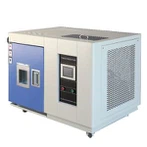
The significance of high and low temperature test
Whether it is outdoor or indoor, during the use of the product, it is inevitable that it will encounter high temperature environment (higher than 50), low temperature environment (lower than 10), high humidity environment (relative humidity higher than 80) and dry environment (relative humidity) due to various problems. Below 40).
Low temperature environment, common in sub-tropical areas without heating in winter or strong sources of cold in the environment. The high-humidity environment is usually swamp climate, marine climate, or spring in monsoon climate, or there is a strong water vapor source in the environment. Dry environment, common in autumn in continental climate, desert climate, or monsoon climate.
In addition, some products may often oscillate back and forth between high and low temperatures during use, such as transportation vehicles used in cold storage.
High and low temperature test:
In the natural environment, temperature and humidity are two inseparable natural factors. Due to different locations in different regions, the temperature and humidity effects are also different. Adaptability for storage, transportation and use. The severity of the test depends on the high / low temperature, humidity and duration of exposure.
Reference test standards: IEC 60068-2-2, MIL-STD-810F, etc.
Factors affecting experimental results:
1. The influence of high and low temperature range, the higher the high temperature, the lower the low temperature, the shorter the impact test interval, the worse the result.
2. The effects of reserved expansion / contraction space in expansion joints and gaps in the product. Inadequate reserved space will lead to unsatisfactory results.
3. Differences in expansion coefficients of materials. The larger the expansion coefficients, the worse the results. Please try to choose materials with similar expansion coefficients.
4. Influence of high temperature aging / embrittlement of polymer materials. In high-temperature environments, it will accelerate the cracking of polymers. The low temperature environment will cause brittleness of polymer materials.
5. Influence of metal materials. At high temperatures, the metal oxidation rate will increase, especially in high humidity environments. At low temperatures, many metallic materials, such as iron, become brittle.
6. In the impact environment, repeated expansion and contraction cause the internal defects of the material to enlarge. This is often referred to as material fatigue.