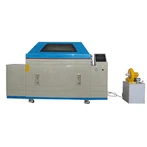
In industries where precision and safety are non-negotiable, battery test chambers are indispensable. These sophisticated devices play a crucial role in ensuring the reliability and safety of lithium batteries, which power everything from smartphones to electric vehicles. As a leading manufacturer of these essential tools, LIB focuses on providing comprehensive solutions for environmental testing. This article will delve into the significance of battery test chambers, exploring their role in quality assurance, safety, and innovation.
The Role of Battery Test Chambers in Quality Assurance
Before being sold to customers, batteries must pass stringent testing requirements in battery test chambers, which are an essential part of the quality assurance procedure. To test the performance and durability of batteries, these chambers simulate various environmental conditions.

Maintaining Consistency and Reliability
One of the main purposes of battery test chambers is to ensure consistency across battery batches. Manufacturers can identify any performance variations and address them before they become widespread issues by exposing batteries to controlled conditions. In addition to increasing consumer confidence in the products, this procedure also ensures their dependability.
Simulating Real-World Conditions
Battery test chambers are capable of simulating a wide range of real-world conditions, including extreme temperatures, levels of humidity, and variations in pressure. When determining how batteries will perform in actual situations, these simulations are crucial. For instance, an electric vehicle battery needs to work reliably in both the sweltering heat of the desert and the icy cold of the winter. Manufacturers can guarantee that their batteries will perform at their highest level in any situation by testing them in these simulated environments.
Early Failure Detection
Another important aspect of quality assurance is early failure detection. Battery test chambers assist in determining problems like rapid discharge, leakage, or swelling under stress. Manufacturers can improve their designs and processes by identifying these issues early, lowering the likelihood of product recalls and increasing overall product quality.
Enhancing Safety Through Rigorous Testing
Given the potential dangers of battery failure, safety is of the utmost importance in battery design and manufacturing. Battery test chambers are very influential for protecting consumers and devices.
Preventing Thermal Runaway
A dangerous condition in which a battery overheats and has the potential to explode or catch fire is known as thermal runaway. Battery test chambers enable manufacturers to develop failsafe and design enhancements that reduce these risks by studying how batteries respond to thermal stress. Manufacturers can prevent catastrophic failures by understanding their batteries' thermal limits.

Testing for Environmental Compliance
There are a lot of industries that use batteries, like aerospace and automotive, that have to follow strict standards for environmental compliance. Manufacturers can test their products against these standards in battery test chambers to make sure they comply with all safety and environmental regulations. In addition to safeguarding consumers, manufacturers benefit from this compliance by avoiding costly fines and legal issues.
Identifying Chemical Stability Issues
Battery test chambers are necessary for determining the chemical stability of battery parts. They make it possible for manufacturers to test for potential chemical reactions that, over time, could damage the integrity of the battery. Manufacturers can increase the safety and longevity of their products as well as provide dependable power sources for crucial applications by identifying and addressing these issues.
Driving Innovation and Advancements
Battery test chambers are used for more than just evaluating existing goods; they likewise assume a vital part in driving development and mechanical head ways in the battery business.
Supporting Research and Development
In research and development, battery test chambers are essential instruments for attempting new designs and materials. They accelerate the development of next-generation batteries by providing a controlled environment in which researchers can test hypotheses and collect data. As businesses strive to develop batteries with higher energy densities, longer lifespans, and quicker charging times, this capability is especially crucial.
Enabling Customization and Optimization
Various applications have extraordinary battery necessities, and test chambers empower producers to redo and advance batteries for explicit purposes. Test chambers make it possible to precisely adjust specifications in order to produce lightweight batteries for aerospace applications or high-capacity batteries for electric vehicles.
Facilitating Sustainable Solutions
As the world progressively centers around manageability, battery test loads are pivotal for creating eco-accommodating battery advancements. They make it possible for producers to test and improve batteries that use fewer harmful materials, leave less of a carbon footprint, and are easier to recycle. Battery test chambers contribute to a greener future by supporting the creation of sustainable solutions.
Conclusion
In conclusion, battery test chambers are absolutely necessary for guaranteeing the innovation, dependability, and safety of contemporary battery technologies. By identifying early failures, increasing safety through stringent testing, and driving advancements in battery design, they are crucial to quality assurance. The significance of these test chambers, which aid in the creation of energy solutions that are safer, more effective, and less harmful to the environment, will only continue to rise in tandem with the growing reliance of industries on lithium batteries.
Battery test chambers are essential for ensuring the quality, safety, and innovation of lithium batteries. If you're interested in learning more about our Lithium Battery Test Chamber and how they can benefit your operations, please contact us at info@libtestchamber.com. Our experts are ready to help you achieve excellence in battery testing and development.
References
1. Environmental Testing Standards for Lithium Batteries - This reference discusses the various standards and regulations governing the testing of lithium batteries in different environmental conditions.
2. Thermal Management in Battery Design - A comprehensive study on how battery test chambers aid in understanding and managing thermal challenges in battery technologies.
3. Advancements in Battery Technology - An exploration of recent innovations in battery materials and designs, highlighting the role of test chambers in facilitating these advancements.
4. Safety Protocols in Battery Manufacturing - An examination of safety protocols in the battery industry, emphasizing the importance of rigorous testing to prevent failures.
5. The Importance of Quality Assurance in Electronics - A detailed look at how quality assurance processes, including the use of test chambers, ensure the reliability and performance of electronic components.
6. Sustainable Battery Technologies - A discussion on the development of eco-friendly battery technologies and the role of test chambers in promoting sustainable practices within the industry.