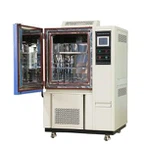
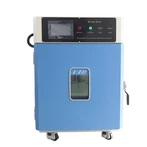
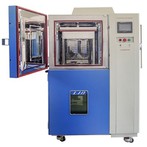
Battery test chambers play a crucial role in the development, quality control, and safety assessment of various types of batteries. These specialized environmental testing devices simulate diverse conditions to evaluate battery performance, reliability, and safety under different scenarios. In this comprehensive guide, we'll explore the various types of battery test chambers, their unique features, and applications in the ever-evolving energy storage industry.

The demand for battery testing is mainly from the new energy automobile industry. There are five types of new energy batteries, including lithium cobalt acid batteries, lithium iron phosphate batteries, nickel-metal hydride batteries, ternary lithium batteries and graphene batteries. These batteries have advantages and disadvantages, and their stability varies in different environments. For better performance, stability, safety, car companies must carry out environmental reliability tests on batteries.
Temperature-Controlled Battery Test Chambers
Temperature-controlled battery test chambers are fundamental in assessing how batteries perform across a wide range of temperatures. These chambers are designed to simulate various environmental conditions, from freezing to intense heat, allowing manufacturers to evaluate battery performance, safety, and longevity under different thermal stresses.
-
High-Low Temperature Battery Test Chamber
The maximum temperature of the high and low temperature battery test chamber can reach 200 degrees Celsius or higher. These chambers are instrumental in evaluating battery performance and safety under hot conditions, such as those experienced in automotive applications or industrial settings. High-temperature testing helps identify potential issues like thermal runaway, electrolyte decomposition, and accelerated aging of battery components.
|
|
Cooling Rate: 10℃/min (15℃/min) Heating Rate: 10℃/min (15℃/min) Temperature Fluctuation: ± 0.5 ℃ Temperature deviation:± 2.0 ℃ |

The low temperature range is usually as low as -70 °C. It is essential for testing batteries for cold climates or applications such as aerospace and polar research. Low temperature testing helps to assess issues such as reduced capacity, increased internal resistance, and possible freezing of electrolytes under freezing conditions. These chambers are crucial for testing batteries intended for use in cold climates or applications such as aerospace and polar research. Low-temperature testing helps assess issues like reduced capacity, increased internal resistance, and potential freezing of electrolytes in freezing conditions.
-
Thermal Shock Battery Test Chambers
Thermal shock battery test chambers subject batteries to rapid and extreme temperature changes. These chambers typically feature two or more temperature zones and can quickly transfer batteries between hot and cold environments. This type of testing is vital for evaluating a battery's ability to withstand sudden temperature fluctuations, which can occur in applications like electric vehicles or portable electronics used in varying climates.

Humidity-Controlled Battery Test Chambers
Humidity-controlled battery test chambers are designed to evaluate how batteries perform and age under various moisture conditions. These chambers can simulate environments ranging from dry deserts to tropical rainforests, allowing manufacturers to assess the impact of humidity on battery life, performance, and safety.
-
High-Humidity Battery Test Chambers
High-humidity battery test chambers are capable of creating environments with relative humidity levels up to 98% or higher. These chambers are crucial for testing batteries that may be exposed to moist or tropical conditions. High-humidity testing helps identify potential issues such as corrosion of battery terminals, degradation of insulation materials, and the impact of moisture ingress on battery performance and safety.
-
Low-Humidity Battery Test Chambers
Low-humidity battery test chambers simulate arid environments with relative humidity levels as low as 10% or less. These chambers are essential for evaluating batteries intended for use in dry climates or applications where moisture control is critical. Low-humidity testing can reveal issues such as electrolyte evaporation, changes in internal resistance, and potential safety concerns related to static electricity buildup.
-
Programmable Humidity Cycling Chambers
Programmable humidity cycling chambers allow for the simulation of complex humidity profiles over time. These advanced battery test chambers can replicate real-world scenarios where humidity levels fluctuate throughout the day or across seasons. This type of testing is particularly valuable for batteries used in outdoor applications or in regions with variable climate conditions, helping to ensure consistent performance and longevity across a range of humidity levels.
Pressure-Controlled Battery Test Chambers
Pressure-controlled battery test chambers are specialized environmental testing devices designed to evaluate battery performance and safety under various atmospheric pressure conditions. These chambers are particularly important for batteries used in aerospace, high-altitude, or underwater applications where pressure variations can significantly impact battery behavior and safety.
-
High-Pressure Battery Test Chambers
High-pressure battery test chambers are engineered to simulate environments with elevated atmospheric pressure, typically ranging from standard atmospheric pressure (1 atm) to several atmospheres. These chambers are crucial for testing batteries intended for use in deep-sea applications, pressurized aircraft cabins, or other high-pressure environments. High-pressure testing helps identify potential issues such as electrolyte leakage, casing deformation, or changes in chemical reaction rates within the battery under increased pressure.
-
Low-Pressure Battery Test Chambers
Low-pressure battery test chambers are designed to replicate low atmospheric pressure conditions, simulating high-altitude environments or even near-vacuum conditions. These chambers are essential for evaluating batteries used in aerospace applications, high-altitude drones, or scientific instruments deployed at extreme altitudes. Low-pressure testing can reveal issues like outgassing of battery components, changes in electrolyte behavior, or potential safety concerns related to rapid decompression scenarios.
-
Altitude Simulation Chambers
Altitude simulation chambers are specialized battery test chambers that can recreate the environmental conditions experienced at various altitudes. These chambers combine pressure control with temperature and humidity regulation to provide a comprehensive simulation of high-altitude environments. Altitude simulation testing is crucial for batteries used in aviation, space exploration, or high-altitude terrestrial applications, ensuring that energy storage systems can perform reliably and safely across a range of atmospheric conditions.
Conclusion
In conclusion, battery test chambers are indispensable tools in the development and quality assurance of modern energy storage solutions. By subjecting batteries to a wide range of environmental conditions, manufacturers can ensure the safety, reliability, and performance of their products across diverse applications and scenarios. As battery technology continues to advance and find new applications, the role of specialized test chambers in validating and improving these critical components will only grow in importance.
If you're looking for high-quality Lithium Battery Test Chambers tailored to your specific testing needs, don't hesitate to reach out to us at info@libtestchamber.com. Our team of experts is ready to help you find the perfect environmental testing solution for your battery development and quality control processes.
References
1. Barsukov, Y., & Qian, J. (2013). Battery Power Management for Portable Devices. Artech House.
2. Brodd, R. J. (2017). Batteries for Sustainability: Selected Entries from the Encyclopedia of Sustainability Science and Technology. Springer.
3. Dahn, J., & Ehrlich, G. M. (2011). Lithium-Ion Batteries. In Linden's Handbook of Batteries (4th ed.). McGraw-Hill Education.
4. Linden, D., & Reddy, T. B. (Eds.). (2010). Handbook of Batteries (4th ed.). McGraw-Hill Education.
5. Pistoia, G. (Ed.). (2014). Lithium-Ion Batteries: Advances and Applications. Elsevier.
6. Warner, J. T. (2015). The Handbook of Lithium-Ion Battery Pack Design: Chemistry, Components, Types and Terminology. Elsevier.