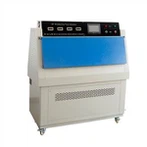
With the increasing application of salt fog test chamber, its advantages are known to the public. Now it is widely used in aerospace, aviation, petroleum, chemical, electronics, communications and other fields. So do you understand the design and working principle of the salt spray test chamber?
What is the structure of the salt fog test chamber
External structure
- Test chamber cover: roof type Angle of 110 degrees perspective cover, can clearly observe the indoor test conditions;
- Isolation tank: the use of watertight sealing cover to avoid salt spray leakage;
- Measuring cylinder: collect the spray amount of each test, 50ml each time is the highest scale;
- Saturated air barrel: placed at the bottom of the control box, made of SUS#304 stainless steel plate, play the role of filtering, heating, humidification, so that the purified air reaches the saturation temperature and humidity to the nozzle spray. Saturated equipment has automatic water refill function.
- Pressure regulating valve: manually adjust intake pressure and spray pressure. Intake pressure is controlled at 83 KPa; Spray pressure is controlled at 0.1 MPa. (The above pressure has been adjusted before leaving the factory, and the user does not need to adjust it in general)
- Pressure gauge: Pressure gauge pointer shows the pressure is the air-saturated air barrel conveying nozzle spray pressure;
- Water tank filling: automatic or manual filling saturated bucket water;
- Exhaust pipe: PVC hard plastic pipe with diameter of 50. The pressure caused by spray is discharged when the salt spray test chamber is working.
Internal structure
- Spray device: tower sprayer, containing glass nozzle, spray guided by the tower tube and then dispersed through the cone, evenly dispersed to the entire laboratory;
- Spray volume adjustment: adjust the spray volume of the conical diffuser on the spray tower to increase, and lower the spray volume to decrease;
- Collector: The fine mist emitted by the nozzle settles in a free-falling way. The salt mist is collected by one or several funnel cups with a surface area of 80 cm², which condenses into water and flows to the measuring cylinder outside the box through the conduit;
- Heating water tank: water tank attached to the bottom of the laboratory, for water heating to keep the temperature of the laboratory stable;
- Shelf: It is generally composed of round rods and V-shaped slots.
Why do you need a salt spray test chamber
Salt spray test is an accelerated corrosion resistance evaluation method for artificial atmosphere. It atomizes a certain concentration of brine and then sprays it into a closed thermostatic box. The corrosion resistance of the tested sample is reflected by observing the changes of the tested sample after it is placed in the box for a period of time. It's an accelerated method of testing that takes a short time, not years, but days or even hours.
Classification of salt fog test chamber
Salt fog test chamber can be roughly divided into three types: salt spray test chamber for salt spray test only, composite salt spray tanks for salt spray and humidity control, and composite salt spray tanks for salt spray, humidity and toxic gases (sulfur dioxide is most common).

S-016

SC-010

SSC
Sample placement requirements of salt fog test chamber
1. The test sample is placed in the salt spray test chamber with the test surface facing upward. The salt spray generated during the spray of the salt spray test chamber can freely settle and deposit on the test surface of the sample. The salt spray can not be directly sprayed onto the test surface of the sample.
2. The test sample should be flat in general. In the salt spray test chamber, the test surface of the sample should be 15° ~ 30° from the vertical direction and 20° as far as possible. For irregular samples (such as the whole workpiece), it should also be as close to the above requirements as possible.
3. Test samples can be placed in the box at different levels, but must not touch the box, nor each other. The distance between test samples shall not affect the free landing of salt spray on the test surface, and the salt spray droplets gathered on test samples shall not drop onto other test samples. For a salt spray test whose total test period exceeds 96 hours, the sample can be shifted.
4. The sample bracket is made of glass, plastic, and other materials resistant to salt spray and acid and alkali corrosion. If the sample needs to be suspended on the bracket, the material of the hanging sample can not be made of metal.