



When you're building anything that's supposed to handle water-think smartwatches, rugged flashlights, or even Bluetooth speakers-there's one thing that makes every product manager, engineer, and QA lead breathe a little easier: an IPx8 rating. But here's the thing: that "x8" doesn't just mean "it works under water." It's a specific, rigorous test, and getting the detection right is what separates a pass from a flood. As someone who's been supplying IP testing gear for years, I get it-most folks hear "IPx8 tester" and think "just dunk it in a pool." Nope. There's a whole science to how these tools spot even the tiniest water ingress, and I've walked so many teams through the process that I can break it down like we're chatting over coffee (minus the coffee stains on your test reports).
First, let's get the basics straight. IPx8 is the highest level of ingress protection for water, right? It's not the same as IP67 (which only dips up to 1 meter for 30 minutes) or IP54 (which just resists light splashes). The x8 standard varies a bit by industry, but generally, it's submersion beyond 1 meter, often up to 10 meters, for extended periods-like hours, not minutes. The key here is detection: if your device leaks, even a tiny micro-droplet, that's a fail. So how does an IPx8 tester actually catch that? It all starts with the setup, and no, it's not just a big tank.
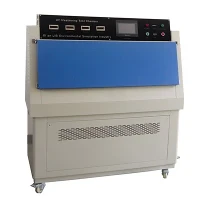
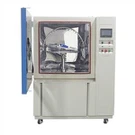
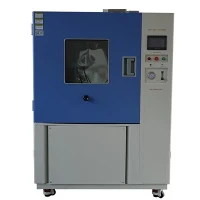
Wait, before we dive into detection tech, let's talk about where this fits in the bigger IP testing picture. If you're just starting out with IP ratings, you might start with something like the Water Spray Machine for quick splash resistance checks, or the Splash Water Test Device to see how your gear holds up to rain or incidental spills. But when you're gunning for that x8 rating, those tools are just warm-ups. For deeper testing, you'd move to specialized gear like the IP67 Test Equipment (which is often the bridge between shallow submersion and full x8) or the IP67 Test Machine for more controlled, repeatable shallow dips. But today, we're focused on the big leagues-IPx8 detection.
So step one for any IPx8 test: the test environment. This isn't your backyard pool. First, the water used has to be clean, right? No chemicals, no sediment-just regular tap water filtered to remove impurities. Why? Because if there's gunk in the water, it can get into tiny crevices and mimic a leak, or even block small holes so a real ingress goes undetected. Some advanced testers even let you adjust the water temperature to match what your device would actually encounter-like if you're testing a winter smart glove, you'd use cold water; for a beach speaker, warm. That's important because thermal expansion or contraction can cause seals to loosen or tighten, which affects ingress.
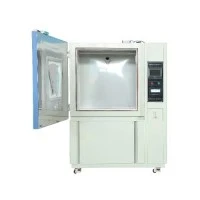
Now, the test chamber itself. Unlike an IP54 Waterproof Test Chamber (which is built for spray testing in a controlled booth), an IPx8 tester uses a large, pressure-regulated tank. Here's the first key to detection: pressure monitoring. When you submerge a device, the water exerts hydrostatic pressure. If the device's enclosure is perfectly sealed, the pressure inside the device should stay equal to the pressure outside, right? But if there's a leak, water will seep in, which changes the internal volume-and that's where most IPx8 testers pick it up.
Wait, how does that pressure detection work exactly? Let's break it down with a real example. Say you're testing a waterproof action camera. You seal it up, attach a tiny, sensitive pressure sensor to its internal cavity (through a port that gets sealed once the sensor is in place), then lower it into the IPx8 tank. The tank is filled slowly, and as the water depth increases, the external pressure is measured by another sensor. The tester keeps the external pressure consistent throughout the test-some runs are for 2 hours, others for 8, depending on the product's intended use. Now, if the camera's seal is good, the internal pressure will match the external pressure at all times. But if there's a pinhole leak, water gets in, compressing the air inside the camera's body. That compression causes the internal pressure to spike, and the tester picks that up in real time. No need to open the tank and check every 30 minutes-this is continuous, automated monitoring.
But wait, what about devices that have vents? A lot of modern waterproof tech has pressure equalization vents to stop seals from popping when you move between different altitudes, like flying on a plane. If your device has a vent, the pressure detection method alone might not work because air can escape (or water can get in through the vent, which is designed for pressure, not water). So for those cases, testers use a second method: water content analysis. This is where things get a little more hands-on, but still super precise. After the test run, you carefully take the device out of the tank, dry the outside immediately with a lint-free cloth, and then open it up (in a humidity-controlled room, to stop external moisture from messing with results). Then you weigh the internal components-circuit boards, batteries, everything. If the weight is higher than the pre-test weight, that means water got in. Even a 0.1 gram difference is enough to flag a leak, because that's about the weight of a tiny water droplet in a crevice.
I've seen teams mess this up all the time-they open the device and let it sit on the bench for a minute before weighing, so it picks up room humidity and skews the numbers. The good IPx8 testers I supply have built-in tools to prevent that: when you pull the device out, there's a built-in drying cycle with compressed dry air right at the test tank, so you can get it to the weigh station fast without extra moisture.
Another trick some premium IPx8 testers use is dielectric testing. Wait, what's that? So water conducts electricity, right? Pure water is actually a pretty bad conductor, but tap water (which is what we use for testing) has minerals that make it conductive. If you've got a device with an exposed circuit, you can run a low-voltage current through it while it's submerged. If water gets into the enclosure, it creates a conductive path between two points on the circuit, and the tester picks up a drop in resistance or a spike in current. That's great for devices that have open, non-sealed components inside-like a waterproof drill that has a motor exposed, but the enclosure is supposed to keep water out. The pressure method works for the main enclosure, but dielectric testing catches any leaks that let water get into the motor cavity.
Now, let's talk about common mistakes I see with IPx8 testing, because even the best tester can only do so much if the setup is wrong. One big one is test duration. The standard is usually 24 hours? No, wait-no, it depends. For watches, it's often 2 meters for 30 minutes (that's actually closer to IP67) but for things like underwater drones, it's 10 meters for 12 hours. The problem is a lot of teams cut the test short because it takes too long, and they miss slow leaks that only show up after a few hours. A solid IPx8 tester will let you program different duration and depth profiles, so you can mimic exactly what the product will face in real life.
Another mistake is water temperature difference. If you test a device that's been sitting at room temperature in a tank of cold water, the sudden temperature change can make the air inside the enclosure contract, which might look like a leak to the pressure sensor. So the best testers let you condition the device to the same temperature as the test water before you start-so thermal expansion or contraction doesn't skew the pressure readings. That's a small step, but it's the difference between a false fail and a real leak.
Wait, let's circle back to how all this fits in with the rest of your testing lineup. If you're just starting to build water-resistant products, you might start with a basic Water Spray Machine to check for light splashes, then move up to a Splash Water Test Device to simulate heavy rain. As your products get more advanced, you'll need tools like the IP54 Waterproof Test Chamber for consistent spray testing, then the IP67 Test Equipment for shallow submersion. When you're ready to go for that full IPx8 rating, the IP67 Test Machine is a great intermediate step to validate your seals before moving to the deeper, pressure-regulated IPx8 tank tests. It's all a progression-you don't jump from splash tests to 10-meter dives without checking the middle steps.

Now, you might be wondering: do all IPx8 testers use these methods? Nope. There's cheaper testers on the market that just submerge the device and have someone check for water after, which is super unreliable. What if the leak is tiny, hidden under a component, and takes hours to show up? That person would miss it. The testers I supply use continuous pressure monitoring combined with post-test water weight analysis, and for devices with circuits, dielectric testing. It's automated, so you can run tests overnight or over the weekend, and you get a full report with time-stamped leak alerts if something goes wrong.
Let me give you a real example of how this works. Last year, a client of mine was testing a new waterproof Bluetooth earbud case. They had it passing IP67, but when they tried for IPx8, it kept failing. Their old tester was just submerging it for 2 hours, then taking it out and peeling the case open to check. They couldn't find the leak, so they thought their seal design was bad. We set them up with an IPx8 tester that had continuous pressure monitoring. First, they conditioned the case to 25°C, then submerged it to 5 meters (which is a standard depth for earbuds) for 4 hours. About 45 minutes into the test, the pressure sensor spiked-so there was a leak. They used the pressure data to narrow down where the leak was: the seam where the charging port meets the case. Turns out, their ultrasonic welding was off on a small section, which let in tiny amounts of water that they never would've found with their old manual method. Fixed that weld, and they passed IPx8 on the next try. That's the power of good detection tech.
So to wrap this up: an IPx8 tester doesn't just "dunk" your product. It uses hydrostatic pressure monitoring to track internal vs. external pressure in real time, water weight analysis to catch even micro-ingress after the test, and dielectric testing for devices with exposed electronics. It also relies on proper setup-clean water, matching temperatures, correct duration and depth-to avoid false results. And it all fits into your broader testing workflow, starting with splash and spray tests and moving up to the rigorous IPx8 standard.
If you're looking to upgrade your testing setup and get reliable, accurate IPx8 results, or if you're just starting out and need to figure out which tools are right for your product, reach out. Don't waste time with cheap, unreliable testers that miss leaks or give false fails. We've helped hundreds of teams get their IP ratings right, from IP54 for everyday water resistance to full IPx8 for underwater gear. Whether you need a small tester for lab work or a large system for manufacturing, we can hook you up.
References
- International Electrotechnical Commission. (2013). IEC 60529: Degrees of protection provided by enclosures (IP Code).
- Underwriters Laboratories. (2021). UL 7543: Standard for Water-Resistant and Waterproof Portable Electronic Devices.
- Institute of Environmental Sciences and Technology. (2022). IP Test Procedures: Best Practices for Water Ingress Detection.