


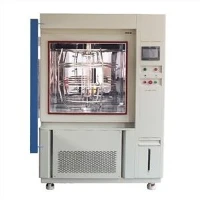
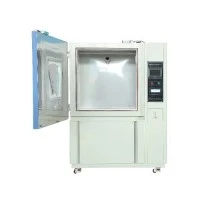
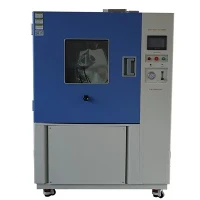
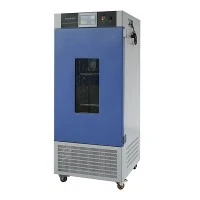
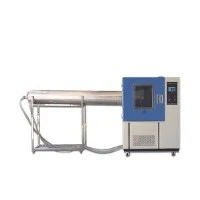
If you’ve ever worked in the electronic device industry—whether designing consumer wearables, rugged smartphones, automotive control modules, or industrial sensors—you’ve likely wrestled with one of the most critical performance metrics in product development: water resistance. With consumers and regulatory bodies alike demanding greater protection against accidental spills, rain, submersion, or high-pressure high-temperature water jets, test equipment that can accurately validate this functionality is non-negotiable. For suppliers of IP testing gear, one question comes up repeatedly from engineers and product managers: Can the IPX9k tester be used for electronic devices? As someone who’s spent years working side-by-side with product teams to refine their water resistance testing protocols, I’m here to break down the science, use cases, and nuances of this powerful testing tool to help you make the right choice for your next product launch.
First, let’s ground ourselves in what IP ratings actually mean, and where the IPX9k tester fits into the broader landscape of water resistance testing. The Ingress Protection (IP) rating system, defined by the International Electrotechnical Commission (IEC) in standards 60529 and 60529-1, classifies the level of protection a device provides against solid particles (the first digit) and liquids (the second digit). For water testing, ratings range from IPX1 (protection against vertical dripping water) up to IPX9k, which is a relatively newer, more rigorous rating introduced in 2013 specifically for applications exposed to high-temperature, high-pressure water jets. Unlike older IP ratings that focus on static submersion or low-pressure water exposure, IPX9k testing simulates real-world scenarios like high-pressure car wash systems, steam cleaning, or industrial pressure washing—conditions that can easily breach a poorly sealed electronic device.
Many people assume that because IPX9k is a high-pressure test, it only applies to heavy-duty industrial equipment or outdoor machinery, not consumer electronics. But that’s a misconception rooted in misapplying the rating’s original intent. Let’s start by defining what an IPX9k tester does, exactly. These testers deliver water at 80°C (176°F) with a pressure of 80–100 bar (1160–1450 psi) at a distance of 10–15 cm from the test sample, using a specific nozzle with a 12.5 mm diameter. The test involves spraying water at all angles for a set duration (typically 30 seconds per angle) while monitoring the device for water ingress, electrical failure, or material degradation.
Now, can this be used for electronic devices? The short answer is yes—but only when paired with a clear understanding of your product’s intended use case, and aligned with relevant industry standards. Let’s break down the key use cases where an IPX9k tester is not just useful, but essential for electronics, and where it might be overkill (or unsuitable).
First, consider automotive electronics, a massive segment where IPX9k testing is not only common but mandated by regulatory bodies. Modern cars are packed with electronics: infotainment systems, backup camera modules, door control units, engine sensors, and even interior sensors for cabin climate control. Many of these components are exposed to conditions where high-pressure water is a reality. Think about automatic car washes—especially the ones that use high-pressure jets to clean grime off the car’s body, doors, and even wheel wells. If your automotive infotainment module is mounted high on the dashboard, it might not be directly sprayed, but components located near the side mirrors, in the door sills, or in the trunk (where water can splash back during washing) need to withstand that kind of pressure. Even more critically, electric vehicle (EV) battery management systems (BMS) and charging ports are often exposed to high-pressure cleaning, and their water resistance is a safety-critical requirement. For these applications, an IPX9k tester is not just a nice-to-have—it’s required to meet global automotive standards like IEC 60529 and ISO 20653, which govern road vehicle electrical equipment. For example, a test conducted per IPX9k ensures that an EV charging port won’t short circuit, corrode, or fail to operate after being sprayed with high-temperature high-pressure water, which is a non-negotiable safety feature.
Next, industrial electronics and ruggedized consumer devices. Think of portable industrial sensors used in construction sites, agricultural equipment, or offshore energy operations. These devices are often cleaned with high-pressure steam or water jets to remove mud, dust, and chemicals that accumulate during use. A ruggedized GPS for heavy machinery, or a temperature sensor used in food processing (where sanitation requires regular high-temperature washdowns) must be able to withstand both submersion and high-pressure high-temperature jets. While static submersion testing (like IPX7 or IPX8, which test immersion at 1.5m for 30 minutes or deeper for longer periods) is important for devices that might be dropped in water, IPX9k testing validates their ability to survive the harsh cleaning processes they’ll face in the field. For these products, pairing an IPX9k tester with other complementary testing tools makes sense. For example, our team often works with customers who combine IPX9k testing with immersion testing using an IPX8 Water Immersion Test Chamber to cover both cleaning and accidental submersion scenarios—creating a full picture of water resistance. You can explore these complementary tools at our IP Water Proof Test Chamber page, which offers tailored solutions for mixed testing protocols.
But here’s where it gets tricky: not all electronic devices need IPX9k testing, and using an IPX9k tester for every device can lead to unnecessary cost, over-testing, or even inaccurate results. Let’s be clear about which electronics should (and shouldn’t) use this tool. For small consumer electronics like wireless earbuds, smart watches, or budget smartphones, their typical exposure is limited to rain, accidental spills, or short submersion in water (like a hand wash). For these, ratings like IPX7 or IPX8 are far more appropriate, and testing with an IPX9k tester would be overkill—exposing the device to pressure that could damage seals even if it meets its IP rating for lower-pressure conditions. In these cases, a tester designed for standard liquid contact testing, like an IP66 Test Chamber (designed for lower-pressure water jets and dust resistance) is more cost-effective and accurate. It’s important to note that IPX9k is not a replacement for these standard tests; it’s an add-on for devices that face high-pressure water exposure. Another key limitation: IPX9k testing does not cover submersion, so if your device needs to withstand being fully underwater (like a dive watch), you’ll need to pair IPX9k testing with an immersion test, like the ones available in our IP 68 Tester line, which is purpose-built for deeper, longer submersion scenarios.
Now, let’s address a common concern among electronic engineers: can an IPX9k tester damage a device during testing, or produce inconsistent results? The answer depends on how you calibrate and operate the tester, and align it with your device’s specifications. For example, a smart watch designed to be used in the shower (exposed to low-pressure warm water) is not rated for IPX9k, so testing it to IPX9k standards would likely damage its seals and lead to failure, even if it performs perfectly in a shower. That’s why it’s critical to first confirm what water resistance rating your device is intended to meet, per its target market standards, before choosing a tester. For devices that are intended to meet IPX9k—like the automotive and industrial electronics we discussed earlier—calibrating the tester’s pressure, temperature, and spray angle is key to accurate, repeatable results. A well-maintained IPX9k tester will deliver consistent, reliable data that helps you validate seal integrity, material performance, and long-term durability, rather than causing unnecessary damage.


Another important point: IPX9k testing isn’t just for testing finished devices—it’s also a critical tool during the design and prototyping phases of electronic development. Many engineers don’t realize that seal design flaws or material choices that seem fine in low-pressure tests can fail catastrophically in high-pressure high-temperature conditions. For example, a rubber seal that works well in IPX7 submersion testing might develop a microscopic crack when exposed to 100 bar of hot water, leading to water ingress over time. Testing prototypes with an IPX9k tester early in the design cycle allows you to catch these flaws before mass production, saving significant costs in rework, warranty claims, and product recalls. For industries where regulatory compliance is mandatory (like automotive or medical devices), this early testing can mean the difference between bringing a product to market on time or facing costly delays and penalties.
Let’s also touch on real-world examples to illustrate how this works in practice. A few years ago, we worked with a automotive startup developing a new line of electric delivery vans. Their BMS was located under the driver’s side door, a spot that would be exposed to high-pressure car washes and road splash during rainy weather. The initial seal design passed IPX7 submersion testing, but failed an IPX9k test, with water seeping into the control module during spraying. By adjusting the seal material to a higher-temperature EPDM rubber and increasing the clamp pressure on the seal grooves, the BMS passed multiple IPX9k tests, as well as subsequent submersion tests using an IPX8 Water Immersion Test Chamber, to ensure full compliance. Without the IPX9k tester, the startup would have launched vans with a critical safety flaw, leading to potential failures in the field and costly recalls.
For smaller-scale projects, like a manufacturer of rugged outdoor GPS units for hikers, the IPX9k tester adds an extra layer of protection that matters for users who might spray their gear with a hose to clean off dirt after a long hike. While the GPS’s target IP rating might be IPX7, adding IPX9k testing ensures it can handle that occasional hose-down, a feature that differentiates their product in a crowded market. In this case, pairing the IPX9k test with a standard liquid contact test (available via an IP69k Test Equipment set, which includes all the tools needed for high-pressure testing) gives them a full view of their product’s water resistance.
Now, let’s address some common myths about IPX9k testing for electronics. One myth is that all devices rated IPX9k can be submerged in water—this is not true, as IPX9k only tests resistance to high-pressure water jets, not submersion. Another myth is that IPX9k is equivalent to IPX7 or IPX8, which is also false; the two tests simulate completely different real-world conditions. A device that passes IPX9k testing may still fail a submersion test, and vice versa, depending on its seal design and intended use.
So, putting it all together: an IPX9k tester is a valuable tool for electronic devices, but it’s not a one-size-fits-all solution. It is essential for any electronic device intended to be exposed to high-temperature high-pressure water jets, such as automotive electronics, industrial washdown equipment, and rugged outdoor gear that requires regular cleaning with high-pressure hoses. For smaller consumer electronics that only face low-pressure water exposure, it’s unnecessary and can lead to over-testing. When used correctly, aligned with industry standards and your device’s intended use case, it helps you validate seal integrity, catch design flaws early, and ensure compliance with global safety and performance standards.
If you’re an engineer, product manager, or quality lead looking to integrate IPX9k testing into your electronic device development process, or if you need guidance on building a full water resistance testing suite that combines IPX9k with submersion, low-pressure, or dust testing, our team is here to help. We work with businesses of all sizes, from startup automotive teams to large industrial manufacturers, to tailor testing solutions that meet your specific needs, whether that’s an IPX9k tester alone or a complete system that includes IPX8 immersion chambers, IP66 test chambers, and more. Contact us today to discuss your testing requirements and find the right solution for your electronic device testing needs.
References:
- International Electrotechnical Commission. (2019). IEC 60529: Degrees of protection provided by enclosures (IP Code). Geneva, Switzerland: IEC.
- International Organization for Standardization. (2015). ISO 20653: Road vehicles – Degrees of protection (IP-Code) – Protection of electrical equipment against foreign objects, water and electricity. Geneva, Switzerland: ISO.
- Underwriters Laboratories. (2022). Water Resistance Testing for Electronic Products: A Guide for Manufacturers. Northbrook, IL: UL LLC.
- European Committee for Electrotechnical Standardization. (2021). EN 60529: Degrees of protection provided by enclosures (IP Code). Brussels, Belgium: CENELEC.
- National Highway Traffic Safety Administration. (2020). Safety Standards for Electric Vehicle Battery Systems: Water Resistance Requirements. Washington, DC: NHTSA.