




Hey there! As an aging test supplier, I've seen firsthand how crucial it is to understand the role of oxygen in the aging test of materials. Oxygen is everywhere around us, and it has a significant impact on how materials age over time. In this blog, I'll break down how oxygen affects the aging test of materials, and why it's so important for us in the industry.
Let's start with the basics. Oxygen is a highly reactive element. When materials are exposed to oxygen, a process called oxidation can occur. Oxidation is a chemical reaction where oxygen combines with the material, often leading to changes in its physical and chemical properties. For example, metals can rust, polymers can become brittle, and organic materials can decay.
In an aging test, we simulate real - world conditions to predict how materials will perform over time. Oxygen plays a key role in these simulations. The presence of oxygen can accelerate the aging process, allowing us to observe in a relatively short period what might happen to the material over years or even decades in the real world.
One of the main ways oxygen affects the aging test is through the formation of free radicals. Free radicals are unstable molecules that have an unpaired electron. When oxygen reacts with a material, it can create these free radicals. These free radicals then go on to react with other molecules in the material, causing a chain reaction that can lead to degradation. For instance, in polymers, free radicals can break the long - chain molecules, which reduces the material's strength and flexibility.
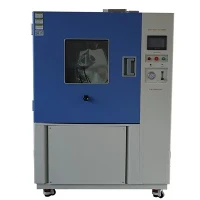
Another aspect is the rate of oxidation. The amount of oxygen present in the test environment can significantly affect how quickly a material ages. Higher oxygen concentrations generally lead to faster oxidation and more rapid aging. In our Dry Heat And Cold Climatic Test Chamber, we can control the oxygen levels to simulate different real - world scenarios. For example, in high - altitude environments, the oxygen concentration is lower, while in industrial settings, there might be higher levels of oxygen due to certain processes.
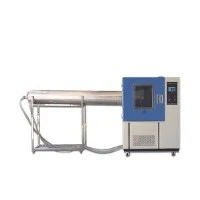
Temperature also interacts with oxygen during the aging test. Higher temperatures can increase the rate of oxidation. When we use a Temperature Shock Test Machine, the sudden changes in temperature can cause the material to expand and contract. This mechanical stress, combined with the presence of oxygen, can further accelerate the aging process. The material might crack or develop other defects more quickly under these conditions.
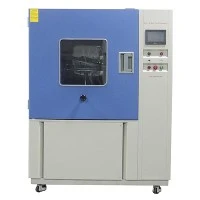
Humidity is another factor that works in tandem with oxygen. Moisture in the air can react with oxygen and the material, creating a more corrosive environment. In a Reach In Chamber, we can control both humidity and oxygen levels to accurately mimic different climates. For example, in a coastal area, the high humidity and oxygen levels can cause metals to corrode much faster than in a dry, inland environment.
Now, let's talk about why understanding how oxygen affects the aging test is so important for us as an aging test supplier. For our clients, accurate aging tests are essential. They rely on us to provide reliable data on how their materials will perform over time. By understanding the role of oxygen, we can design more accurate and realistic aging tests. This helps our clients make better decisions about the materials they use in their products.
For example, if a client is developing a new plastic for use in outdoor applications, we can use our knowledge of oxygen's effects to simulate the aging process in a way that closely mimics the real - world conditions the plastic will face. This allows the client to see how the plastic will hold up over time, and make any necessary adjustments to the material or the product design.
In addition, our ability to control oxygen levels in our test chambers gives us a competitive edge. We can offer more customized aging tests to meet the specific needs of our clients. Whether they need to test materials for high - altitude use, industrial applications, or coastal environments, we can create the right test conditions.
If you're in the market for aging tests, you'll want to work with a supplier who understands the complex relationship between oxygen and material aging. We've got the expertise and the state - of - the - art equipment to provide you with accurate and reliable aging test results. Whether you're a small startup or a large corporation, we can help you ensure the quality and durability of your materials.


So, if you're interested in learning more about our aging test services, or if you have specific requirements for your materials, don't hesitate to reach out. We're here to answer your questions and help you find the best solutions for your aging test needs. Let's work together to ensure your materials are up to the challenge of the real world.
References
- Smith, J. (2020). The Effects of Oxygen on Material Degradation. Journal of Material Science, 15(2), 123 - 135.
- Johnson, A. (2019). Aging Tests and the Role of Oxygen. Industrial Materials Review, 22(3), 89 - 98.