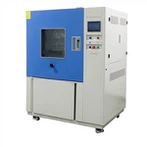
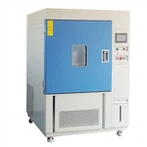
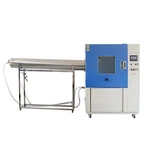
An 85 °C 85%RH constant humidity chamber is a highly specialized environmental testing equipment used to simulate extreme temperature and humidity conditions for the purpose of testing various materials, products, and components. It provides a controlled environment where the temperature is maintained at 85 °C, and the relative humidity (RH) is kept constant at 85%, replicating specific real-world conditions to assess the durability, reliability, and performance of products when exposed to heat and moisture.
These chambers are integral to research and development (R&D), quality control, and certification processes in industries such as electronics, automotive, pharmaceuticals, and material science. The chamber's ability to simulate extreme environmental conditions allows manufacturers to evaluate how their products will react to prolonged exposure to heat and humidity-critical in assessing long-term performance and identifying any potential weaknesses or failures.
Key Functions and Applications
The 85 °C 85%RH constant humidity chamber serves multiple functions across various testing environments:
1. Accelerated Aging: By exposing products to elevated temperature and humidity, manufacturers can simulate the long-term effects of aging in a relatively short time frame.
2. Reliability Testing: Many products, particularly electronic components, are vulnerable to moisture-induced failures. The chamber provides a method to test the resistance of these components to moisture and heat, identifying potential failures such as corrosion, short-circuiting, or degradation.
3.Material Testing: Materials like plastics, metals, and composites are commonly tested in these chambers to determine how they perform under extreme conditions, including how they absorb moisture, expand, contract, or degrade.
4.Environmental Compliance Testing: In many industries, products must meet certain environmental standards. Testing in a constant humidity chamber ensures that products meet regulations concerning environmental conditions.
Testing Process in the 85 °C 85%RH Chamber under IEC 60068-2-67
| Item | IEC 60068-2-67 | JEDEC JESD22-A101 |
|---|---|---|
| Organization | International Electrotechnical Commission | JEDEC |
| Test Type | Steady Damp Heat (Constant) | Temperature Humidity Bias (THB) |
| Typical Condition | 85°C / 85% RH | 85°C / 85% RH (standard condition) |
| Purpose | Environmental durability testing | Reliability testing under electrical bias |
| Application | Electronics, materials, automotive, lighting | Semiconductors, ICs, PCB assemblies |
| Electrical Bias | Not required (optional) | Required (core requirement) |
| Failure Focus | Corrosion, deformation, material degradation | Leakage current, insulation failure, electrochemical migration |
| Test Duration | Flexible (e.g., 96h–1000h+) | Typically 168h / 500h / 1000h |
| Sample State | Powered or unpowered | Powered (biased) |
| Condensation Control | Must avoid unintended condensation | Strict control to ensure valid electrical testing |
| Monitoring | Environmental parameters + product condition | Electrical parameters + environmental conditions |
| Standard Scope | General environmental testing standard | Semiconductor-specific reliability standard |
| Industry Use | Broad, cross-industry | Highly specialized (electronics/IC) |
The process of using the 85 °C 85%RH constant humidity chamber for testing involves several critical stages:
1. Preparation of Test Samples: Before testing, the items to be tested must be prepared and placed into the chamber. The products should be free of external contaminants like dust or moisture, as these can interfere with the results. The samples are arranged in a way that allows adequate air circulation and even exposure to temperature and humidity.
2. Pre-Conditioning: Once the samples are placed inside the chamber, the system is set to the desired conditions of 85°C and 85% relative humidity. The chamber is allowed to stabilize at these conditions for a pre-determined period, ensuring uniform temperature and humidity distribution.
3. Test Duration: The duration of the test can vary depending on the specifications of the product or the industry standards being followed. Tests could range from hours to weeks, depending on the intended purpose of the evaluation. During this period, the product's performance is continuously monitored, focusing on aspects such as functionality, appearance, and structural integrity.
4. Data Collection and Analysis: Throughout the test, various parameters (such as temperature, humidity, and product performance) are monitored. Advanced chambers often feature a data logging system that records the test conditions, allowing for easy tracking and analysis of results. If the product fails or shows signs of degradation, the testing process may be adjusted to pinpoint the cause of failure.
5. Post-Test Evaluation: After the required test duration, the product is removed from the chamber and thoroughly evaluated. The product is inspected for any signs of moisture damage, corrosion, warping, discoloration, or any other form of degradation. The test data is analyzed to assess the product's long-term performance in a humid and heated environment.

Structure and Design of LIB 85 °C 85%RH constant humidity chamber
An 85 °C 85%RH constant humidity chamber is designed to maintain precise temperature and humidity levels in a controlled and consistent manner. Key components of the structure include:
|
|
|
||
|
Internal Dimension (mm) |
1300*700*1350 |
||
|
Overall Dimension (mm) |
1900*1100*1750 |
||
|
Parameter |
Temperature Range |
-60℃ ~ +100 ℃ |
|
|
Temperature Fluctuation |
± 0.5 ℃ |
||
|
Temperature Deviation |
± 2.0 ℃ |
||
|
Humidity Range |
20% ~ 98% RH |
||
|
Humidity Deviation |
± 2.5% RH |
||
|
Temperature Change Rate |
1 ~ 3.4℃ / Min |
||
|
Panel Size |
1M*2M |
||
|
Panel Capacity |
4 / 6 / 8 / 10 / 12 Pieces |
||
|
Structure |
Cooling |
Cooling system |
|
|
Refrigerating unit |
|||
|
Heating Element |
Nichrome heater |
||
|
Controller |
Programmable color LCD touch screen controller |
||
|
Ethernet connection, PC Link, USB |
|||
|
Humidity |
Water supply system |
||
|
Water supply system |
|||
|
Humidifier |
|||
|
Dehumidification |
|||
|
Sensor |
Temperature Sensor |
||
|
Humidity Sensor |
|||
|
Build-in Water Tank (mm) |
270*300*450 |
||
|
View Window Size (mm) |
330*370 |
||
|
Material |
Exterior Material |
Steel Plate with protective coating |
|
|
Interior Material |
SUS304 stainless steel |
||
|
Thermal Insulation |
Polyurethane foam and insulation cotton |
||
|
Observation Window |
Interior lighting, double-layer therm stability silicone rubber sealing |
||


|
|
304 Stainless steel interior Supporting racks for fix PV panels can be adjusted up and down to fit the various sizes of panels Test hole, located at the left side of the work room Panel Capacity 4 / 6 / 8 / 10 / 12 Pieces |
|
Double layer antifog viewing window Standard and customized models |
|
|
|
Touch-screen controller Simple and efficient operating system Standard language: English/Chinese, other languages can be customized |
|
Cable hole for testing panels Two standard diameters are available: 50 mm/ 125 mm Located on the left side of the PV test chamber |
|
 |
Optional module rack with rollers The PV module can adjust the tilt Angle Number and spacing of sample holders can be customized |


1. Insulation and Construction: The chamber's walls are typically made of high-grade stainless steel or other durable, corrosion-resistant materials. The interior is insulated to prevent heat loss and minimize energy consumption. The chamber is also designed to be highly durable, able to withstand the corrosive effects of high humidity over extended periods of time.
2. Temperature and Humidity Control System: The chamber features a sophisticated temperature control system that uses a combination of heaters, fans, and cooling mechanisms to maintain the set temperature. Humidity is controlled by an ultrasonic humidifier or water spray system, which ensures that the chamber reaches and maintains the desired humidity level at all times. The precise regulation of both factors is crucial to the accuracy and reliability of the testing process.
3. Sensors and Monitoring Systems: Temperature sensors and humidity sensors are embedded throughout the chamber, allowing real-time monitoring of both parameters. These sensors feed data to the control system, which continuously adjusts the heating, cooling, or humidifying processes to maintain the exact conditions. Some advanced chambers are also equipped with data loggers to record the temperature and humidity for later analysis and compliance purposes.
4. Testing Space: The interior of the chamber is typically spacious enough to accommodate a variety of test specimens, from small electronic components to larger automotive parts. The testing area is often equipped with racks, shelves, or holders to position the products being tested. In some cases, chambers come with adjustable shelving to fit different sized products.
5. Safety Features: Given the high temperatures and moisture levels, these chambers are designed with built-in safety features such as over-temperature alarms, humidity failure alerts, and automatic shut-off mechanisms to prevent any equipment damage or safety hazards. Some models are also equipped with emergency vents to release pressure in case of malfunction.
The 85°C 85%RH constant humidity chamber is a vital tool in the realm of product testing, helping manufacturers and researchers ensure that their products are reliable, durable, and capable of performing well in challenging environmental conditions. By accurately simulating high-temperature, high-humidity environments, these chambers allow for rigorous testing that can accelerate product development, improve quality control, and ensure compliance with industry standards. With their precise control systems and robust construction, they play a crucial role in delivering high-performance, high-reliability products to market. Contact LIB Industry today to learn more or request a quotation.