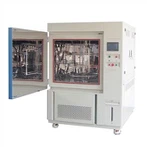
ASTM D45855-2018 tests as part of its polymer testing services. The standard describes an accelerated aging test that allows the water resistance of a coating to be assessed by using controlled condensation. More specifically, this practice illustrates the principles and operating conditions needed to achieve consistent results from lab to lab. In addition, ASTMD4585M-2018 does not provide any instructions regarding sample preparation, specific test conditions, nor does it provide any guidance or requirements for evaluation results. Finally, the ASTMD1735 and ASTM D2247 standards are alternatives to this practice. The cyclic condensation test chamber uses controlled condensation to test the water resistance of coatings and factors to consider:
The purpose of ASTM D4585M-2018 is to evaluate the ability of coatings to resist deterioration caused by water through condensation tests. In practice, the latter involves exposing the sample to a controlled temperature environment with saturated vapor, and the results of these types of tests pass or fail the assay. In addition, the test can evaluate the coating or the complete coating system, as the damage observed in this test can be caused by a variety of factors. For example, failure may be caused by substrate contamination, inadequate surface preparation, or the coating itself. To measure the water resistance of the sample, the test relies on the assessment of aesthetic characteristics such as: loss of color change, foaming, adhesion and softening, which have been described in detail in other criteria.
AOTSI-6270-1 cyclic condensation test chamber is designed according to GB/T 13893-2008 "Continuous condensation method for determination of moisture resistance of paints and varnishing" (equivalent to ISO 6270 standard Part 1) and ASTM D 4585 requirements. Used to assess the moisture resistance of coatings, coating systems and similar products in high humidity environments of continuous condensation. This test method specifies a continuous condensation performance test that may occur on coated surfaces under harsh exposure conditions. It is adapted to coating systems including porous substrates (such as wood, gypsum and paper plasterboard) and non-porous substrates (such as metal), and can reveal coating damage (including bubbles, soiling, softening, wrinkling and embrittling) and substrate damage. The instrument uses 100% condensing humidity to simulate and accelerate damage to metals, coatings and organic materials caused by dew. Increasing the condensation temperature will be faster than the damage caused by natural storms. It has the characteristics of simple structure, convenient operation and high reproducibility of test results.
Temperature and moisture In the AOTSI-6270-1 cycle condensation test chamber, moisture can be invisible dew or continuous flow of hot condensate. The AOTSI-6270-1 continuous condensate test chamber can be configured for drying cycles to remove osmotic pressure or to accelerate moisture erosion by increasing the condensation temperature.
AOTSI-6270-1 Continuous condensate test chamber is very low in purchase and operation costs, it does not require special installation conditions, only need to connect to the ordinary power supply and tap water can be used normally. Its versatility, speed and low operating costs make the AOTSI-6270-1 continuous condensate test chamber one of the most cost-effective condensation testing machines on the market.
LIB can customize the condensation testing machine for you, which has reached the standard you need to refer to. We are a China-based climate chamber manufacturers that specialize in environmental testing solutions. If you are looking for a cost-effective condensation testing chamber, then we will be your best choice, please contact us(info@libtestchamber.com)for more information about this device or other environmental test equipment.