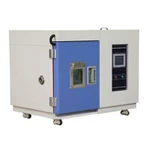
ASTM G154 use and factors to be considered
ASTM G154 testing uses fluorescent light sources that can simulate UVA or UVB. This technique is used to evaluate the impact of UV exposure on a product's mechanical properties.This method is used for evaluating accelerated weathering on plastics, adhesives and sealants, printing inks and coatings. It is also used for doing accelerated weathering on a lot of finished products including roofing materials and outdoor household products.
ASTM G154 typical experiment parameters
To perform an accelerated weathering test that is right for your application, the following test parameters need to be defined:
The fluorescent lamp
The lamp's irradiance level
The type of moisture exposure
The timing of the light and moisture exposure
The temperature of light exposure
The temperature of moisture exposure
The timing of a light/dark cycle.
Other related test methods
As an alternative to Fluorescent light exposure, one should consider ASTM G155.
Many ASTM test methods call up ASTM G154. Among others you will find ASTM D1248, ASTM D5208 and ASTM D5894, which combines a UV exposure with ASTM G85 (salt cyclic corrosion).
Upon exposure to ASTM G154, different measurements can be made to quantify the aging impact.

Practical Considerations and Data Analysis
When conducting ASTM G154 tests, several practical factors influence the accuracy and reproducibility of results. For example, the type of fluorescent lamp selected (UVA-340, UVB-313, or UVB-351) determines the spectral distribution and, therefore, the degree of photodegradation. UVA lamps closely replicate natural sunlight, while UVB lamps accelerate degradation more aggressively, often used for screening tests.
|
|
|
| Lamp | Controller |


Moisture control is equally crucial. Most G154 cycles alternate between UV exposure and condensation. During condensation phases, water vapor condenses on the specimen's surface, mimicking dew or rain exposure. This process promotes both photo-oxidation and hydrolysis-two primary mechanisms of material aging.
Additionally, temperature uniformity must be monitored carefully, as temperature affects reaction rates and can skew results if not maintained within ±2 °C. The combination of precise irradiance and temperature control ensures test repeatability across different laboratories.
 |
|
|
Model |
UV-SI-260 |
|
Internal Dimension (mm) |
450*1170*500 |
|
Overall Dimension (mm) |
680*1300*1500 |
|
Irradiation Source |
Fluorescent UV lamps (8) - 40 W |
|
Temperature Range |
Ambient ~ 90 ℃ ±2℃ |
|
Black Panel Temperature (BPT) |
35 ~ 80 ℃ |
|
Humidity Range |
≥95% RH |
|
Bandwidth |
290 ~ 400nm |
|
Irradiance Control |
0.3~20 W/㎡ |
|
Distance of Specimen and lamp |
50mm |
|
Heating Element |
Nichrome heater |
|
Controller |
Programmable color LCD touch screen controller |
|
Ethernet connection, PC Link, USB |
|
|
Water Supply System |
Automatic water supply, Water purification system |
|
Interior Material |
SUS304 stainless steel |
Post-Test Evaluation
After exposure, test specimens undergo various analytical evaluations to measure deterioration. These include:
Colorimetric Analysis: Determines fading or yellowing using ΔE values.
Gloss Measurement: Evaluates surface dulling or texture changes.
Tensile Strength Testing: Detects loss of mechanical integrity.
Microscopic Inspection: Identifies cracking, chalking, or delamination.
By comparing pre- and post-exposure data, engineers can estimate product life expectancy and identify weak points in formulation or design.
Importance for Product Development and Quality Assurance
Implementing ASTM G154 accelerated weathering tests during early design stages allows manufacturers to:
Screen materials quickly before long-term outdoor testing.
Compare alternative formulations under identical conditions.
Validate compliance with international quality standards.
Reduce warranty risks associated with premature product degradation.
Equipment and Standards Compliance
Modern UV exposure chambers-such as the LIB Accelerated UV Exposure Test Chamber-are designed to meet or exceed ASTM G154 requirements. These systems feature programmable light/dark cycles, precise irradiance calibration, automatic condensation control, and uniform temperature distribution. Compliance with ISO 4892-3 and ASTM G151 ensures that test results are traceable and consistent worldwide.
Ultimately, ASTM G154 testing provides manufacturers with an effective, time-efficient, and standardized method to simulate years of outdoor aging within weeks or months-helping ensure that materials maintain their performance, appearance, and reliability in real-world environments.