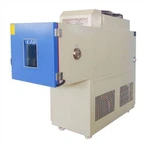
In industries where coatings, plated components, and protective finishes are exposed to aggressive environments, corrosion resistance testing is essential. Products used in automotive, electronics, marine, and industrial equipment must withstand humidity, salt, pollutants, and temperature changes over long service periods. Laboratory corrosion testing allows engineers to simulate these harsh conditions in a controlled environment and evaluate how materials perform before they reach the market.
Recently, a customer in Mexico using the LIB S-150 Salt Spray Test Chamber shared positive feedback after operating the equipment in their laboratory. The chamber has been running reliably and delivering stable testing performance. Aside from a minor saline container leak that was quickly resolved, the user reported that the system has been working "wonderfully" and appreciated the maintenance guidance provided. Real-world feedback like this demonstrates how dependable and practical a well-designed salt spray chamber can be for daily corrosion testing operations.
Accurate corrosion testing requires more than simply exposing samples to salt fog. Factors such as temperature stability, humidity control, solution composition, and deposition rate must all be precisely regulated. Modern salt spray chambers are therefore designed with intelligent control systems, uniform spray mechanisms, and reliable monitoring tools to ensure every test produces repeatable and meaningful results.
Factors Affecting Coating Corrosion Resistance
Corrosion resistance is influenced by multiple environmental and material factors. Proper testing requires consideration of temperature, humidity, solution composition, exposure duration, and pollutant presence.
| Factor | Typical Test Range / Specification | Impact on Coating Performance |
|---|---|---|
| Temperature | +10 °C to +90 °C (Cyclic), 35 ± 2 °C (NSS) | Accelerates chemical reactions and stresses coatings |
| Humidity | 30 % to 98 % RH | Promotes moisture absorption and blister formation |
| Salt Solution | 5 % NaCl (NSS), 5 % NaCl + Acetic Acid (AASS), 5 % NaCl + Acetic Acid + 0.26 g/L CuCl₂ (CASS) | Determines aggressiveness of the test and simulates different environments |
| Spray Pressure | 83 kPa | Ensures uniform deposition of corrosive mist |
| Deposition Rate | 1–2 mL/80 cm²/h | Critical for repeatability and avoiding over- or under-testing |
By controlling these factors, laboratories can produce reproducible results, minimizing the risk of false positives or negatives in corrosion resistance assessment.
In addition to environmental conditions, the type of coating system and substrate material also play a critical role in corrosion resistance. Factors such as coating thickness, adhesion strength, surface preparation, and curing quality directly influence how effectively a coating protects the underlying metal. Even small variations in coating application-such as uneven thickness or incomplete curing-can significantly reduce corrosion protection during salt spray or cyclic corrosion testing.
Additionally, test duration and evaluation criteria are essential for accurate corrosion assessment. Short-term exposure may only reveal initial coating defects, while extended testing periods help simulate long-term environmental degradation. Laboratories typically evaluate results based on visible corrosion, blistering, rust creepage from scribed lines, and coating delamination. These indicators provide a comprehensive understanding of coating durability and long-term performance in corrosive environments.

Salt Fog Chamber for Corrosion resistance test
How LIB Salt Spray Chambers Ensure Stable and Accurate Testing
LIB Salt Spray Chambers are engineered to maintain consistent and precise test conditions for coatings of all types. Temperature and humidity are controlled by PT‑100 Class A sensors with ± 0.5 °C and ± 2 % RH accuracy. Salt fog is atomized via quartz nozzles at a constant 83 kPa, achieving a deposition rate of 1–2 mL/80 cm²/h, meeting ISO 9227, ASTM B117, and ASTM G85 requirements.
Key features that ensure test stability include:
1. Preheated Air Saturator: Maintains fog at 47 ± 1 °C, stabilizing the density and preventing variability.
2. Automated Water Inlet and Dry-Burn Protection: Prevents overheating and maintains consistent solution levels.
3. PID Control System: Monitors and adjusts temperature, humidity, and spray, keeping conditions within strict tolerances.
4. Uniform Sample Exposure: V‑groove and round-rod holders guarantee consistent fog contact across multiple samples.
5. Real-Time Logging: Temperature, humidity, pH, and deposition rate are recorded and exportable via USB or Ethernet for compliance reporting.
6. Fast Global Delivery: Standard models are available for rapid shipment within 7–15 days, helping laboratories and manufacturers quickly deploy corrosion testing equipment and minimize project delays.
  |
|||
|
Model |
S-150 |
||
|
Internal dimensions (mm) |
470*590*400 |
||
|
Overall dimensions (mm) |
620*1400*1050 |
||
|
Temp. Range |
Ambient ~ +60 degree |
||
|
Temp. Fluctuation |
± 0.5 ℃ |
||
|
Temp. Deviation |
± 2.0℃ |
||
|
Humidity Range |
95 % ~ 98 % RH |
||
|
Salt Fog Deposition |
1~2ml / 80cm2 · h |
||
|
Spray Type |
Continuous / Periodic |
||
|
Heating Element |
Nichrome heater |
||
|
Salt Fog Collected |
Fog collector and fog measure cylinder |
||
|
Controller |
PID controller |
||
|
Material |
Glass fiber reinforced plastics |
||
|
Standard Configuration |
8 round bars and 7 V-shaped grooves |
||
|
salt spray tower |
cylinder |
spray collector |


With these controls, LIB chambers eliminate human error and environmental inconsistencies, making every test reliable and comparable across batches.
Available LIB Salt Spray Chambers
LIB offers three primary chamber types, each tailored for different corrosion testing needs:
|
Classify |
Type 1 |
Type 2 |
Type 3 |
|
Name |
Salt Spray Test Chamber |
Salt Cyclic Corrosion Test Chamber |
Salt and So2 Corrosion Test Chamber |
|
|
|
|
|
|
Model |
S-150, S-250, S-750 S-010, S-016, S-020, |
SC-010, SC-016, SC-020 |
SSC-010, SSC-016, SSC-020 |
|
Test Standard |
ASTM B117; ISO9227 (NSS, NASS, CASS ); |
ASTM B117; ISO9227; IEC60068-2-52; |
ASTM B117; ISO9227; IEC60068-2-52; ASTM G85 (A4); |
|
Function |
Salt fog spray; Temp (Ambient ~+60℃) |
Salt fog Spray; Temp (+10℃ ~+90℃); Humid (30% ~98%RH); |
Salt fog Spray; Temp (+10℃ ~+90℃); Humid (30% ~98%RH); So2 gas; |


Choosing the Right Chamber:
1. Use Salt Spray Test Chamber for standard laboratory or coating certification tasks.
2. Choose Salt Cyclic Corrosion Chamber when simulating wet/dry cycles, high humidity, or temperature fluctuations.
3. Opt for Salt + SO₂ Chamber for evaluating coatings in acidic or industrial pollution conditions.
FAQs on the Salt Spray Chambers
Q1: What standards do LIB chambers comply with?
A1: LIB chambers meet ISO 9227, ASTM B117, ASTM G85, IEC 60068-2-52, and ASTM D5894. They also accommodate company-specific standards from VW, Ford, BMW, Jaguar, Toyota, Honda, and more.
Q2: How accurate is the deposition rate of salt fog?
A2: Quartz nozzles maintain 1–2 mL/80 cm²/h with ± 0.5 °C temperature control, precisely meeting ISO 9227 NSS specifications.
Q3: Can these chambers handle multiple test types in one setup?
A3: Yes, up to 120 programmable profiles allow chaining NSS, AASS, and CASS tests, as well as cyclic temperature and humidity phases.
Q4: How is sample uniformity ensured?
A4: Dual hanging spray towers, V-groove holders, and round-rod supports provide even exposure across all specimens, eliminating dead zones.
Q5: What maintenance is required?
A5: Routine checks like filter replacement, water refill, and sensor verification take only minutes. Chambers are built with corrosion-resistant SUS304 interiors and A3 steel exteriors for long-term durability.
Q6: Can LIB chambers integrate with external monitoring systems?
A6: Yes, Ethernet and USB ports allow real-time data logging and integration with LIMS or other QA systems.
Q7: Is long-term support available?
A7: All LIB chambers come with a 3-year warranty and lifetime technical support, including 24/7 multilingual service and spare-part delivery within 7–15 days.
LIB Salt Spray Chambers provide laboratories with precise, repeatable, and globally recognized corrosion testing capabilities. From standard NSS testing to multi-phase cyclic simulations and SO₂ exposure, these chambers offer unmatched flexibility and reliability. With advanced sensors, automated routines, and comprehensive reporting, LIB ensures that every corrosion resistance test produces actionable, field-relevant data.
Contact LIB Industry today to configure a Salt Spray Chamber tailored to your specific research, production, or QA needs. With LIB, you can confidently validate coating durability, comply with international standards, and accelerate product development timelines.