
Composite materials such as carbon fiber reinforced polymers ,  glass fiber composites, and structural adhesives are widely used in aerospace, automotive, renewable energy, and electronics industries. However, these materials often operate in environments where temperature fluctuations, moisture exposure, and long-term humidity can significantly affect strength, bonding performance, and structural stability. Without controlled environmental testing, it is difficult for engineers to predict how these materials will perform after years of real-world service.
Recently, a research laboratory in Canada shared positive feedback after installing a LIB temperature and humidity chamber. After one week of operation, their team confirmed that the chamber had been working well and delivered stable performance in daily testing. They also noted that the equipment was already integrated into their lab workflow and that their technical team would continue monitoring results. Feedback like this demonstrates how environmental test chambers quickly become a reliable tool for laboratories performing long-term reliability studies.
To support this type of research, LIB Temperature And Humidity Aging Chamber For Compositesis designed to simulate real environmental conditions with precise control of temperature and humidity. By exposing composite materials to conditions such as –70 °C to +150 °C temperature ranges and 20 % to 98 % RH humidity, engineers can perform accelerated aging tests, evaluate durability, and verify compliance with international standards before products enter the market.
Working Principle of a Temperature And Humidity Aging Chamber For Composites
A Temperature And Humidity Aging Chamber For Composites recreates environmental stress conditions by precisely controlling temperature, humidity, and airflow within an enclosed testing space.
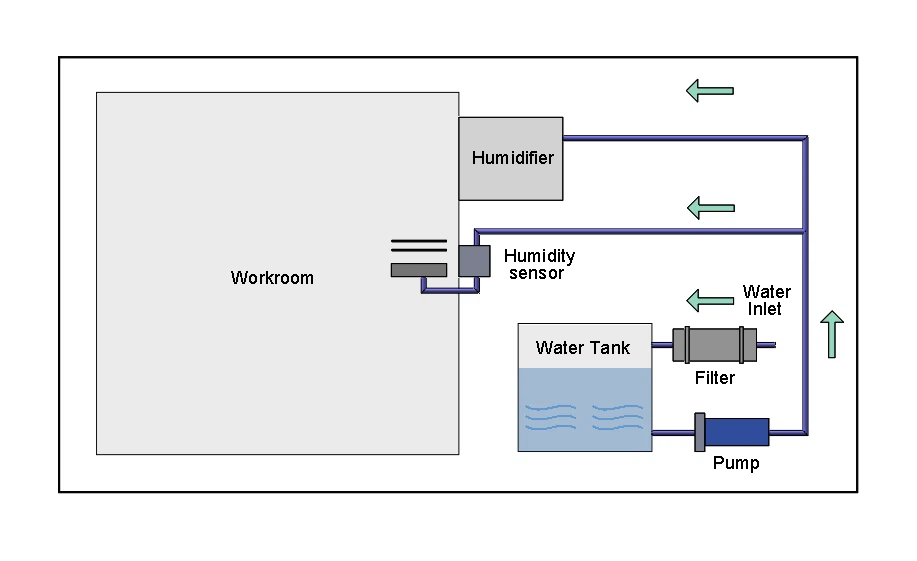
The chamber uses a refrigeration compressor system and electric heaters to regulate temperature, typically covering ranges from –70 °C to +150 °C. At the same time, a humidification system injects controlled moisture into the chamber to maintain humidity levels from 20 % RH to 98 % RH. Sensors such as PT100 Class A probes continuously monitor the internal environment, ensuring stability within ±0.5 °C temperature fluctuation and ±2.5 % RH humidity accuracy.
Airflow circulation is equally important. Dual centrifugal fans distribute air uniformly throughout the workroom so that every composite specimen experiences identical test conditions. This allows engineers to simulate real environmental exposure, including tropical humidity, cold storage, or long-term material aging.
These tightly controlled environmental conditions accelerate the aging process of composite materials such as carbon-fiber reinforced polymers (CFRP), glass-fiber composites (GFRP), and polymer laminates. Under combined temperature and humidity stress, engineers can observe potential issues including delamination, resin degradation, moisture absorption, and loss of mechanical strength. Accelerated aging testing allows laboratories to simulate years of environmental exposure within weeks, providing critical data for product validation and material selection.
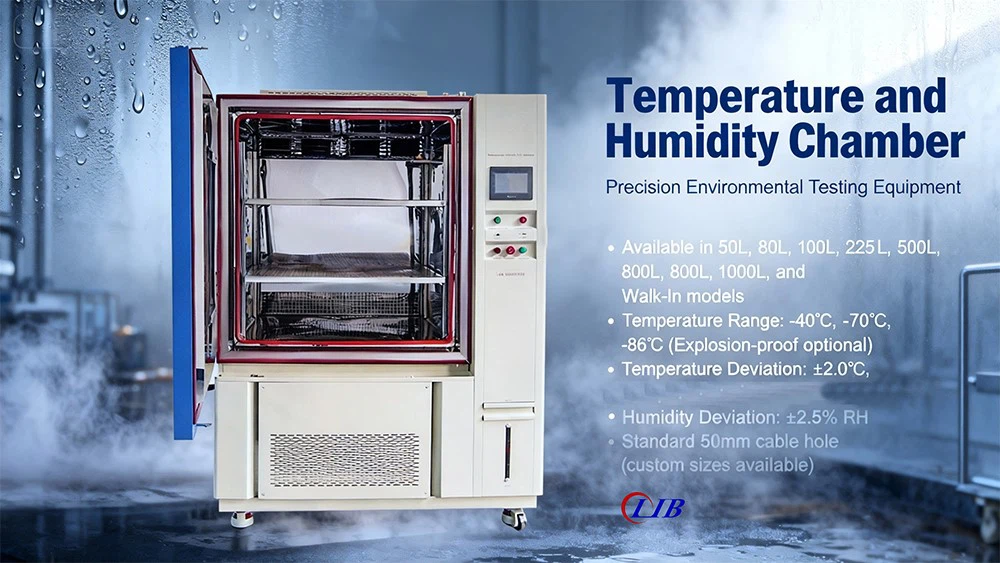
Temperature Humidity Chambers for aging test
1. Temperature And Humidity Aging Chamber For Composites
2. Small Benchtop Temperature Humidity Chamber
3. High-Precision Walk in Temperature Chamber
4. Temperature Explosion Proof Test Chamber
5. Energy-Efficient Battery Thermal Test Chamber
6. Programmable 2-Zone And 3-Zone Vertical Shock Test Chamber
Test Methods of LIB Temperature And Humidity Aging Chamber For Composites
Environmental aging tests for composites must comply with multiple international standards. LIB chambers are designed to support widely recognized testing requirements such as:
1. IEC 60068-2-30 – Damp heat cyclic test
2. IEC 60068-2-78 – Damp heat steady state test
3. ISO 16750-4 – Environmental conditions for automotive electronics
4. ASTM D5229 – Moisture conditioning of polymer matrix composites
5. MIL-STD-810H – Environmental engineering considerations
Below are two commonly used testing methods.
Method 1: Damp Heat Aging Test for Composites
The damp heat test evaluates how composite materials behave under high temperature and high humidity exposure. One widely used condition is 85 °C / 85 % RH, often called the "85/85 test." Test durations usually range from 240 hours to 1000 hours depending on reliability requirements.
This method is commonly used for: Adhesive bonding validation, Composite laminate durability testing, Solar panel encapsulation reliability.
LIB Advantages
1. High precision control: Temperature fluctuation within ±0.5 °C and humidity accuracy within ±2.5 % RH ensures reliable data.
2. Uniform airflow: Multi-directional air circulation maintains ±2 °C temperature uniformity, ensuring consistent testing conditions.
3. Programmable testing: Up to 120 test programs with 100 steps each allow engineers to automate complex aging cycles.
|
|
Name | Temperature Humidity Chamber for Composites | ||||
|
Model |
TH-100 |
|||||
|
Internal dimension (mm) |
400*500*500 |
|||||
|
Overall dimension (mm) |
860*1050*1620 |
|||||
|
Capacity |
100L |
|||||
|
Temperature range |
-20℃ ~+150 ℃ |
|||||
|
Low type |
A: -40℃ B:-70℃ C -86℃ |
|||||
|
Humidity Range |
20%-98%RH |
|||||
|
Temperature deviation |
± 2.0 ℃ |
|||||
|
Heating rate |
3 ℃ / min |
|||||
|
Cooling rate |
1 ℃ / min |
|||||
|
Controller |
Programmable color LCD touch screen controller, Multi-language interface, Ethernet , USB |
|||||
|
Refrigerant |
R404A, R23 |
|||||
|
Exterior material |
Steel Plate with protective coating |
|||||
|
Interior material |
SUS304 stainless steel |
|||||
|
Standard configuration |
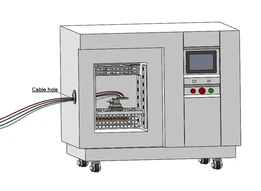
1 Cable hole (Φ 50) with plug; 2 shelves |
|||||
|
Timing Function |
0.1~999.9 (S,M,H) settable |
|||||

|
|
|
|
|
|
| Robust Workroom | Cable Hole | Temperature and Humidity Sensor | PID controller |


Method 2: Temperature Cycling Aging Test
The temperature cycling aging test evaluates the structural stability of composite materials when repeatedly exposed to alternating high and low temperature conditions. In a typical test, the chamber cycles between –40 °C and +85 °C, with the temperature increasing at about 3 °C per minute during heating and decreasing at approximately 1 °C per minute during cooling. This cycle is repeated 50 to 200 times to simulate the repeated thermal stress that materials experience in real operating environments.
This test is widely used in: Automotive composite components, Aerospace structural panels, Wind turbine blades
LIB Advantages
1. Fast thermal transitions: Heating up to 3 °C/min shortens test duration.
2. Robust construction: SUS304 stainless steel interior resists moisture corrosion during long-term testing.
3. Data traceability: Built-in data logging supports ISO/IEC compliant testing documentation.
Optional LIB Temperature And Humidity Chamber Configurations
Different laboratories require different chamber sizes depending on the number of samples, component dimensions, and testing objectives. To accommodate these varying needs, LIB provides three common configurations: benchtop chambers, reach-in chambers, and walk-in chambers, allowing laboratories to select the most suitable system for their testing scale.
|
|
|
|
|
|---|---|---|---|
 |
 |
 |
|
| Name | Small Temperature And Humidity Aging Chamber For Composites | Standing Temperature And Humidity Aging Chamber For Composites | Walk-In Temperature And Humidity Aging Chamber For Composites |
| Capacity |
TH-50: 800x1050x950 mm TH-80: 900×1100×1000mm |
Capacity: 100L; 225L; 500L; 800L; 1000L |
>20m³ |
| Throughput | Ideal for small components, sensors, boards | Subassemblies or mid-volume batches |
Bulk testing of items or vehicles as a whole |
| Energy Saving |
Automatic Moisture Circulation in Humidity System
|
Automatic Moisture Circulation in Humidity System
|
Automatic Moisture Circulation in Humidity System
|
| Operational Cost | Lowest | Medium | Highest |
| Standards Coverage | Full IEC / ISO / ASTM compliance | ||
| Noise Level | ≤ 65 dBA | ||


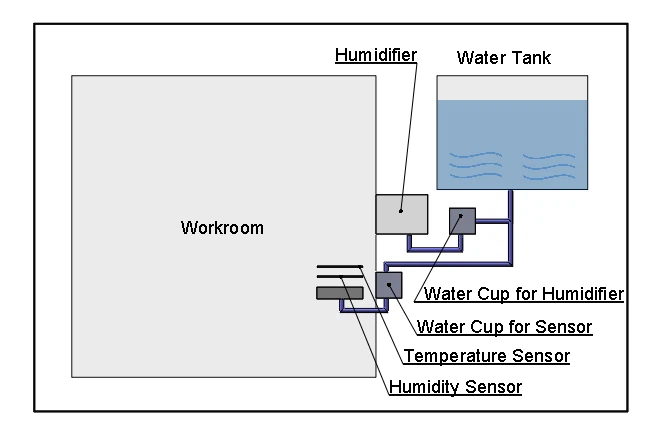
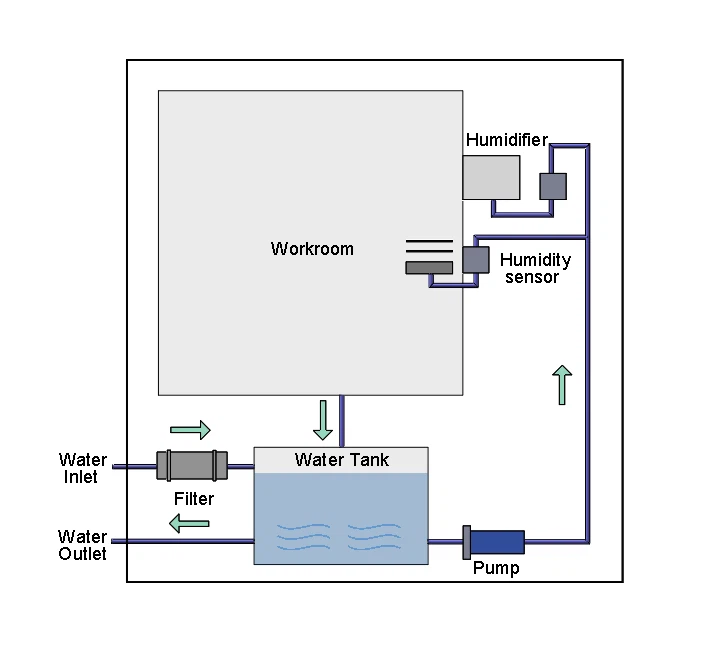
Benchtop chambers are compact environmental testing systems designed for small composite samples, adhesive materials, and laboratory-scale research. With a typical capacity ranging from 50 L to 80 L, these chambers are commonly used in university laboratories, material research institutes, and small development programs where space is limited but precise environmental control is still required.
Reach-in chambers are the most widely used environmental test chambers in industrial laboratories. Their typical capacity ranges from 225 L to 1000 L, making them suitable for automotive component testing, electronics reliability verification, and medium-size composite part evaluation. These systems offer a practical balance between testing volume, energy efficiency, and operational cost, which is why they are commonly adopted in product validation laboratories.
Walk-in chambers are designed for testing large composite structures or running multiple samples simultaneously. With volumes typically ranging from 5 m³ to 98 m³ or even larger, these chambers are ideal for applications such as wind turbine blade components, aerospace structural parts, and large-scale product validation programs. For laboratories that need to test full-size composite assemblies or conduct batch environmental aging tests, walk-in chambers provide the most flexible and efficient solution.
FAQs on the Temperature And Humidity Aging Chamber For Composites
Q1: What is the purpose of a Temperature And Humidity Aging Chamber for composites?
The chamber simulates environmental conditions such as heat, cold, and humidity to evaluate the durability and long-term reliability of composite materials.
Q2: What temperature range is typically required for composite testing?
Most composite aging tests use ranges between –40 °C and +85 °C, while advanced chambers can reach –70 °C to +150 °C.
Q3: What humidity conditions are used in composite aging tests?
Humidity conditions usually range from 40 % RH to 98 % RH, with 85 % RH being the most common testing value.
Q4: How long does a composite aging test typically last?
Test durations vary depending on standards but often range from 240 hours to 1000 hours for accelerated aging evaluations.
Q5: What industries use composite aging chambers?
Industries include: Aerospace, Automotive, Renewable energy, Electronics, Advanced materials research.
Contact LIB Industry to learn how our Temperature And Humidity Aging Chambers for Composites can help you perform reliable environmental testing and meet global certification standards.


