Picture a circuit board that works perfectly on your bench today, then fails eighteen months later in a Singapore data center where humidity sits above 80% for weeks at a time. Waiting a year and a half to discover that failure is not an option for any product team on a deadline.
This article explains what LIB Industry's Humidity And Temperature Chamber actually is, which international standards it satisfies, how it reproduces heat, cold, and moisture on demand, and what test methods engineers rely on to compress years of environmental exposure into days.
What Humidity And Temperature Chambers Are Used For
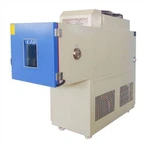
A Humidity And Temperature Chamber is a sealed, insulated test enclosure that reproduces heat, cold, humidity, and condensation on command, letting engineers simulate outdoor and industrial conditions without waiting for the seasons to change. Standard chambers cover a temperature range of -20°C to +150°C, with optional low-temperature extensions down to -40°C, -70°C, or -86°C depending on the model, and humidity control spanning 20% RH to 98% RH. This range lets a single chamber replicate everything from a desert afternoon to a humid coastal warehouse, making it a core tool for automotive, aerospace, electronics, defense, telecommunications, and pharmaceutical testing programs.

Standards It Satisfies and How It Works
The chamber is built to support IEC 60068-2-1 for low-temperature exposure, IEC 60068-2-2 for high-temperature endurance, IEC 60068-2-30 for cyclic damp heat testing, and IEC 60068-2-78 for steady-state humidity assessment. In automotive testing, ISO 16750 governs how electronic components are validated for vehicle environments, while MIL-STD-810H is the common reference for aerospace and defense qualification. Internally, PID-controlled heating and refrigeration systems work together with a humidification unit to hit precise setpoints, and PT100 Class A sensors feed real-time data back to the controller, holding temperature stability within ±0.5°C and humidity within ±2.5% RH. Uniform airflow distribution, driven by centrifugal fans and internal baffles, keeps every point inside the chamber at the same condition, so results don't vary depending on where a sample sits.
Test Methods Used in Humidity And Temperature Chambers
A typical test cycles the chamber between programmed high and low setpoints, commonly -40°C to +85°C for automotive electronics or up to +150°C for high-temperature endurance runs. For humidity-driven testing, 85°C at 85% RH is a widely used condition for aging electronic components over 1,000 hours or more, following IEC 60068-2-78. An automotive ECU, for example, might undergo 1,000 thermal cycles between -40°C and +125°C under IEC 60068-2-14 to confirm solder joint and connector reliability before mass production. Touchscreen controllers that store multiple programmable sequences let labs automate ramp rates, dwell times, and humidity transitions without manual resets between test phases, keeping every batch under identical conditions.
Leading Electronics Manufacturers Are Highly Satisfied Testing With the Benchtop Model
Several major electronics manufacturers have adopted LIB Industry's Benchtop Humidity And Temperature Chamber for qualifying small

components and PCB assemblies, and their engineering teams have reported consistently strong results. Several points stood out to them:
Standards compliance: the chamber supports IEC 60068 series testing and satisfies CE, IEC, and CSA safety requirements, simplifying certification across multiple export markets.
High safety design: over-temperature protection, compressor protection, and emergency stop functions kept extended aging cycles running without interruption.
Strong test precision: temperature stability within ±0.5°C and humidity control within ±2.5% RH gave engineers confidence that every board received identical exposure.
Cost-effective operation: the water-recovery humidification system reduced refill frequency significantly, lowering day-to-day running costs.
Full customization: chamber volume can be built up to 2000 L free of charge, letting teams scale from small benchtop units to larger production-line testing.
Long-term confidence: a 3-year warranty backed by permanent maintenance support gave manufacturers peace of mind for continuous reliability testing programs.
These advantages made the benchtop chamber a practical fit for teams needing fast, repeatable electronics qualification without the footprint of a full walk-in system.
Humidity And Temperature Chambers vs Benchtop Humidity And Temperature Chambers: Comparison and How to Choose
| Feature |
|
|
|---|---|---|
| Temperature range | -20°C to +150°C (optional to -86°C) | -20°C to +150°C (optional to -86°C) |
| Humidity control | 20% RH to 98% RH | 20% RH to 98% RH |
| Typical volume | Larger, for full assemblies or batches | Compact, for small components and samples |
| Best suited for | Product qualification, multi-sample batch testing | Lab bench use, small electronics, space-limited facilities |
| Typical standards | IEC 60068-2-30, IEC 60068-2-78, ISO 16750 | Same standards, scaled to smaller sample sizes |
| Relative footprint | Larger floor space required | Minimal footprint, fits on a standard lab bench |


If your testing involves full-size assemblies, multiple simultaneous samples, or long-duration batch qualification, a standard reach-in chamber offers the space and capacity needed. If your work centers on small PCBs, sensors, or individual components in a space-constrained lab, a Benchtop Humidity And Temperature Chamber delivers the same precision and standards compliance in a fraction of the footprint.
LIB Popular Humidity And Temperature Chambers

Space-Saving Laboratory Design, Precise Temperature and Humidity Control

Versatile Testing for Multiple Industries, Stable and Uniform Environmental Conditions

Easy Access for Large Test Specimens, High-Capacity Environmental Simulation

Combined Climatic and Vibration Testing, Reduced Testing Time and Improved Correlation


Up to 20°C/min Temperature Ramp Rates, Accelerated Product Reliability Validation.
FAQs on the Humidity And Temperature Chambers
Q1: What after-sales service comes with the chamber?
LIB Industry provides a 3-year warranty, installation guidance, operation training, calibration support, and remote technical assistance to keep the chamber running reliably long after purchase.
Q2: How is the chamber shipped internationally?
Units are packaged in reinforced export-grade wooden crates with shock-resistant protection. Before shipment, each chamber undergoes factory acceptance testing (FAT) and calibration verification to ensure safe transport and immediate commissioning on arrival.
Q3: Can the chamber be customized for specific testing needs?
Yes. Chamber dimensions, temperature and humidity ranges, cable ports, viewing windows, shelving systems, and controller languages can all be customized, with volumes built up to 2000 L on request.
Q4: Does LIB support installation and training after delivery?
Yes. LIB Industry's technical team provides remote setup guidance, and on-site installation and operator training can be arranged for larger orders upon request.
Contact LIB Industry today for expert consultation, chamber selection assistance, and customized environmental testing solutions.
The extension has been updated. Please reload page to enable spell and grammar checking.